
Hercinothrips
Hercinothrips
Description
How to identify
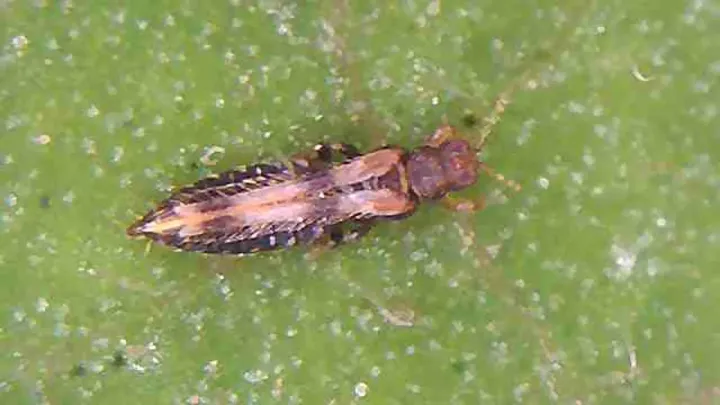
Hercinothrips is a genus of insects belonging to the order Thysanoptera and the family Thripidae. These tiny insects typically measure between 1 and 2 mm in length.
Adult insects usually have elongated, dark brown bodies. A distinguishing feature of this genus is the presence of narrow wings with dense fringes, typical for all thrips species.
The larval stages resemble adults in body shape but lack developed wings and generally appear lighter in color, often being white or yellowish.
Their life cycle includes egg, two larval stages, prepupa, pupa, and adult. The development occurs both on plant tissue and within the growing substrate.
In greenhouse conditions, they can reproduce continuously throughout the year, leading to overlapping generations and rapid population growth.
What it damages
Hercinothrips species are known to infest a wide range of indoor plants, including ornamental flowers, vegetables, and fruit crops like citrus.
Common hosts in horticultural settings include Ficus, Gardenia, orchids, and various greenhouse-grown vegetables, which suffer significant stress from feeding.
The insects feed by piercing the plant epidermis and sucking out the cell contents, which disrupts plant metabolism and inhibits natural growth processes.
Heavy feeding causes the collapse of cell structures, leading to reduced photosynthetic capacity and the eventual weakening of the entire host plant.
The economic impact is severe, as the damage to foliage significantly lowers the commercial quality and value of ornamental plants.
Signs of infestation
Initial signs of infestation appear as small, silvery, or bleached spots on the upper leaf surface, which eventually coalesce into larger discolored patches.
A reliable diagnostic sign is the presence of small, dark black specks of excrement on the underside of leaves, often accompanied by faint webbing.
As the infestation progresses, leaves become yellow, deformed, and brittle, often leading to premature abscission (leaf drop) and overall plant decline.
In severe cases, necrotized patches appear where the tissue has been drained of nutrients, causing portions of the plant to wither completely.
Adult thrips can be monitored by using yellow or blue sticky cards, which help detect the initial presence of the pest before an outbreak occurs.
Control measures
Effective management of Hercinothrips relies on integrated pest management (IPM) practices, combining cultural, biological, and chemical methods.
Preventive measures include strict sanitation of the greenhouse environment, sterilization of soil media, and careful inspection of new plant introductions.
Biological control agents, such as predatory mites and bugs (e.g., Orius species), can be used to manage population levels without heavy chemical reliance.
- Screening ventilation windows to prevent adult entry.
- Using blue sticky traps to monitor and reduce adult population.
- Application of systemic insecticides during active growth phases.
It is crucial to rotate insecticides with different modes of action to prevent the development of pesticide resistance in the Hercinothrips population.
Taxonomy
- Latin name
- Hercinothrips
- Order
- Thrips
- Family
- Thripidae
- EPPO code
- HERCSP
Discussion
No discussions yet — be the first.