
Brown-spotted leafroller
Henricus fuscodorsana
Description
How to identify
The Brown-spotted leafroller (Henricus fuscodorsana) belongs to the Tortricidae family of the order Lepidoptera. It is a common moth species often found in woody habitats and managed orchards.
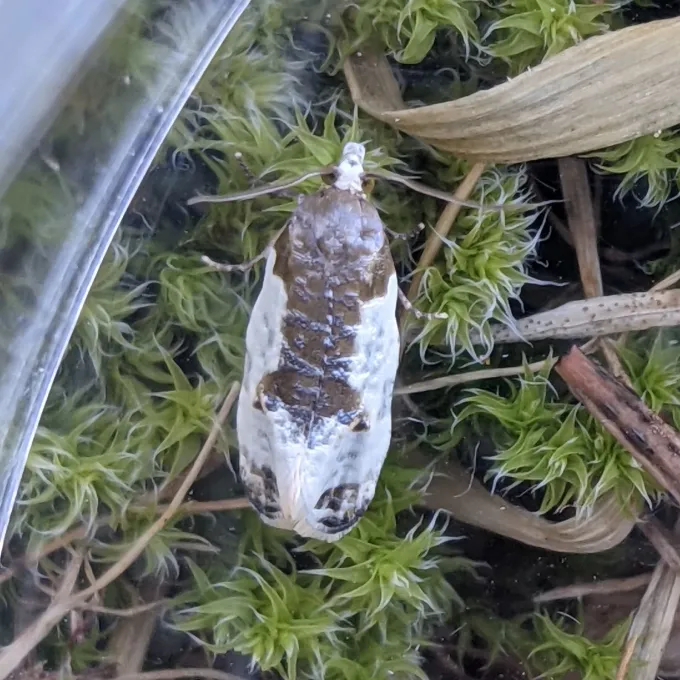
Adult moths are relatively small, characterized by a brownish-mottled appearance that allows them to blend in with bark and dry leaves. The forewings typically feature a distinct dark spot that gives the species its common name.
The larval stage consists of caterpillars that undergo several instars. As they grow, their color shifts from pale yellow to a darker, more mottled brown, which aids in camouflage while feeding on leaves.
The life cycle typically includes four stages: egg, larva, pupa, and adult. The overwintering usually occurs in the pupal stage, hidden within crevices or protected sites in leaf litter.
Adults are nocturnal and are highly attracted to artificial light sources. Monitoring adult emergence is crucial for timing agricultural interventions and preventing large-scale infestation.
What it damages
This pest primarily affects woody plants and shrubs, frequently damaging fruit trees and ornamental species. The caterpillars focus their feeding on succulent parts like young leaves, buds, and flowers.
Feeding larvae skeletonize the leaves, consuming the green tissue between veins. This drastically reduces the plant's ability to photosynthesize, which can stunt growth and overall vigor of the host plant.
During the spring, the caterpillars attack developing buds, which can lead to flower loss and reduced fruit set. This direct impact on the reproductive parts makes the pest economically significant.
Damage to foliage also creates entry points for secondary pathogens. Once the leaf tissue is injured, fungal and bacterial infections can easily spread, causing further decay of the branches.
In nursery environments, the constant feeding by leafroller populations can cause severe deformation of new shoots, rendering the saplings unsuitable for sale or commercial planting.
Signs of infestation
The most visible sign of an infestation is the webbing and rolling of leaves. Larvae silk together parts of the leaf, creating a protected shelter from which they feed undetected.
Dark frass, or larval excrement, is often visible near the leaf-rolling sites. When foliage is opened, one can usually find the caterpillar or its remnants inside the silken chamber.
Bud damage is another key indicator; affected buds often appear withered or fail to open entirely in the spring. This is particularly noticeable in susceptible tree species during the early growth phase.
Observation of nocturnal moth activity around the garden during the summer months is a strong indicator of an upcoming infestation cycle, necessitating scouting for egg masses on foliage.
- Rolled leaves tied together with silk.
- Skeletonized patterns on leaf surfaces.
- Accumulated larval droppings in webbing.
- Deformed or necrotic young buds.
- Visible damage to blossoms and tender shoots.
Control measures
A comprehensive control strategy involves both cultural and chemical management. Removing and destroying infested leaf litter in autumn significantly reduces the overwintering population.
Biological control methods, such as utilizing Bacillus thuringiensis sprays, are highly effective against young larvae. These biological agents minimize impact on non-target species and pollinators.
Chemical treatments should be applied during peak larval activity to ensure maximum efficacy. It is essential to rotate products with different modes of action to prevent the development of pesticide resistance.
Enhancing habitat for natural predators, such as parasitic wasps and predatory beetles, can help maintain population levels below the economic threshold without the need for frequent spraying.
Integrated Pest Management (IPM) practices, including the use of pheromone traps, allow growers to time applications precisely. This targeted approach saves costs and protects the surrounding ecosystem.
Taxonomy
- Latin name
- Henricus fuscodorsana
- Order
- Lepidoptera (butterflies)
- Family
- Tortricidae
- EPPO code
- HENRFU
Discussion
No discussions yet — be the first.