
Forest thrips
Heliothrips sylvanus
Description
How to identify
Forest thrips (Heliothrips sylvanus) belong to the order Thysanoptera, specifically the family Thripidae, known for their plant-feeding habits.
Adults are tiny, typically measuring between 1.5 to 2 mm in length, with a dark, slender body and characteristic fringed wings held flat along their back.
The larvae are significantly lighter in color, often yellowish or whitish, and lack developed wings, making them move quite rapidly across leaf surfaces.
They possess piercing-sucking mouthparts that allow them to penetrate plant tissue and consume cell sap, causing characteristic cellular collapse.
Because they are small and prefer to reside on the undersides of leaves, they are often overlooked until significant damage becomes apparent.
What it damages
This species primarily targets various deciduous trees and shrub species, making it a pest of concern in woodland and nursery management.
Feeding activity significantly stunts the development of young plants, leading to reduced growth rates and poor overall health in forest nurseries.
Severe infestations can lead to widespread defoliation, which weakens the trees and makes them more susceptible to secondary diseases and pathogens.
In addition to direct damage, the feeding process creates entry points for fungal infections, further complicating the plant's recovery.
During dry and hot summer periods, the impact of these pests is magnified, as the trees struggle with water balance and reduced photosynthetic efficiency.
When it appears
The life cycle of the forest thrips is highly dependent on ambient temperature, with activity increasing during the spring and summer months.
Overwintering usually occurs in the adult stage within soil debris, leaf litter, or crevices in tree bark where they seek thermal protection.
As temperatures rise in the spring, the population emerges to feed on emerging buds and fresh foliage, starting the first generation of the season.
Multiple overlapping generations can occur within a single year, allowing the population to grow rapidly under optimal environmental conditions.
By late autumn, the thrips enter a state of dormancy, migrating to sheltered overwintering sites to survive the cold winter months.
Signs of infestation
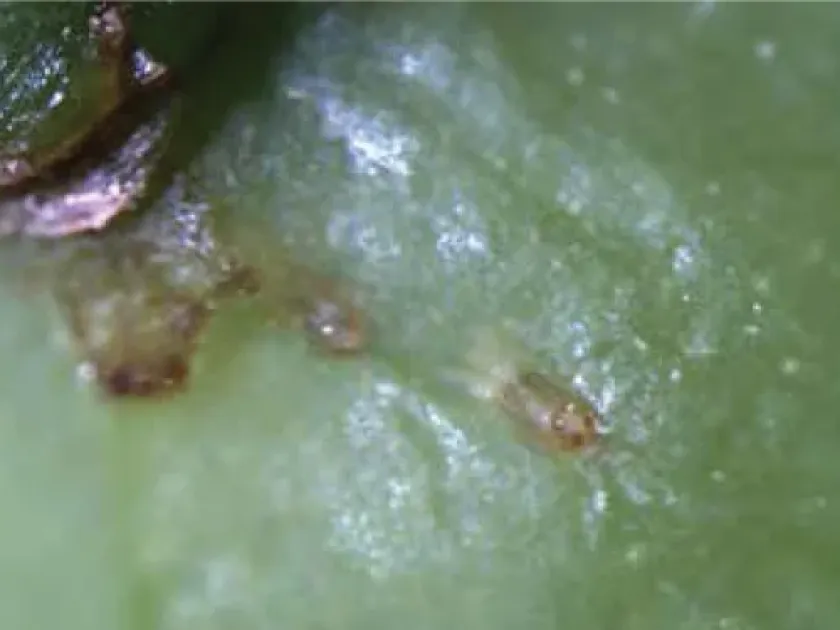
The primary symptom of infestation is the appearance of tiny, pale or silvery spots on leaves, resulting from the destruction of chloroplasts within the cells.
As the feeding continues, these spots coalesce into larger irregular patches, and the leaves may eventually wither and turn brown.
Black, shiny droplets of fecal material found on the underside of leaves are a diagnostic indicator of a thrips presence.
- Silvery-white leaf speckling
- Leaf yellowing and curling
- Presence of dark fecal spots
- Reduced plant vitality
Premature leaf drop is a common late-stage sign, indicating that the tree has sustained serious physiological stress from the insect attack.
Control measures
Monitoring using colored sticky traps is the most effective way to detect the presence of forest thrips before they reach damaging levels.
Integrated pest management strategies often focus on encouraging natural predators such as minute pirate bugs and predatory mites.
Maintaining high plant health through proper watering and fertilization helps trees better withstand and recover from thrips feeding pressure.
Chemical intervention should be considered only when populations exceed damage thresholds, using systemic or contact insecticides carefully.
Cleaning forest nursery environments by removing weed hosts and debris helps to reduce the available habitat for overwintering populations.
Taxonomy
- Latin name
- Heliothrips sylvanus
- Order
- Thrips
- Family
- Thripidae
- EPPO code
- HELTSA
Discussion
No discussions yet — be the first.