
Heliothrips
Heliothrips
Description
How to identify
Heliothrips represents a genus of thrips within the family Thripidae. These insects are characterized by their small, slender bodies and specialized fringed wings that enable them to navigate effectively.
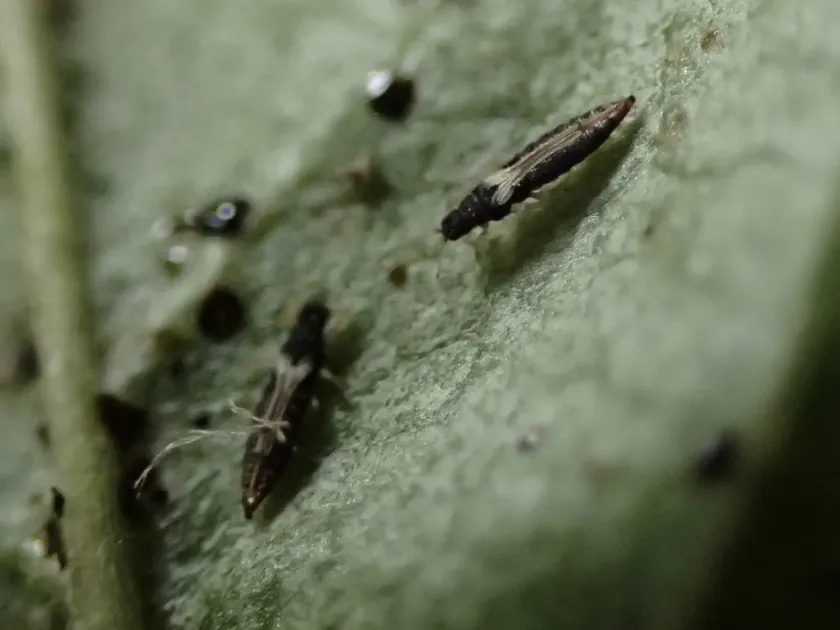
Adult Heliothrips are generally dark brown to black in color, often featuring lighter, yellowish legs. Their appearance and distinct feeding patterns are key diagnostic features for agronomists.
The life cycle involves several stages: egg, two larval instars, prepupa, pupa, and adult. This development occurs primarily on the host plant, often in protected microenvironments.
These pests thrive in warm, humid conditions, which frequently occur in commercial greenhouse environments. Their developmental speed is highly dependent on ambient temperatures.
Unlike some other thrips species, Heliothrips often exhibit a colonial lifestyle, with groups of nymphs and adults aggregating on the underside of leaves to feed and develop.
What it damages
Heliothrips are polyphagous pests that target a wide array of plants, including ornamental species, citrus trees, and various greenhouse crops, causing significant economic losses.
Damage is inflicted through piercing-sucking feeding behavior. The insect punctures plant cells and extracts sap, which leads to the collapse of the epidermis and internal tissue.
The immediate physiological impact is a loss of photosynthetic surface area, which slows down the plant's overall growth rate and diminishes its vigor and structural integrity.
Affected foliage typically exhibits discoloration, starting as silvery or whitish patches that gradually expand, leading to leaf distortion, brittleness, and eventually necrosis.
In addition to direct feeding damage, these insects are known vectors for various plant viruses, which can complicate management and lead to secondary systemic infections.
Signs of infestation
The most reliable sign of a Heliothrips infestation is the development of silvery-white streaks or spots on the upper leaf surface, created by the destruction of cellular content.
The presence of numerous black, granular fecal spots on the underside of leaves is a hallmark symptom of their activity, acting as a clear indicator of a resident population.
Severe infestations often cause leaves to turn pale, become stunted, and develop irregular brown patches, which can be mistaken for physiological disorders if not examined closely.
Observation of insects moving slowly across the leaf surface, particularly on the lower foliage, confirms the active presence of this pest rather than environmental stress.
Premature leaf drop is a common late-stage indicator, suggesting that the pest population has reached a critical density that is severely impacting plant health.
Control measures
Integrated Pest Management (IPM) for Heliothrips begins with monitoring, utilizing blue sticky traps to detect the arrival and population density of flying adults early.
Cultural practices, such as maintaining optimal humidity, proper plant spacing, and the rigorous removal of crop residues and weeds, are essential for limiting population growth.
Biological control agents, including predatory mites (e.g., Amblyseius species) and predatory bugs (e.g., Orius), provide sustainable solutions for controlling larvae in greenhouse settings.
Chemical control should be implemented judiciously, focusing on contact and systemic insecticides. Rotating chemical classes is vital to prevent the development of insecticide resistance.
Thorough spray coverage is necessary, especially on the undersides of leaves where these insects reside. Utilizing wetting agents can improve the efficacy of spray applications significantly.
Taxonomy
- Latin name
- Heliothrips
- Order
- Thrips
- Family
- Thripidae
- EPPO code
- HELTSP
Discussion
No discussions yet — be the first.