
Spinach moth
Heliodines roesella
Description
How to identify
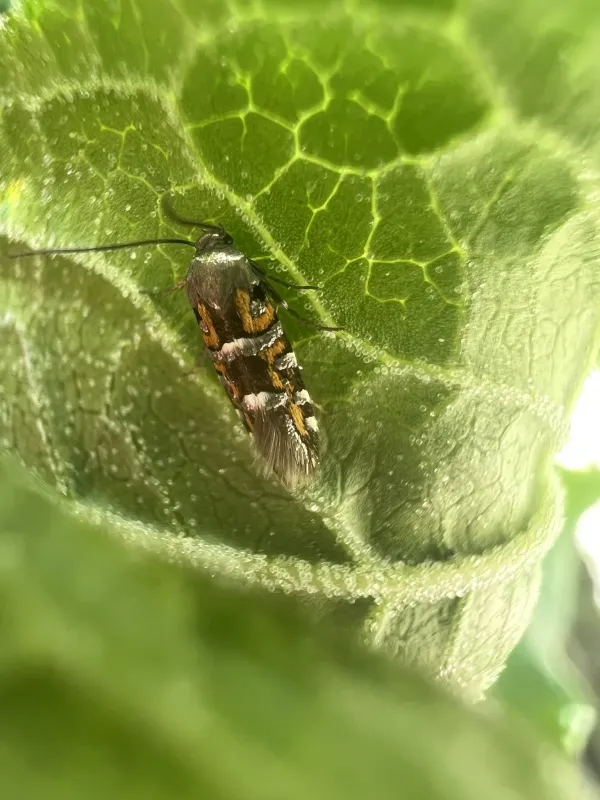
The spinach moth (Heliodines roesella) is a small lepidopteran insect belonging to the family Heliodinidae. It is characterized by its bright coloration and diurnal activity patterns.
Adult moths are notable for their vibrant wings, which often exhibit a metallic sheen, making them easily distinguishable from other small field moths during the day.
The life cycle follows a complete metamorphosis: egg, larva (caterpillar), pupa, and adult. Each stage is adapted to survival on host plants within the Chenopodiaceae family.
Temperature significantly influences the speed of development, with optimal growth occurring in warm, temperate conditions typical of the vegetable growing season.
Proper identification of the larvae is crucial for early detection, as they are specifically adapted for mining the leaves of their host plants.
What it damages
This pest primarily targets plants in the Chenopodiaceae family, with garden spinach being the main commercial host susceptible to damage.
Besides spinach, the larvae can also attack beet crops, causing economic losses in vegetable gardens and large-scale agricultural operations alike.
The damage is caused by larvae that mine the internal tissues of leaves. They consume the mesophyll, leaving only the outer epidermal layers intact.
This feeding behavior results in unsightly leaf blemishes, making the produce unmarketable due to the presence of larval frass and tissue decay.
In cases of high infestation, the photosynthetic capacity of the plant is significantly impaired, leading to stunted growth and reduced crop yields.
Signs of infestation
Early symptoms include pale, serpentine mines on the leaves, which are caused by the larvae feeding inside the leaf tissue.
Black or dark brown dots within the mined areas are clear indicators of larval presence, representing the waste material deposited as they feed.
As the larvae mature, the mines expand and may coalesce, eventually causing the leaves to turn yellow, wither, and collapse under stress.
Damaged leaves often become thin and translucent. If infection occurs during the seedling stage, the entire plant may fail to develop properly.
Secondary infections, such as fungal or bacterial rots, often follow the initial damage caused by the moth, further degrading the health of the crop.
Control measures
The most effective strategy for managing the spinach moth is based on cultural practices, such as maintaining a robust crop rotation schedule.
Eliminating host weeds from the Chenopodiaceae family, such as lambsquarters and pigweed, is essential to minimize the population of the pest.
Fall plowing is a recommended mechanical measure, as it disrupts the overwintering pupae and prevents them from emerging in the following season.
In organic and sustainable systems, biological insecticides containing Bacillus thuringiensis have proven effective against young larvae.
- Monitoring adult moth flights using pheromone traps.
- Removing and destroying infested plant parts immediately.
- Using protective row covers to prevent adults from laying eggs on young spinach plants.
Taxonomy
- Latin name
- Heliodines roesella
- Order
- Lepidoptera (butterflies)
- Family
- Heliodinidae
- EPPO code
- HELNRO
Discussion
No discussions yet — be the first.