
Heliodinid moths
Heliodines
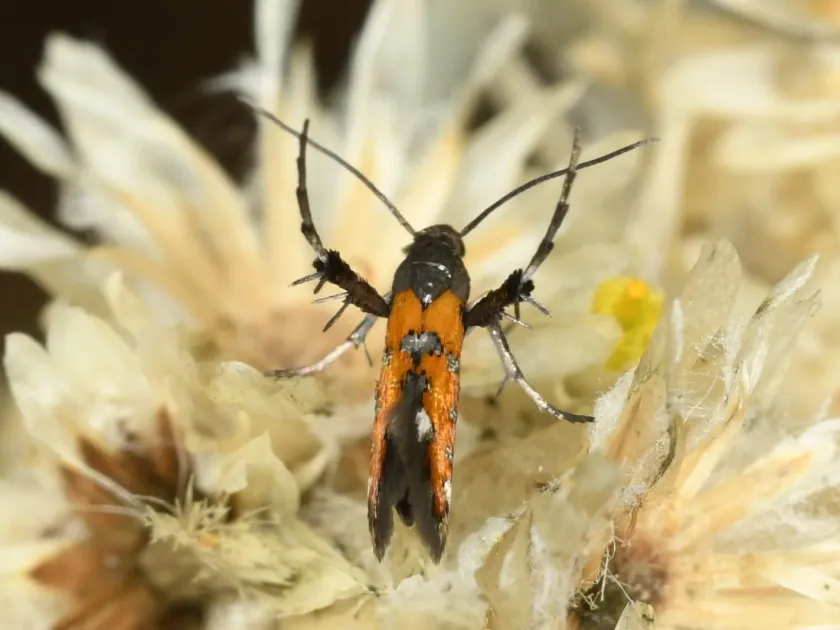
Description
How to identify
Heliodinid moths (family Heliodinidae) are a group of small, often brightly colored Lepidoptera known for their elegant appearance and metallic wing patterns.
The life cycle of these insects consists of four distinct stages: egg, larva, pupa, and adult, following the classic developmental path of moths.
The larvae are specialized, often exhibiting a leaf-mining habit where they tunnel within the leaf mesophyll, providing them with internal shelter.
Adult moths are typically diurnal, showing peak activity during sunny periods, which aids in their mating and distribution across host plants.
Pupation usually occurs in a silken cocoon either on the host plant surface or within the soil, depending on the specific species' adaptations.
What it damages
Heliodinid moths affect a range of herbaceous plants, including various weeds and certain horticultural or agricultural crops that fall within their host range.
By consuming the internal tissues of leaves, the larvae disrupt the photosynthetic process, which can lead to reduced plant vigor and stunted growth.
Significant damage is observed when high larval populations feed simultaneously, causing widespread blotching or mining of the leaves.
In commercial agriculture, heavy infestation can lead to economic losses by reducing the aesthetic quality of ornamental plants or the yield of food crops.
The severity of damage is often correlated with the growth stage of the host plant, with younger plants being the most susceptible to structural impairment.
When it appears
Adult emergence typically aligns with warmer months, as their activity is highly dependent on favorable environmental temperatures and light conditions.
Many species complete multiple generations per year, creating a prolonged window of risk for susceptible vegetation throughout the growing season.
Larval development is synchronized with the vegetative growth of their host plants, ensuring they have consistent access to high-quality nutrients.
Winter survival is typically achieved through diapause, where the insect remains in the pupal stage, often sheltered in plant debris or soil.
As spring approaches, the emergence of the first generation marks the onset of potential infestation for new plant growth.
Signs of infestation
The primary symptom of a Heliodinid infestation is the presence of distinctive mines, which appear as winding, whitish or brownish trails within the leaf.
Close inspection often reveals dark frass (larval waste) trapped inside these mines, confirming the presence of active larvae beneath the epidermis.
- Yellowing of leaf tissue surrounding the larval tunnels.
- Distortion or curling of leaves as a result of disrupted structural integrity.
- Premature senescence and leaf drop in cases of heavy infestation.
- Fine, silken webbing on the leaf underside near the mining sites.
If the infestation reaches the stem or petiole, overall plant growth may be significantly inhibited, leading to loss of foliage density.
Control measures
Effective management begins with routine monitoring using pheromone traps to identify the timing of adult flights and egg-laying peaks.
Cultural practices, such as removing infested plant material and managing weeds, are essential to reduce local pest populations and break the life cycle.
Chemical control should target the early larval stages, as late-stage larvae protected deep within the leaf mines are less susceptible to many treatments.
The application of systemic insecticides is highly recommended, as these can penetrate the plant tissues to reach the hidden larvae effectively.
Biological control, involving the encouragement of natural predators and parasitoids, remains a sustainable strategy to keep pest numbers below economic thresholds.
Taxonomy
- Latin name
- Heliodines
- Order
- Lepidoptera (butterflies)
- Family
- Heliodinidae
- EPPO code
- HELNSP
Discussion
No discussions yet — be the first.