
Heligmosomoides polygyrus
Heligmosomoides polygyrus
Description
How to identify
Heligmosomoides polygyrus is a parasitic nematode belonging to the order Strongylida and the family Heligmosomidae, primarily affecting rodents.
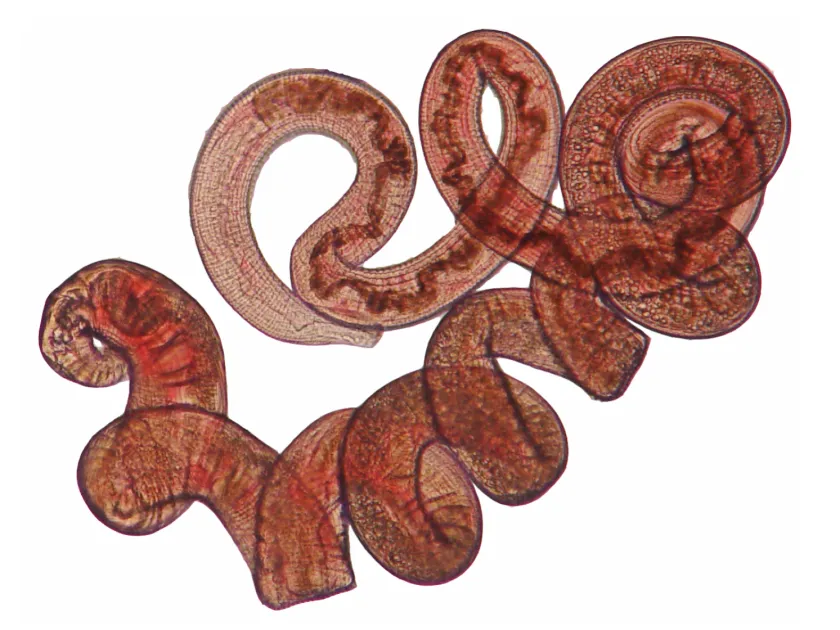
The adult worms are typically reddish in color and coil into a spiral shape, a distinct morphological feature used for identification under a microscope.
Sexual dimorphism is apparent, with males measuring 5–8 mm in length, while females are significantly larger, reaching up to 15–20 mm.
The eggs are thin-shelled and oval, containing a developing embryo that hatches into larvae under suitable environmental conditions.
As an obligate parasite of the small intestine, this nematode has been extensively studied in biomedical research due to its interaction with the host immune system.
What it damages
While this parasite does not directly damage crops, it causes significant health issues in rodent populations, which can impact research outcomes and animal welfare.
Infestation results in weight loss, anemia, and reduced physical condition of the hosts, which is detrimental to laboratory studies involving mice.
In wild populations, high parasite burdens can reduce the fitness of small mammals, potentially influencing local ecosystem dynamics.
Nutrient absorption is frequently impaired due to the physical damage the worms cause to the mucosal lining of the host's small intestine.
Effective control of this nematode is essential to maintain high standards of laboratory animal health and to ensure the validity of scientific experiments.
When it appears
The parasite has a direct life cycle, where eggs are shed in the feces and develop into infective third-stage larvae in the environment.
Warm and moist environments are ideal for larval survival and development, making outdoor transmission more prevalent during certain seasons.
In indoor laboratory settings, transmission can occur throughout the year due to consistent climate control and potential lapses in sanitation.
The larvae are ingested by the host through contaminated food or water, leading to the establishment of the parasite in the gut.
The prepatent period, from ingestion to the appearance of eggs in feces, is typically between 9 and 14 days, facilitating rapid spread within a group.
Signs of infestation
Infected animals often exhibit lethargy, rough fur, and significant weight loss despite having access to adequate food supplies.
Digestive disturbances and gastrointestinal distress are common clinical signs resulting from the parasite's attachment to the intestinal wall.
Diagnostic confirmation is achieved through fecal flotation tests, which allow for the visualization of characteristic eggs under microscopy.
Post-mortem examination may reveal mucosal inflammation and visible worm nodules in the small intestine of the affected animal.
Severe infestations can lead to anemia and, in some cases, the death of younger or immunocompromised individuals within the population.
Control measures
Controlling Heligmosomoides polygyrus requires a combination of hygiene protocols and targeted anthelmintic treatments.
- Administering veterinary-approved anthelmintic medications to the affected rodent population.
- Implementing rigorous sanitation and regular cleaning of housing facilities to remove feces.
- Enforcing strict quarantine procedures for any new animals introduced to a colony.
- Utilizing autoclaved or heat-treated bedding to ensure the absence of infective larvae.
Regular monitoring of animal health through fecal screening is a proactive step in preventing outbreaks within a research facility.
Overall, maintaining biosecurity and reducing environmental contamination remain the cornerstones of managing this parasitic infection effectively.
Taxonomy
- Latin name
- Heligmosomoides polygyrus
- Order
- Nematodes
- Family
- Heligmosomidae
- EPPO code
- HLGSPO
Discussion
No discussions yet — be the first.