
Heilipus trifasciatus
Heilipus trifasciatus
Description
How to identify
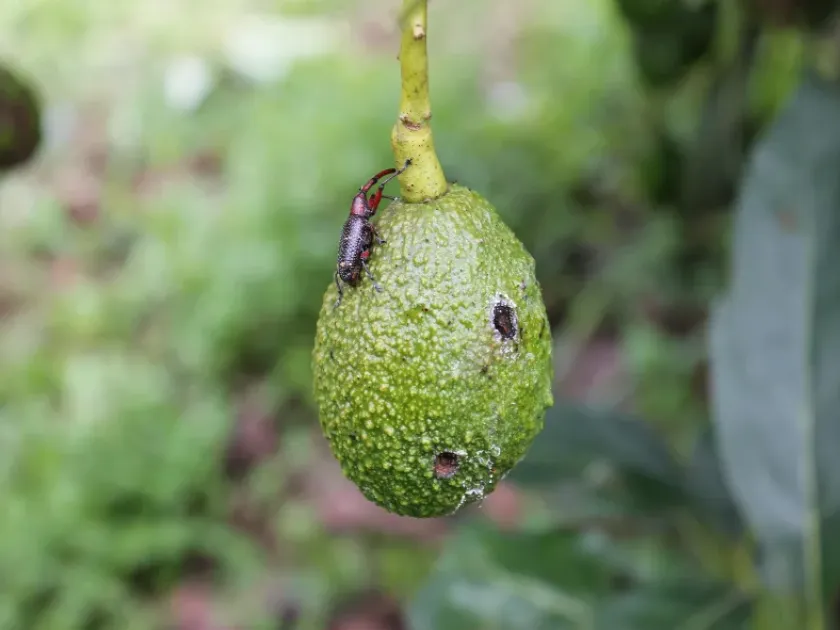
Heilipus trifasciatus is a significant species of weevil belonging to the family Curculionidae. It is recognized by its robust, elongated body and a prominent snout, which are characteristic features of this diverse family of beetles.
The common name refers to the three distinct transverse stripes found on its elytra (wing covers). These markings, combined with a dark brown or blackish coloration, provide the beetle with effective camouflage against the bark of host trees.
The larvae are typically creamy-white, legless, and C-shaped, equipped with a strong head capsule designed for boring into plant tissues. They are rarely seen, as they spend their entire development period inside the host plant's fruit or stems.
The life cycle encompasses four stages: egg, larva, pupa, and adult. The pupal stage usually occurs within the tunnels created by the larva, providing the insect with protection from environmental fluctuations and many predators.
Adult beetles are primarily nocturnal, showing heightened activity after sunset, which makes monitoring and manual collection difficult for orchard managers during daylight hours.
What it damages
The primary host for Heilipus trifasciatus is the avocado (Persea americana). Both adults and larvae can inflict serious economic losses on plantations by attacking both the fruits and the stems of the trees.
Larval feeding causes the most severe damage; as they bore through the fruit, they compromise the integrity of the pulp, leading to rapid decay and making the fruit completely unmarketable for both local and export markets.
Adult beetles feed on the bark and young shoots, creating wounds that serve as entry points for secondary bacterial and fungal pathogens, which can lead to branch dieback or even the death of young trees.
Severe infestations often result in the premature drop of young fruit, a symptom that can be misinterpreted as a response to physiological stress, such as water deficit or nutrient imbalance.
The cumulative damage to the tree's vascular system, caused by extensive larval boring in the stems, can result in stunted growth and a significant reduction in overall tree productivity over several seasons.
Signs of infestation
The most reliable sign of an infestation is the presence of small, circular entry holes on the skin of avocado fruits, often accompanied by resinous exudations or spots of dried sap.
When an infested fruit is opened, the internal tissues will show clear evidence of feeding tunnels and necrosis, often accompanied by a distinct odor associated with decomposing organic matter.
Visible scarring or feeding marks on the bark of younger trees are key indicators that adult beetles are present in the orchard. These marks are often found near the base of the tree or on major scaffold branches.
During the night, using a flashlight to inspect tree trunks can reveal the presence of adult beetles, as they feed openly on the surface of the bark during the dark hours.
- Circular holes on the fruit surface.
- Premature fruit drop in the orchard.
- Presence of frass (larval waste) near entry points.
- Wilting of specific branches due to internal boring.
Control measures
The most crucial cultural practice for managing this pest is the rigorous sanitation of the orchard, which includes the immediate collection and destruction of all infested fruits, whether still on the tree or fallen on the ground.
Implementing a regular monitoring program using pheromone-based traps or night inspections helps in determining the precise timing for chemical or biological interventions, ensuring higher efficacy.
Chemical control should be applied targeting the adult stage. The use of contact insecticides during peak nocturnal activity can significantly reduce the beetle population before they have the chance to lay eggs.
Research into biological control agents, such as entomopathogenic fungi (e.g., Beauveria bassiana), shows promise as a sustainable alternative to traditional chemical pesticides for managing Heilipus species.
Pruning of infested branches and maintaining tree vigor through balanced fertilization and irrigation are essential components of an Integrated Pest Management (IPM) strategy to withstand the pressure of this borer.
Taxonomy
- Latin name
- Heilipus trifasciatus
- Order
- Coleoptera (beetles)
- Family
- Curculionidae
- EPPO code
- HEILTR
Discussion
No discussions yet — be the first.