
Avocado weevil
Heilipus catagraphus
Description
How to identify
The avocado weevil (Heilipus catagraphus) is a member of the Curculionidae family and the order Coleoptera. It is a highly specialized pest known for targeting avocado crops in tropical regions.
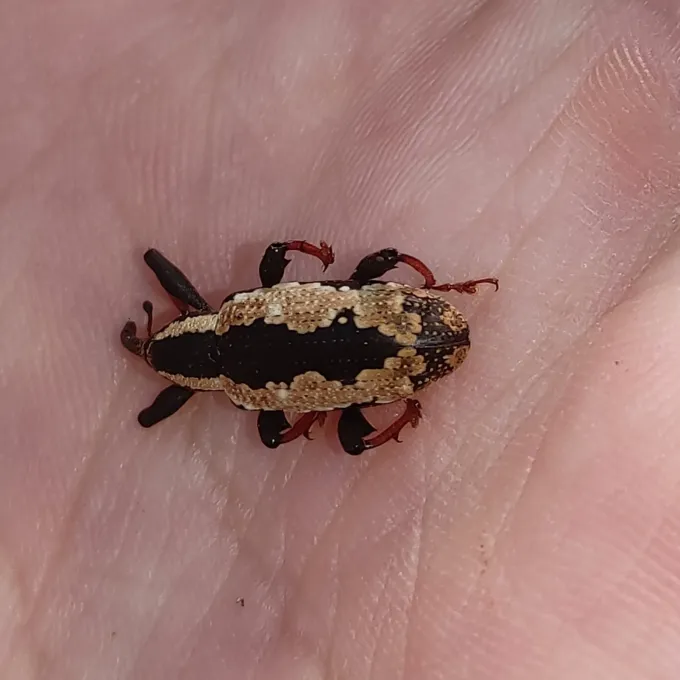
Adult weevils are characterized by their elongated rostrum, which they use to feed and prepare oviposition sites. Their coloration and texture provide excellent camouflage against the bark of host trees.
Larvae are legless, fleshy, and light-colored, specifically adapted to burrowing deep into fruit tissue. This cryptic lifestyle makes early detection of an infestation challenging for growers.
The insect undergoes a complete metamorphosis. In regions with favorable temperatures, the avocado weevil can reproduce continuously, provided that avocado fruits are available at various maturity stages.
Understanding the synchronization between the weevil's life cycle and the avocado tree's fruit-bearing stages is crucial for developing effective management programs.
What it damages
The primary host for this pest is Persea americana (avocado). While adults feed on leaves and young shoots, the most severe damage is caused by larvae feeding inside the fruit.
Female weevils puncture the fruit skin to lay eggs. These punctures not only damage the fruit directly but also act as entry points for secondary pathogens that lead to fruit decay and rot.
Upon hatching, the larvae tunnel through the pulp and seeds of the avocado, rendering the fruit commercially valueless and often causing it to drop from the tree prematurely.
Economic losses can be catastrophic in neglected orchards, where high pest populations can destroy a significant percentage of the harvest before it even reaches maturity.
Symptoms of infestation include small, dark punctures on the fruit surface, often accompanied by necrotic tissue or sap exudation where the weevil has been active.
Control measures
Effective management of the avocado weevil requires an Integrated Pest Management (IPM) approach. Sanitation is the most critical first step in reducing the local pest population.
All fallen fruit should be collected and destroyed immediately to prevent larvae from completing their life cycle and emerging as a new generation of adults.
Chemical control should be applied strategically, targeting adults before they can deposit eggs. The use of systemic insecticides, when approved and necessary, can help protect the fruit during vulnerable development stages.
Biological control methods are being researched and utilized, focusing on parasitoids and entomopathogenic fungi that can naturally suppress weevil populations in the orchard.
- Rigorous sanitation to remove fallen and damaged fruit.
- Use of pheromone or visual traps to monitor population density.
- Targeted application of insecticides based on crop phenology.
- Maintaining healthy tree vigor to increase natural resistance.
Taxonomy
- Latin name
- Heilipus catagraphus
- Order
- Coleoptera (beetles)
- Family
- Curculionidae
- EPPO code
- HEILCA
Discussion
No discussions yet — be the first.