
Avocado weevil
Heilipus apiatus
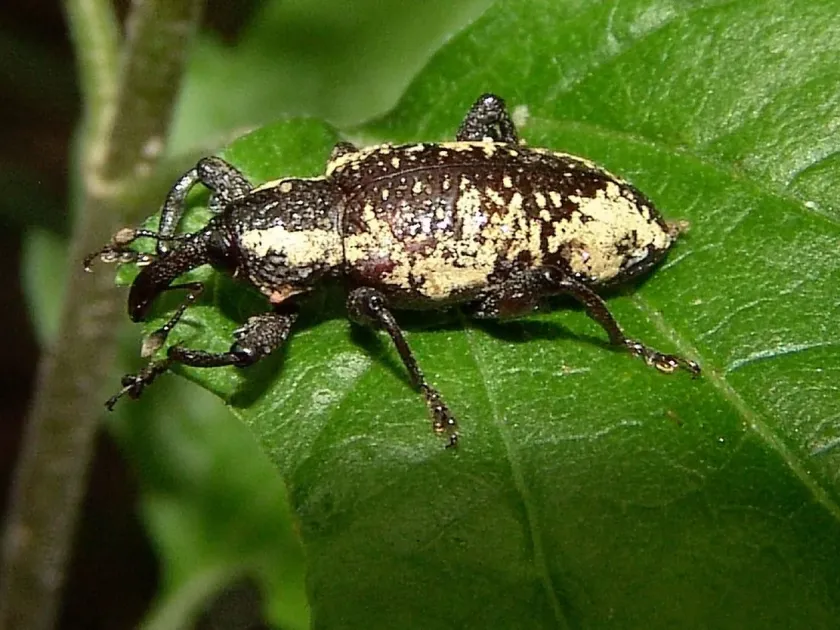
Description
How to identify
The avocado weevil (Heilipus apiatus) is a significant pest belonging to the Curculionidae family within the order Coleoptera. Adult weevils are recognizable by their elongated rostrum, which is a hallmark feature of this beetle family.
These insects generally possess a dark coloration, sometimes with distinctive patterns on the elytra, providing them with excellent camouflage against the bark of avocado trees. They are relatively large compared to other weevil species.
The larval stage consists of legless, creamy-white grubs with a well-developed head capsule. These larvae spend their entire developmental period concealed within the tissues of the host plant.
The life cycle encompasses a complete metamorphosis, including the egg, larva, pupa, and adult stages. Each stage is adapted to survive within specific niches of the avocado tree structure.
Due to their cryptic habits, adult weevils often remain hidden during daylight hours in bark crevices or leaf axils, requiring strategic monitoring to ensure accurate identification of an infestation.
What it damages
The avocado weevil primarily targets the avocado tree (Persea americana). Infestations can occur in both young seedlings and mature, fruit-bearing trees, leading to potential significant economic losses in commercial orchards.
Adult weevils feed on young shoots, petioles, and buds, causing physical damage that disrupts nutrient flow and leads to the wilting and death of affected branches.
The most severe damage is caused by the larvae, which bore into fruits or stems. Tunneling within the fruit ruins the quality, making it unmarketable, while stem damage can cause structural weakness.
Once the larvae penetrate the stem or branches, they create pathways that facilitate secondary infections from fungi and bacteria, further compromising the tree's overall vitality.
- Total loss of fruit marketability due to internal damage.
- Structural weakening of branches and young shoots.
- Increased susceptibility to secondary pathogens.
- Reduced yield and stunted tree growth.
Signs of infestation
The presence of the pest is indicated by small entry holes found on the fruit surface or tree bark. Frass or wood shavings around these holes are clear evidence of larval boring activity.
Visible changes in foliage, such as yellowing or wilting of specific branches, often point to underlying damage in the conductive tissues of the wood caused by the larvae.
Deformed fruit or premature fruit drop can signal an active infestation. Opening such fruits will reveal internal tunnels filled with larval excrement, confirming the presence of the pest.
Adult beetles can occasionally be spotted at night using artificial lighting, as they often emerge to feed and mate during darker hours, making nocturnal inspections highly effective.
A general decline in tree health, including leaf shedding and the death of small branches, is a common indicator of a persistent, high-density population of avocado weevils.
Control measures
Effective management requires a combination of regular monitoring and integrated pest management practices to suppress populations below economic injury thresholds.
Sanitation is a critical control method; collecting and destroying fallen fruit and pruning infested branches helps prevent the next generation of weevils from emerging.
Chemical control can be employed during periods of high pest activity, targeting adult weevils as they emerge after hibernation. Systemic insecticides may be used, provided they comply with safety regulations.
Biological control methods, such as the application of entomopathogenic fungi or utilizing natural predators, represent a sustainable approach to managing the weevil population in organic orchards.
Maintaining strong tree vigor through proper irrigation, fertilization, and site management helps trees withstand minor feeding pressure and supports quicker recovery from damage.
Taxonomy
- Latin name
- Heilipus apiatus
- Order
- Coleoptera (beetles)
- Family
- Curculionidae
- EPPO code
- HEILAP
Discussion
No discussions yet — be the first.