
Heilipus
Heilipus
Description
How to identify
The genus Heilipus belongs to the Curculionidae family, commonly known as true weevils. These beetles are characterized by their elongated snouts (rostrum), which are used for feeding and laying eggs.
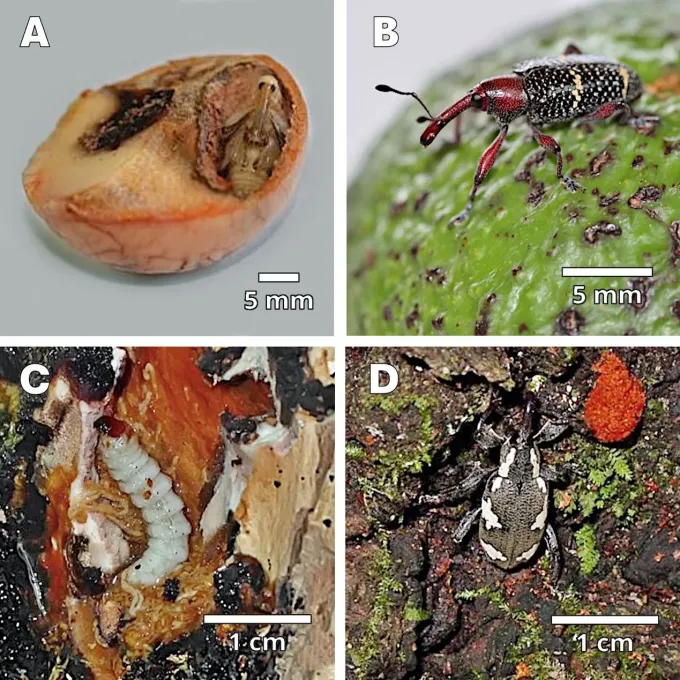
Adult beetles possess a robust, chitinous exoskeleton, typically dark brown or black, often with mottled patterns that help them blend into the bark of host trees. This structural toughness makes them resilient to many external factors.
Larvae are legless, C-shaped grubs with creamy-white bodies and hardened brown head capsules. They are specialized for internal feeding within plant tissues, making them cryptic and hard to detect.
Pupation typically occurs inside the host's fruits or occasionally in the soil, where the insect constructs a protective chamber. The transformation phase is completed within this hidden environment.
The insects are primarily nocturnal, often remaining inactive or hidden within crevices during daylight hours to avoid predation and desiccation.
What it damages
Species such as Heilipus lauri are major economic pests for avocado production. The larvae bore directly into the seed of the fruit, consuming it entirely and rendering the fruit worthless.
Besides avocado, these weevils target various plants in the Lauraceae family. The damage is severe as it occurs internally, often going unnoticed until the fruit begins to rot or drops prematurely.
Feeding activity by larvae creates extensive galleries, which serve as entry points for fungal pathogens, leading to rapid deterioration of the produce before it reaches the market.
Adult weevils also cause damage by feeding on stems and young shoots. This feeding weakens the plant structure and reduces the overall vigor of the tree, making it susceptible to other stressors.
Due to the significant impact on fruit quality, Heilipus presence often results in strict quarantine regulations and trade restrictions for agricultural exports.
When it appears
The seasonal activity of Heilipus is closely tied to the phenology of its host plants, specifically the development and maturation stages of the fruit.
Reproductive cycles are often continuous in tropical climates, allowing for multiple generations to overlap and persist throughout the growing season.
Peak infestation periods typically align with fruit set and development, as these stages provide the necessary nutritional resources for the development of the larvae.
Overwintering occurs primarily in the adult stage, often sheltering under tree bark, in leaf litter, or in the soil, waiting for favorable conditions to emerge.
In greenhouse settings or protected cultivation, the pest can maintain an active population year-round, requiring consistent and vigilant monitoring efforts.
Signs of infestation
Visible signs of infestation are often subtle, usually starting as small pin-sized puncture marks on the skin of the fruit where females have deposited eggs.
- Premature yellowing and dropping of young or mature fruits.
- Presence of frass (excrement) around entry or exit holes on the fruit.
- Internal tunnels and cavities found within the seed upon cutting the fruit.
- Deformed fruits showing uneven ripening or dark, necrotic patches.
- Detection of adult weevils on trunks or branches during night inspections.
Control measures
Strict phytosanitary measures are the first line of defense to prevent the introduction and spread of these pests into new geographic regions.
Sanitation is critical: all fallen fruits must be collected and destroyed immediately to prevent larvae from completing their life cycle in the soil.
Chemical control involving systemic insecticides may be applied, but must be timed precisely to target adult beetles before they bore into the fruit or stems.
The use of pheromone-based traps is highly recommended for monitoring population density and timing intervention strategies effectively.
Integrated Pest Management (IPM) practices, including proper tree pruning and habitat modification, help decrease the number of suitable overwintering sites for the weevils.
Taxonomy
- Latin name
- Heilipus
- Order
- Coleoptera (beetles)
- Family
- Curculionidae
- EPPO code
- HEILSP
Discussion
No discussions yet — be the first.