
Plum fruit moth
Hedya pruniana
Description
How to identify
The plum fruit moth (lat. Hedya pruniana) is a species of moth in the family Tortricidae, recognized as a significant pest of stone fruit trees.
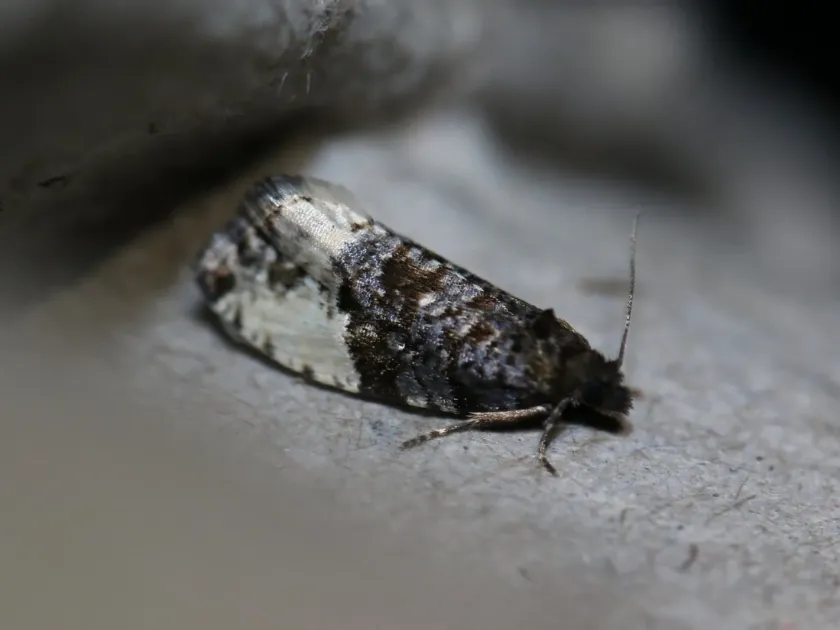
The adult moth is relatively small, with a wingspan ranging from 14 to 18 mm, characterized by a distinct dark basal area and a lighter outer portion of the forewings.
Larvae are typically 12–15 mm in length and exhibit a brownish or greyish body color with a dark, sclerotized head capsule.
Pupation occurs within leaf shelters, where the larva spins a silk cocoon inside a rolled or folded leaf to undergo metamorphosis.
This species is widely distributed across temperate regions and is frequently found in commercial orchards and home gardens alike.
What it damages
Larvae are the primary cause of damage, feeding on buds, blossoms, and leaves of stone fruits such as plums, cherries, and damsons.
In spring, young larvae penetrate the buds, consuming the internal tissues and preventing normal foliage or blossom development.
Later in the season, larvae roll leaves into tubes or create webbed clusters, where they skeletonize the leaf tissue between the veins.
Severe infestations can lead to significant canopy damage, reducing the photosynthetic capacity of the tree and impacting fruit development.
Direct damage to reproductive structures causes bud loss and flower abortion, which directly correlates to a lower final harvest yield.
When it appears
The species overwinters as young larvae within silk cocoons situated in bark crevices or near bud scales on the host trees.
Activity resumes in early spring when temperatures allow for larval emergence and the beginning of feeding on developing buds.
The flight period of adult moths typically occurs between June and July, with the insects being nocturnal or crepuscular in their activity.
The life cycle involves a single generation per year in most areas, though local climate conditions may influence the timing of emergence.
Eggs are laid individually or in small groups on the upper surface of leaves, where the next generation of larvae will hatch and begin feeding.
Signs of infestation
The presence of webbing between leaves or around bud clusters is the most prominent indicator of an active infestation.
Browned or desiccated buds that failed to open in spring are classic signs of overwintered larval activity during the early growth stage.
Rolled-up leaves, often referred to as "leaf-rolls," serve as protected dwellings for the larvae and are easily spotted during routine orchard scouting.
Frass (larval excrement) trapped within the silken webs is a clear sign that larvae are currently present and feeding on the foliage.
Visible skeletonization of leaves, where only the vein structure remains, indicates a high population density of the pest.
Control measures
Cultural control practices include the removal of loose bark and clearing debris from the orchard floor to eliminate overwintering sites.
Manual removal of infested leaves and webbed clusters can effectively reduce larval populations in small-scale plantings.
Biological control options involve the application of Bacillus thuringiensis or other microbial insecticides during the early larval development stages.
Chemical control should be timed based on monitoring, targeting the larvae before they protect themselves within rolled leaves or fruit.
- Monitoring with pheromone traps to determine peak flight times.
- Application of selective insecticides at the correct phenological stage.
- Encouraging natural predators and parasitoids to support long-term population balance.
Taxonomy
- Latin name
- Hedya pruniana
- Order
- Lepidoptera (butterflies)
- Family
- Tortricidae
- EPPO code
- ARGPPR
Discussion
No discussions yet — be the first.