
Rose leaf roller
Hedya ochroleucana
Description
How to identify
The rose leaf roller (Hedya ochroleucana) is a moth belonging to the family Tortricidae, well-known for its role as a minor yet persistent pest in gardens.
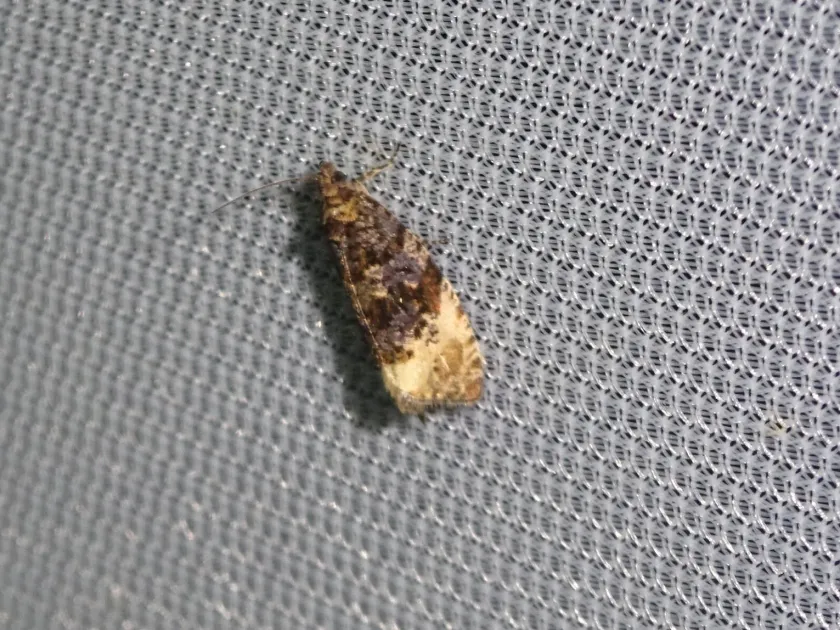
Adult moths have a wingspan of approximately 14–18 mm. Their forewings feature a distinctive marbled pattern with grey, white, and dark patches that camouflage them perfectly against tree bark.
Larvae are small caterpillars measuring about 15 mm in length. Their bodies are typically greyish-brown or dirty-green with a prominent dark-brown to black head capsule.
The pupae are brown and are usually enclosed within a thin silk cocoon, hidden inside the rolled leaves or under the bark of the host plant throughout the winter.
These moths are primarily nocturnal, making them difficult to spot during daylight hours, even when their population density in the garden is high.
What it damages
The primary hosts for this pest include members of the Rosaceae family, specifically roses, wild roses, apple trees, cherry trees, and various other fruit trees.
Larvae feed primarily on young leaves, buds, and terminal shoots, causing significant structural damage by consuming internal tissues and skeletal structures.
The damage often leads to the deformation of new growth, as the caterpillar binds leaves together with silk, preventing the plant from developing normally.
Floral buds are also targeted; larvae eat their way into the buds, often preventing the flowers from ever opening, which is particularly devastating for decorative gardens.
Heavy infestations can result in extensive defoliation, which severely weakens the plant and reduces its overall vigor and resistance to other environmental stressors.
When it appears
The life cycle of the rose leaf roller is univoltine, meaning there is only one generation per year, with the larvae spending the winter in a state of diapause.
During spring, as temperatures rise and plants begin their vegetative phase, the hibernating larvae emerge to feed on developing buds and tender young leaves.
Pupation typically occurs from late May to June, inside the nests the larvae constructed by rolling up leaves or webbing foliage together with their silk.
The adult moth flight period takes place throughout June and July. During this time, mating occurs, and females lay eggs on the surface of host leaves.
By late summer, the newly hatched larvae begin to feed, though their activity is limited before they seek secure overwintering sites as the weather turns colder.
Signs of infestation
The most tell-tale sign of a rose leaf roller infestation is the presence of leaves that have been rolled, folded, or tied together using fine silk threads.
Unfolding these leaves usually reveals a small caterpillar inside, accompanied by dark excrement pellets which are a clear indicator of active feeding.
Look for irregularly shaped holes in the foliage and "skeletonized" leaves where the soft tissue has been consumed, leaving only the veins behind.
Terminal shoots that appear stunted, wilted, or tightly bound together by webbing are further evidence of an active colony working in that area of the shrub.
- Tightly rolled or folded leaves.
- Visible silk webbing on leaf surfaces and buds.
- Skeletonized leaf patches.
- Stunted or deformed shoot tips.
Control measures
Manual removal is highly effective in small gardens: simply inspect the plants regularly and pick off the rolled leaves containing the caterpillars to dispose of them.
Cultural practices, such as removing fallen leaves in autumn and pruning infested branches, can significantly disrupt the pest's overwintering habitat.
Biological control using Bacillus thuringiensis sprays can provide effective management while maintaining the safety of beneficial insects like bees and predators.
In cases of severe outbreaks, targeted application of soft systemic insecticides may be necessary during the early stages of larval emergence in the spring.
Maintaining healthy plant growth through proper fertilization and watering helps ensure that the plants have the resilience to withstand occasional pest damage.
Taxonomy
- Latin name
- Hedya ochroleucana
- Order
- Lepidoptera (butterflies)
- Family
- Tortricidae
- EPPO code
- ARGPOC
Discussion
No discussions yet — be the first.