
Hedya nubiferana
Hedya nubiferana
Description
How to identify
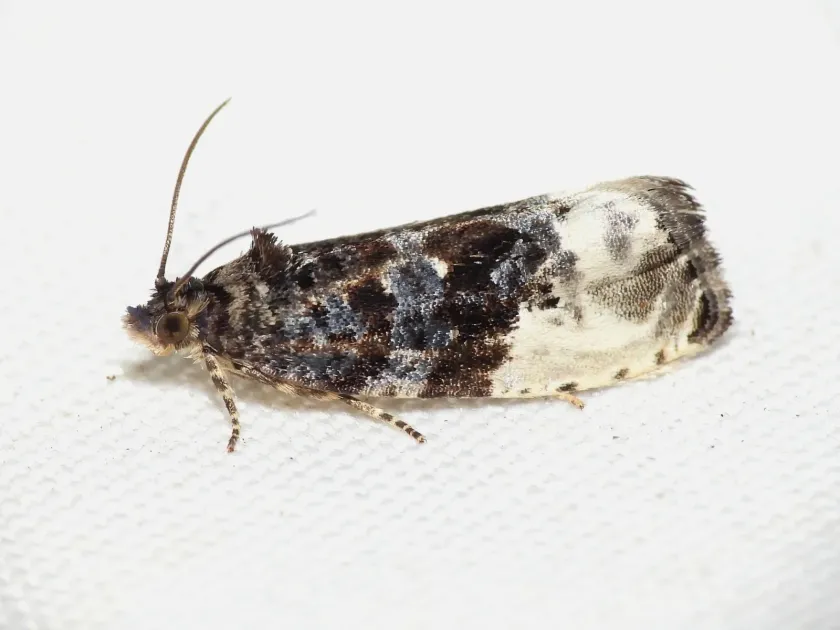
The marbled orchard tortrix (Hedya nubiferana) is a moth species belonging to the Tortricidae family. The adult moth has a wingspan of 16–22 mm, characterized by its mottled forewings, which feature a dark brown basal area and a lighter, whitish-grey apical region.
The larvae, or caterpillars, typically grow up to 15 mm in length. They are easily recognized by their dark brown to greyish-brown body and their distinctive shiny black head and prothoracic shield, which are key diagnostic features.
This species completes one generation per year. They overwinter as early-stage larvae within dense silken cocoons, which they construct in crevices of tree bark or near dormant buds, ensuring they remain protected from harsh winter weather.
In spring, as sap flow begins and buds start to swell, the larvae emerge from their winter shelters. They begin by feeding on the opening buds, eventually moving to young leaves and developing inflorescences, webbing them together to form feeding chambers.
Pupation takes place within these silken leaf-rolls. The adult moths emerge in early summer, typically in June, after which they mate and lay eggs individually on the upper surface of the leaves of their host plants.
What it damages
The marbled orchard tortrix is a polyphagous pest, primarily attacking fruit trees from the Rosaceae family. Its primary hosts include apple, pear, quince, as well as stone fruits like cherry, plum, and apricot.
Early spring damage is the most critical, as larvae destroy the developing buds. This prevents the buds from opening, which can significantly reduce the potential yield and cause malformations in the canopy of young trees.
As the season progresses, the larvae feed on the foliage by webbing leaves together. This leads to skeletonization and leaf damage, which impairs the tree's photosynthetic capacity and weakens overall plant health.
During the summer months, the larvae may also feed on the surface of young fruits. They chew shallow cavities into the skin and flesh of the fruit, which often results in fruit drop or facilitates the development of rot during storage.
In young orchards or nurseries, repeated infestations can lead to stunted shoot growth, branch deformation, and reduced cold hardiness, making the trees more susceptible to environmental stress.
Signs of infestation
The first sign of infestation in spring is the presence of damaged or empty buds that fail to bloom. Close observation often reveals fine silk threads connecting the base of the damaged buds to the shoots.
During the summer, the presence of tightly rolled or webbed leaves at the tips of shoots is a definitive indicator of the pest. If the leaf-roll is opened, a dark-headed caterpillar will usually be visible inside.
Feeding damage on young fruit appears as small, irregular patches or shallow scars on the skin. These injuries are typically located where a leaf makes contact with the fruit surface, serving as a protective shelter for the larva.
- Hollowed-out or damaged buds in early spring.
- Leaf clusters webbed together at shoot tips.
- Presence of silk webbing on branches and leaves.
- Surface scarring and feeding marks on young developing fruits.
Control measures
Cultural control methods involve cleaning tree trunks of loose, dead bark, which serves as a wintering site for larvae, and removing fallen leaves from the orchard floor to destroy potential overwintering habitats.
Pheromone traps are highly effective for monitoring adult activity. By tracking the flight period, growers can time their interventions precisely, ensuring that control measures are applied when the larvae are most vulnerable.
Chemical control should be timed to coincide with the larval emergence phase, typically during the 'green cluster' or 'pink bud' stages of the host plants. Systemic or contact-stomach insecticides are generally recommended.
To prevent the development of insecticide resistance, it is crucial to rotate products with different modes of action. Applications should ensure thorough coverage of the foliage to reach the larvae hidden within the leaf-rolls.
Promoting a healthy ecosystem by supporting natural predators such as lacewings and ladybugs can help keep the population of the marbled orchard tortrix below the economic threshold, reducing the need for intensive chemical sprays.
Taxonomy
- Latin name
- Hedya nubiferana
- Order
- Lepidoptera (butterflies)
- Family
- Tortricidae
- EPPO code
- ARGPVA
Discussion
No discussions yet — be the first.