
Bud moth
Hedya
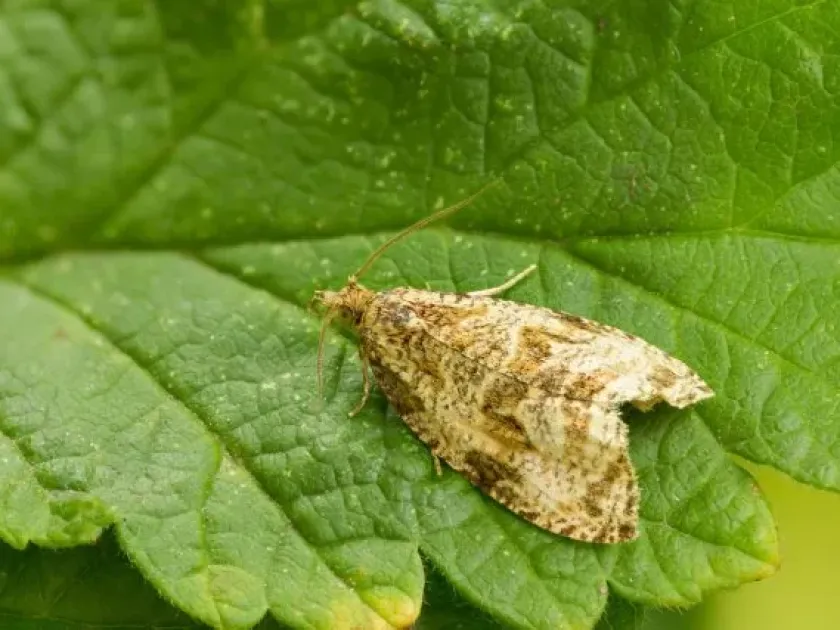
Description
How to identify
The genus Hedya belongs to the Tortricidae family within the order Lepidoptera. The adult moth is relatively small, with a wingspan of approximately 15-20 mm, characterized by mottled grey, white, and brown patterns on the forewings.
The larvae progress through several developmental stages. Young caterpillars are typically pale yellowish or green, eventually turning brown or greyish-brown as they mature, with a distinct, hardened head capsule.
The life cycle of the bud moth is synchronized with the phenology of fruit trees. They typically overwinter as mature larvae inside silken cocoons hidden within bark crevices or under loose bark scales on the host tree.
Emergence occurs in early spring, coinciding with the bud burst phase, as rising temperatures trigger the larvae to exit their winter shelters and move towards the expanding buds.
Adult moths are primarily nocturnal, becoming active in the evening hours to mate and lay eggs on the undersides of leaves or near the buds of host plants.
What it damages
This pest affects a wide range of fruit-bearing trees, including apples, pears, plums, cherries, and various hawthorn species commonly found in garden environments.
The primary damage occurs early in the season when larvae feed on developing buds, effectively destroying potential blossoms and vegetative growth before they even unfold.
As the season progresses, the caterpillars spin silk to web leaves together into shelters or nests. They feed on the leaf tissue within these structures, leading to skeletonized foliage and reduced tree vitality.
Severe infestations can lead to significant stunting of shoots, which affects the tree's overall architecture and its ability to store energy for the subsequent year's harvest.
Damage to young fruit is also common, as larvae may feed on the surface of the fruit skin, creating small lesions that diminish the commercial quality and shelf-life of the produce.
Control measures
Integrated pest management (IPM) begins with good sanitation, such as removing loose, old bark from trunks and clearing leaf litter beneath trees to eliminate potential overwintering sites.
Pheromone traps are essential tools for monitoring adult moth populations, providing data that allows growers to time insecticide applications accurately during the most vulnerable life stages.
Chemical control is most effective when applied during the pre-bloom stage, targeting the larvae as they emerge from dormancy before they can construct protective webbed nests.
Biological control methods, including the release of beneficial insects such as parasitic wasps (e.g., Trichogramma species), can help naturally manage populations of the bud moth.
For small-scale orchards, manual removal of webbed leaf clusters during the early spring is a practical and environmentally friendly way to reduce the overall damage to the canopy.
Taxonomy
- Latin name
- Hedya
- Order
- Lepidoptera (butterflies)
- Family
- Tortricidae
- EPPO code
- HDYASP
Discussion
No discussions yet — be the first.