
Harmologa oblongana
Harmologa oblongana
Description
How to identify
Harmologa oblongana belongs to the Tortricidae family, commonly known as leafrollers. These moths are characterized by their specific wing shape and resting posture, which makes them somewhat cryptic in natural environments.
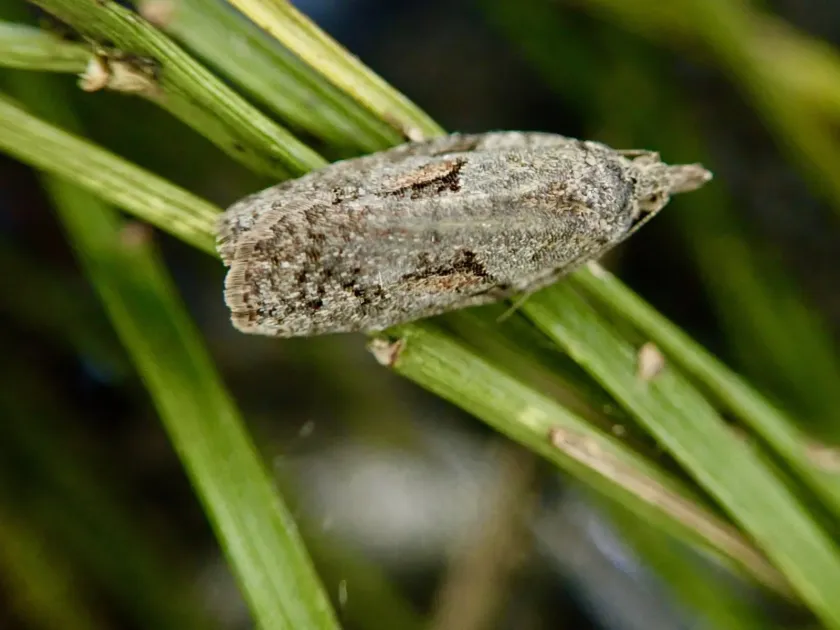
The adult moth typically has elongated forewings with mottled patterns in shades of brown and grey. This coloration provides excellent camouflage against tree bark and dry vegetation, protecting them during daylight hours.
Larvae, or caterpillars, are the primary feeding stage. They typically possess a shiny head capsule and a body that varies in color depending on their diet and developmental stage, often matching the host plant tissue.
The pupal stage occurs within protective webs spun between leaves or in crevices on the host tree. The pupa is capable of slight movement, facilitating its transition into the adult stage during emergence.
Entomological identification often requires examining both the genitalia of the adults and the host-specific feeding patterns of the larvae, as many tortricids share similar physical traits.
What it damages
As a polyphagous species, Harmologa oblongana attacks a variety of woody plants and shrubs. The larvae are particularly destructive during the early stages of plant growth in the spring.
The caterpillars start by attacking opening buds, consuming the tender tissues. This can lead to the destruction of the apical meristem, resulting in stunted growth or deformed canopy development.
Later in the season, larvae move to the leaves, folding them or binding them together with silk webbing. Inside these nests, they skeletonize the foliage, significantly reducing the photosynthetic surface area.
Severe infestations can lead to substantial defoliation. This physiological stress weakens the plant, making it less resilient to other environmental pressures such as drought, frost, or diseases.
In addition to foliage, larvae may feed on blossoms and developing fruitlets if food becomes scarce. This directly impacts the commercial yield, especially in orchards and berry plantations.
When it appears
The lifecycle of Harmologa oblongana is intrinsically linked to the seasonal phenology of its host plants. Overwintering occurs at the larval stage, usually tucked away in silk cocoons on the tree bark.
As spring temperatures rise, the overwintered larvae emerge from their dormancy. Their activity coincides with the bud-burst of fruit trees, providing them with immediate access to nutritious new growth.
The species may complete multiple generations within a single growing season. The timing of each generation often overlaps, leading to a prolonged period of potential damage throughout the summer.
Pupation takes place throughout the season in hidden locations. Once the pupal stage ends, the moths emerge to mate and lay eggs, starting the cycle anew for the next generation of larvae.
As autumn approaches and temperatures drop, the final generation of larvae seeks protected sites. They spin their overwintering hibernacula to survive the winter months until the cycle restarts the following spring.
Signs of infestation
The most recognizable sign of infestation is the presence of webbed, rolled, or bunched leaves. These leaf nests are classic indicators of leafroller activity within a garden or orchard.
Accumulated frass (larval excrement) within these webs is another clear diagnostic sign. If fresh frass is present, it indicates that the larvae are currently active and feeding on the plant.
Terminal shoots that appear stunted, withered, or abnormally branched suggest that the larvae have fed on the growing point. This disrupts the vertical growth habit of the affected branches.
Skeletonized leaves, where only the veins remain, indicate that the larvae are in later developmental stages. Such leaves quickly turn brown and may drop prematurely from the plant.
A general decline in canopy vigor, combined with the presence of visible webs, points toward a significant population density that likely requires immediate agricultural intervention.
Control measures
Integrated Pest Management (IPM) is essential for controlling Harmologa oblongana. This includes cultural practices such as removing infested branches and cleaning up leaf litter to reduce wintering sites.
Biological control methods, including the release of egg parasitoids like Trichogramma species, can be highly effective in suppressing population spikes during the egg-laying period.
Microbial insecticides, specifically those containing Bacillus thuringiensis, offer a targeted solution. They are safe for beneficial insects while being effective against young, actively feeding larvae.
When chemical interventions are necessary, timing is critical. Applications should be synchronized with the peak hatching period of the larvae to ensure maximum contact and efficacy.
Using pheromone traps is recommended for monitoring moth flights. This data allows for the precise timing of control measures, reducing the overall need for broad-spectrum chemical sprays.
Taxonomy
- Latin name
- Harmologa oblongana
- Order
- Lepidoptera (butterflies)
- Family
- Tortricidae
- EPPO code
- HARLOB
Discussion
No discussions yet — be the first.