
Harmologa amplexana
Harmologa amplexana
Description
How to identify
Harmologa amplexana is a species belonging to the family Tortricidae, order Lepidoptera. Like other members of this family, it is commonly referred to as a leafroller moth due to the larvae's habit of rolling or folding leaves.
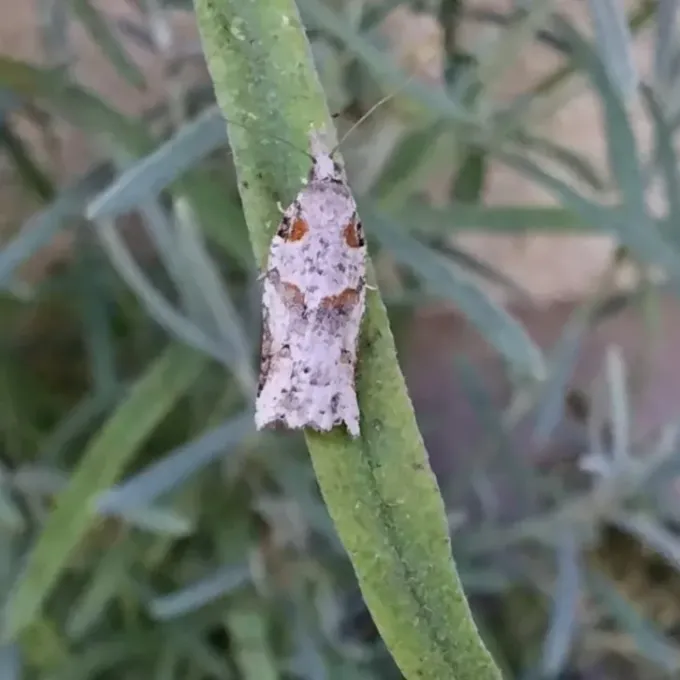
The adult moth has cryptic coloration that allows it to blend in with tree bark or foliage. Identification at the species level usually requires examination of genitalia due to the morphological similarity between related taxa within the Tortricidae family.
The larvae are small, caterpillar-like insects with distinct chewing mouthparts. They pass through several developmental stages, or instars, and are the primary life stage responsible for plant damage.
Pupation typically occurs within protected environments such as rolled leaves, silk webbing, or bark crevices. The pupa stage is a period of significant transformation before the insect emerges as an adult moth.
Understanding the biology of this pest requires monitoring its phenology, which is highly influenced by local environmental conditions including temperature and humidity levels during the growing season.
What it damages
Harmologa amplexana primarily affects various deciduous trees and shrubs. It is known to pose a threat to fruit-bearing species in particular, impacting both vegetative and reproductive plant parts.
Larvae consume buds, young leaves, and developing flower clusters. This feeding activity disrupts the plant's photosynthetic capabilities and can significantly stunt growth during the early stages of development.
In addition to direct foliage consumption, the larvae cause deformation of growing shoots. This physiological stress can lead to reduced plant vigor and decreased resilience against environmental stressors.
Severe infestations can lead to a substantial loss of the year's harvest, as the feeding larvae target the reproductive organs of the plants. This has direct economic consequences for growers.
The presence of webbing and rolled leaves creates a protected environment for the larvae, making them difficult to reach with standard contact-based pest control methods.
When it appears
The life cycle of Harmologa amplexana is closely synchronized with the host plant's phenology. Activity typically begins in early spring, coinciding with bud burst and the emergence of new leaves.
Overwintering usually occurs as larvae or pupae in protected sites, such as cracks in tree bark or leaf litter. They remain dormant until warming temperatures trigger the next phase of their life cycle.
The most active period for larvae, and thus the peak of plant damage, is usually late spring and early summer. During this time, they aggressively feed to fuel their growth and subsequent pupation.
Depending on the climatic zone, the pest may complete one or more generations per year. The duration and intensity of the life cycle are strongly correlated with cumulative temperature units.
Towards autumn, as temperatures drop, the moths prepare for the winter diapause. Identifying these seasonal shifts is essential for timing cultural and chemical control interventions.
Signs of infestation
The most diagnostic sign of an infestation is the presence of leaves that have been rolled, folded, or tied together with fine silk webbing. This is a classic behavior of Tortricidae larvae.
Feeding damage is characterized by ragged holes in the leaves, skeletonized patches, and the consumption of buds. Small dark pellets, known as frass, are often found within the webbing, indicating active feeding.
Infected trees may show stunted growth at the shoot tips and an overall ragged appearance in the canopy. These visible signs often become apparent before substantial damage occurs if inspected early enough.
If left unmanaged, the presence of these silk shelters becomes increasingly evident across the foliage, marking the expansion of the population across the host plants.
- Rolled or folded leaves held by silk.
- Webbing visible between leaves or stems.
- Evidence of frass inside the leaf shelters.
- Bud damage or shoot deformation.
Control measures
Cultural control measures include the removal and destruction of infested foliage and shoots where larvae are sheltering. Regular pruning can also improve canopy ventilation and reduce pest habitats.
Pheromone traps are highly effective for monitoring the population density of adult moths. This data helps growers determine the exact timing for insecticide applications, maximizing efficacy while minimizing chemical use.
Chemical control must be timed during the egg-hatching phase, before the larvae construct their protective webbed shelters. Using systemic insecticides can provide better results when contact is difficult.
Integrated Pest Management (IPM) strategies, including the use of biological control agents like predators or parasitoids, are recommended for long-term and sustainable management of the population.
Maintaining healthy trees through proper fertilization and irrigation increases plant tolerance to damage and is a key component of a successful, multi-faceted pest management program.
Taxonomy
- Latin name
- Harmologa amplexana
- Order
- Lepidoptera (butterflies)
- Family
- Tortricidae
- EPPO code
- HARLAM
Discussion
No discussions yet — be the first.