
Haplonyx
Haplonyx
Description
How to identify
Haplonyx is a genus of weevils belonging to the Curculionidae family, predominantly found in Australia where they are specialized pests of eucalyptus trees.
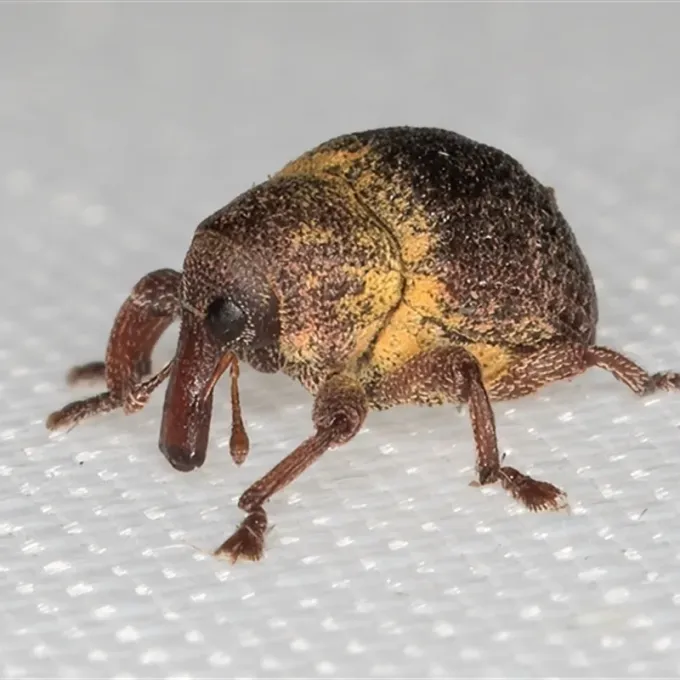
Adult beetles are typically oval-shaped with a characteristic elongated snout (rostrum). Their size ranges from 5 to 10 millimeters, which is common for this group of beetles.
The coloration of Haplonyx species is generally dull, featuring shades of brown and grey to blend in with the bark of host trees, providing excellent camouflage.
The larvae are legless, white to yellowish in color, and possess a hardened head capsule specifically adapted for burrowing through wood or plant tissue.
Taxonomically, the genus is quite diverse, and identification to the species level often requires professional entomological assessment of their antennae and scales.
What it damages
The primary hosts for Haplonyx are species within the Eucalyptus genus. These weevils are highly adapted to the host plant's specific chemical composition.
Adults consume leaves and young shoots, while the larvae are responsible for the most significant damage by boring into flower buds and developing fruits.
By feeding inside reproductive organs, the larvae effectively destroy the seeds, which can cause major problems for nurseries and forest regeneration efforts.
High population densities lead to severe foliage loss and stunted growth in young trees, reducing the overall vigor of the affected eucalyptus plantation.
Furthermore, the physical damage created by boring larvae provides entry points for secondary pathogens, such as fungi and bacteria, further weakening the tree.
When it appears
The lifecycle of Haplonyx is tightly coupled with the phenology of eucalyptus, particularly the flowering and fruit-set stages.
Adult activity peaks during the spring, as they emerge from overwintering sites to feed on foliage and locate suitable hosts for mating.
Oviposition occurs shortly after, with females laying eggs directly into the developing buds or fruits of the eucalyptus trees.
The larval stage takes place over the summer, during which they grow by consuming the internal structures of the buds or fruits until they are ready to pupate.
The lifecycle is generally completed within one growing season, with the new generation emerging towards the end of summer or in autumn.
Signs of infestation
Small entry or exit holes on the surface of eucalyptus buds and fruits are the most obvious signs of a Haplonyx infestation.
Premature abscission (dropping) of buds and fruit often indicates that larvae have been feeding inside, disrupting the plant's nutrient transport.
- Presence of frass (larval waste) near the damage sites on the bark or fruit.
- Ragged leaf edges where adults have been feeding.
- Deformed or shriveled appearance of fruits and flower clusters.
During surveys, adult beetles can be detected by shaking branches, as they tend to drop to the ground and play dead when disturbed.
Severe infestations often result in the yellowing of foliage and an overall unhealthy appearance of the canopy, visible during close monitoring.
Control measures
Sanitation is a critical control measure; removing and destroying fallen plant debris can significantly reduce the overwintering population of pupae.
Integrated Pest Management (IPM) strategies, including the use of entomopathogenic fungi, are being explored as sustainable biological control options.
Chemical control using systemic insecticides can be effective if applied during the adult flight period, specifically targeting them before egg-laying occurs.
Selecting eucalyptus species or varieties that show natural resistance to Haplonyx is highly recommended for long-term forest health.
Regular monitoring with pheromone traps allows for the early detection of the pest, enabling timely intervention before the infestation becomes widespread.
Taxonomy
- Latin name
- Haplonyx
- Order
- Coleoptera (beetles)
- Family
- Curculionidae
- EPPO code
- HAPNSP
Discussion
No discussions yet — be the first.