
Three-spotted weevil
Hadroplontus trimaculatus
Description
How to identify
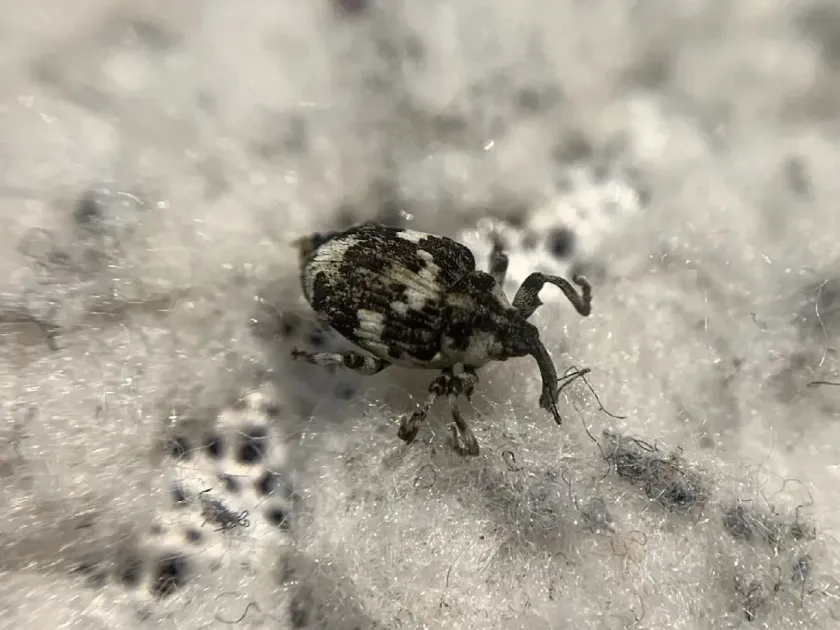
The three-spotted weevil (lat. Hadroplontus trimaculatus) is a member of the Curculionidae family in the order Coleoptera. These beetles are typically 3-4 mm long with a dark body.
The name comes from three distinctive light spots on the elytra (wing covers), which provide a clear identification feature when examining the pest in the field.
The snout, or rostrum, is moderately long and specialized for piercing plant tissues, a common trait among many species of weevils affecting agricultural crops.
Larvae are legless and creamy-white in color with a brown head capsule. They lead a cryptic, internal-feeding life, making them difficult to detect without destructive sampling.
Adult beetles are relatively agile but often exhibit a "death-feigning" behavior, falling to the soil when disturbed, which helps them evade predators and observers.
What it damages
The primary hosts of this weevil are plants within the Brassicaceae (Cruciferous) family. Rapeseed (canola) is the most economically significant crop affected by this pest.
In addition to cultivated crops, the weevil thrives on various wild cruciferous weeds, including field mustard and shepherd's purse, which maintain population levels in the landscape.
Adult weevils feed on leaves and growing points, creating small puncture wounds and feeding holes that can affect the overall vigor of the young plant.
The most severe damage is caused by the larvae, which tunnel inside stems and leaf stalks. This feeding behavior disrupts nutrient flow and can lead to structural weakness in the plant.
Heavy infestations result in stunted growth, reduced photosynthetic area, and increased vulnerability to secondary diseases entering through the larval exit or entry holes.
When it appears
Adults overwinter in protected areas, including soil debris, leaf litter, or sheltered spots near fields where host plants were grown during the previous season.
Emergence from overwintering sites typically occurs in early spring as temperatures rise consistently above 8-10 degrees Celsius, coinciding with the early growth stages of spring crops.
The mating and egg-laying phase occurs during the vegetative development of host plants. Females insert eggs into the tissues of stems or petioles.
The larval stage is completed within the plant tissues. Once mature, the larvae exit the plant to pupate in the soil, with a new generation appearing in mid-summer.
Typically, there is one generation per year, although favorable climatic conditions can sometimes extend the active period of adult feeding and egg laying.
Signs of infestation
One of the earliest signs of infestation is the presence of tiny, pin-prick-sized feeding scars on the leaves, characteristic of the adult weevil's feeding activity.
Internal larval feeding often manifests as localized swellings, cracks, or minor distortions in the stem, which can be observed by inspecting the plant base.
Infested plants may appear chlorotic or display reduced vigor, with slowed development compared to healthy plants in non-infested areas of the field.
In cases of severe infestation, the integrity of the stem is compromised, potentially leading to wilting or breaking of leaves and stems under wind pressure.
Exit holes left by mature larvae before pupation are another diagnostic sign, though these are often found only after the most significant damage has already occurred.
Control measures
Effective management relies on cultural practices, particularly crop rotation, which breaks the lifecycle by keeping host plants away from the source of the infestation.
Deep tillage following harvest helps disrupt the pupation process in the soil, significantly reducing the number of surviving adults that would otherwise overwinter.
Control of cruciferous weeds in and around the field is essential to eliminate reservoirs that sustain the pest population throughout the growing season.
Chemical control involving insecticides is effective when applied during the period of adult activity, prior to the beetles laying eggs inside the plant tissue.
- Use yellow sticky traps for monitoring to determine the precise timing of adult migration into the fields.
- Apply pyrethroid-based insecticides during the early active stage of adults.
- Ensure optimal plant nutrition to promote rapid growth, which can help the crop compensate for minor damage.
Taxonomy
- Latin name
- Hadroplontus trimaculatus
- Order
- Coleoptera (beetles)
- Family
- Curculionidae
- EPPO code
- CEUTTM
Discussion
No discussions yet — be the first.