
Cabbage stem weevil
Hadroplontus
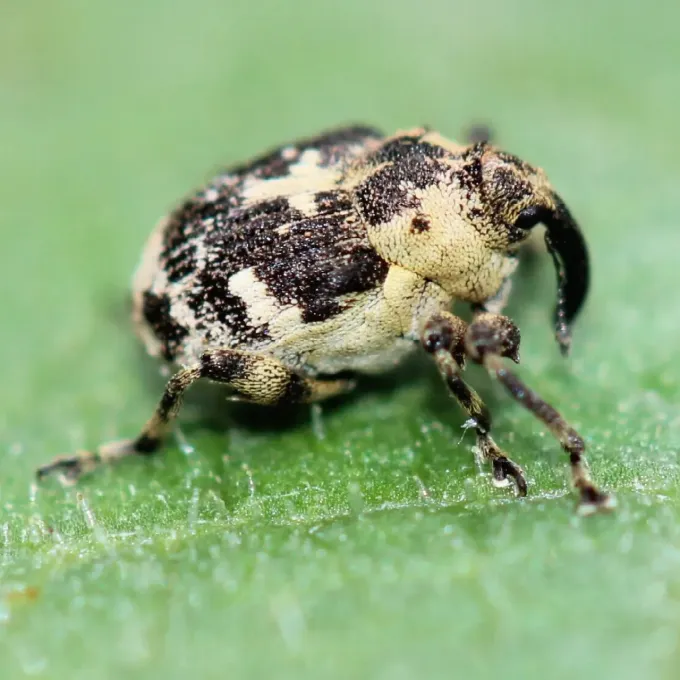
Description
How to identify
The Cabbage stem weevil (Hadroplontus litura) is a small beetle belonging to the Curculionidae family. Adults typically measure between 3 to 4 mm in length and possess a characteristic elongated rostrum (snout).
Their bodies are oval-shaped and covered in greyish hairs, which provides effective camouflage against the soil and plant stems they inhabit during their life cycle.
The larvae are apodous (legless) and whitish in color with a distinctive brown head capsule. They spend their entire developmental phase inside the host plant's stem.
As part of the Coleoptera order, they undergo complete metamorphosis, which includes the egg, larval, pupal, and adult stages within their annual cycle.
Monitoring is crucial as they are often elusive; the adults are most active during warm spring days when they migrate from overwintering sites toward host crops.
What it damages
Damage is primarily caused by the larvae, which burrow into the stems and leaf petioles of various brassica crops, including oilseed rape, cabbage, and mustard.
By feeding on internal plant tissues, the larvae disrupt the vascular system, which hinders the transport of water and essential nutrients to the upper parts of the plant.
While adult weevils cause minor cosmetic damage to leaves by creating tiny perforations, the structural damage inflicted by the larvae is economically significant.
Affected plants often display stunted growth, reduced pod formation, and increased susceptibility to secondary infections by pathogenic fungi or bacteria.
Severe infestations render stems fragile, leading to significant lodging during adverse weather, which results in substantial yield losses for farmers.
When it appears
Adult weevils emerge from their overwintering locations in the soil or crop residues once temperatures consistently reach or exceed 10°C in early spring.
The mating and egg-laying period typically spans from spring to early summer, depending on local climatic conditions and the development stage of the host crop.
Larvae feed internally for several weeks throughout the growing season, reaching maturity before exiting the stem to pupate in the soil environment.
New adults emerge later in the summer or early autumn, feeding briefly on young leaves of newly planted winter crops before entering diapause for the winter.
Agronomic scouting must be intensified during the spring rosette phase of the crop to identify the presence of adults before egg-laying occurs.
Signs of infestation
The earliest signs of infestation are small, circular, whitish feeding punctures on the leaves made by the adult weevils during their initial spring migration.
Careful inspection of the stem base often reveals tiny, darkened spots where the female has deposited eggs, sometimes accompanied by a slight swelling of the tissue.
Uneven or stunted development compared to healthy surrounding plants in the field is a clear indicator that the plant's internal system has been compromised.
Curvature or twisting of the stem is a common morphological symptom caused by the feeding activity of larvae damaging the vascular bundles inside.
Splitting the stem vertically often reveals larval tunnels packed with frass (insect excrement), which is the most definitive sign of an active infestation.
Control measures
Management strategy relies on integrated pest management (IPM) practices, prioritizing biological and cultural methods before resorting to chemical applications.
Crop rotation is essential; ensuring that brassica crops are not grown in the same field more than once every three to four years disrupts the pest cycle.
Deep autumn plowing helps destroy the pupae and overwintering adults residing in the soil, effectively reducing the population for the following year.
Using yellow water traps allows for accurate monitoring of adult flight activity, helping to determine the precise timing for targeted insecticide applications.
- Ensure optimal planting dates to avoid peak pest activity;
- Control cruciferous weeds in adjacent areas to eliminate alternative hosts;
- Use systemic insecticides only when economic thresholds are exceeded;
- Maintain proper field sanitation by removing post-harvest residues.
Taxonomy
- Latin name
- Hadroplontus
- Order
- Coleoptera (beetles)
- Family
- Curculionidae
- EPPO code
- HADPSP
Discussion
No discussions yet — be the first.