
Poplar bud moth
Gypsonoma oppressana
Description
How to identify
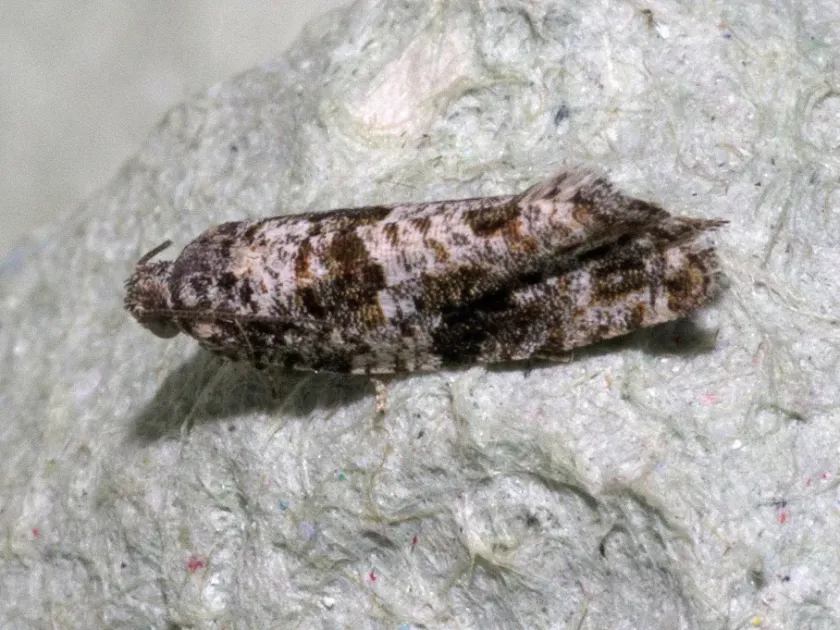
The Poplar bud moth (Gypsonoma oppressana) is a member of the Tortricidae family within the order Lepidoptera. The adult moth is small, with a wingspan of approximately 12–15 mm, displaying a mottled grey pattern on its forewings.
The larvae, which are the damaging stage of this moth, reach a length of 10–12 mm. They typically have a light-coloured body contrasted by a dark head and thoracic plate, which are key features for field identification.
This species undergoes complete metamorphosis. Its development cycle is synchronized with the phenology of its host plants, particularly poplar species (Populus), which it utilizes for both food and shelter.
The overwintering stage consists of young larvae that hide in crevices of the tree bark or beneath bud scales. They remain inactive until the warming temperatures of spring trigger their emergence.
Adult moths are primarily nocturnal, flying in the early summer. Following mating, females lay eggs on the surface of the buds, which will serve as the initial food source for the next larval generation.
What it damages
The primary hosts for Gypsonoma oppressana are various poplar species. This pest is particularly problematic in ornamental plantings, urban alleys, and dedicated windbreak rows.
The larvae inflict damage in early spring by boring into the buds and consuming their contents. This process leads to the destruction of the bud before it can develop into a leaf or shoot.
A high infestation rate can cause significant damage to a tree's crown, leading to reduced vigour, stunted growth, and an overall decrease in the photosynthetic potential of the affected poplar.
Repeated annual damage can weaken the host tree, making it susceptible to secondary infestations by wood-boring insects or infections by various fungal pathogens.
The aesthetic impact of the damage is significant in urban environments, as the loss of buds leads to sparse foliage and distorted branch development, reducing the ornamental value of the trees.
Signs of infestation
The most prominent sign of infestation is the presence of silken webbing around the buds. These webs are often reinforced with larval frass, appearing as small dark pellets.
Infested buds fail to open normally or exhibit delayed development. If they do sprout, the leaves often appear crumpled, skeletonized, or display irregular edges due to the early larval feeding.
During the spring, the accumulation of bud scales underneath the canopy is a clear indicator of heavy larval feeding activity occurring in the upper branches.
Close inspection of twigs during the early spring may reveal the presence of larvae or their entry points into the developing buds.
Monitoring the tree canopy for signs of silk webs in April is the most reliable method for detecting an early-stage outbreak and determining the need for intervention.
Control measures
Management strategies should focus on an integrated approach. Cultural practices, such as the removal and disposal of infested branches during pruning, can help reduce the local population.
Chemical control is most effective when applied at the green-tip stage of bud development, as this is when the larvae are most active and vulnerable to contact or systemic insecticides.
Biological control methods, including the application of Bacillus thuringiensis, offer an environmentally friendly alternative for controlling young larval stages.
Encouraging natural predators, such as parasitic wasps and predatory beetles, can contribute to the long-term suppression of the moth population within the landscape.
- Regular monitoring of poplar health during early spring.
- Timely application of authorized insecticides at bud break.
- Pruning and destruction of infested vegetative material.
- Ensuring proper soil nutrition to maintain tree vigour.
Taxonomy
- Latin name
- Gypsonoma oppressana
- Order
- Lepidoptera (butterflies)
- Family
- Tortricidae
- EPPO code
- GYPSOP
Discussion
No discussions yet — be the first.