
Poplar shoot moth
Gypsonoma haimbachiana
Description
How to identify
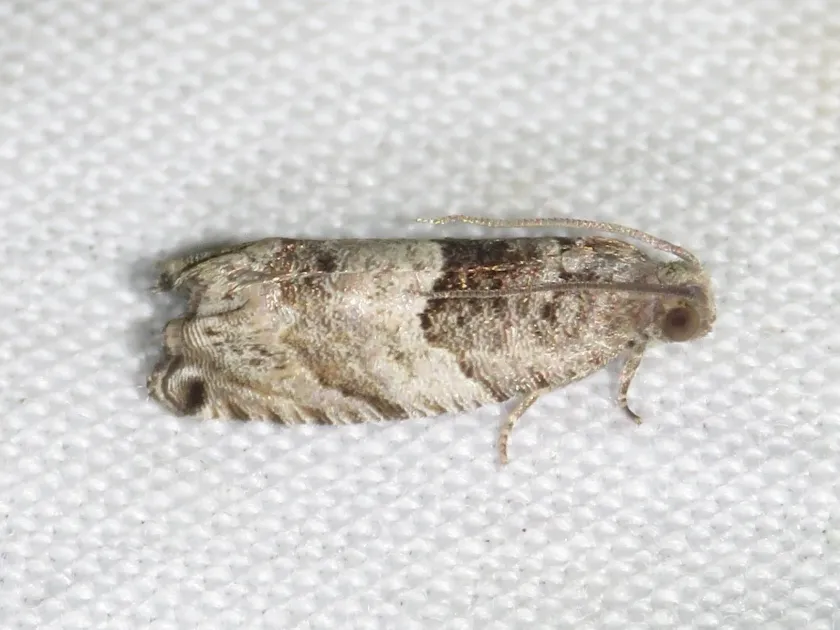
The poplar shoot moth is a small moth belonging to the family Tortricidae. An adult specimen has a wingspan of approximately 12–15 millimeters, with forewings displaying a mottled grey-brown pattern that acts as effective camouflage on tree bark.
The larva of this pest typically reaches a length of 10–12 millimeters. It features a greyish-green or yellowish-white body, while the head and prothoracic shield are distinctively dark brown or black, serving as a key diagnostic feature for field identification.
The life cycle involves complete metamorphosis, consisting of egg, larva, pupa, and adult stages. In many regions, the species completes two generations per growing season, which significantly increases its impact on host plants.
Overwintering occurs at the young larval stage. These larvae construct small, dense silk cocoons hidden in bark crevices, bud scales, or other protected niches on the trunks and branches of the host trees.
Pupation generally occurs in the spring when temperatures rise. After the pupal development phase, the moths emerge to mate and initiate the cycle of the first generation for the new season.
What it damages
The primary hosts for this species are various members of the genus Populus, including black poplar, Lombardy poplar, and Canadian poplar. Willow trees growing in close proximity may also be subject to occasional infestation.
The primary damage is caused by larvae that bore into young shoots, buds, and leaf petioles. This tunneling activity disrupts the tree's vascular system, leading to stunted growth and structural deformity.
In nursery settings, damage to the terminal leader is particularly severe, as it stunts height growth and forces the development of multiple lateral branches, ruining the form of young trees.
Extensive infestation can cause widespread dieback of growing tips, leading to an unsightly appearance and a decrease in the overall vigor and economic value of the poplar plantation.
Repeated attacks over several years can result in significant loss of biomass and can potentially weaken the tree, making it more susceptible to secondary pests and environmental stressors.
When it appears
The spring emergence of overwintered larvae coincides with the bud break of poplar trees. During this time, the larvae are highly active and begin feeding on the succulent tissues of newly emerging buds.
The first adult generation typically flies during late May and June. During this period, females lay eggs on the undersides of young leaves or on the surface of current-season shoots.
The second generation of larvae appears mid-summer, typically in July and August. This generation is often responsible for the most visible damage, as they feed during the period of active shoot elongation.
Environmental conditions, particularly temperature and humidity, strongly influence the population dynamics. Warm and dry summers generally favor the rapid development and expansion of the pest population.
As autumn approaches, the second-generation larvae cease feeding and seek out suitable overwintering sites on the bark, preparing for the upcoming dormant season.
Signs of infestation
The initial signs of infestation include the presence of small entry holes in buds or at leaf junctions, often surrounded by frass (larval excrement), indicating recent feeding activity.
A classic symptom is the wilting and subsequent browning of the shoot tips. A close inspection of the wilted area usually reveals a bore hole where the larva has entered the stem.
The presence of silken webbing between leaves or around a shoot is a clear indicator of larval presence, as the caterpillars use silk to create protective shelters while feeding.
Affected buds may fail to open, appearing stunted or brown. These damaged buds often die before the leaves can fully expand, contributing to the overall unhealthy appearance of the tree canopy.
Zig-zagging or deformed shoots are a common consequence of terminal leader damage, as the tree attempts to compensate for the loss of the primary growing point by sprouting lateral shoots.
Control measures
Sanitation practices such as the timely pruning and destruction of infested shoots are critical for managing populations, provided the work is done before the larvae have exited the shoots.
In forest nurseries and plantations, the use of pheromone traps is an effective strategy to monitor adult flight periods and time the application of insecticides for maximum efficacy.
Systemic insecticides are generally the most effective chemical control method. Applications must be timed carefully to coincide with the period of peak larval hatch to ensure high mortality rates.
Biological control, including the encouragement of parasitic wasps (parasitoids) and other natural enemies, can help maintain population levels below economic injury thresholds in mature stands.
- Regular monitoring of tree stands during June and August.
- Burning of pruned material to eliminate overwintering larvae.
- Selecting poplar clones with proven resistance to shoot moth infestation.
Taxonomy
- Latin name
- Gypsonoma haimbachiana
- Order
- Lepidoptera (butterflies)
- Family
- Tortricidae
- EPPO code
- GYPSHA
Discussion
No discussions yet — be the first.