
Bud moth
Gypsonoma dealbana
Description
How to identify
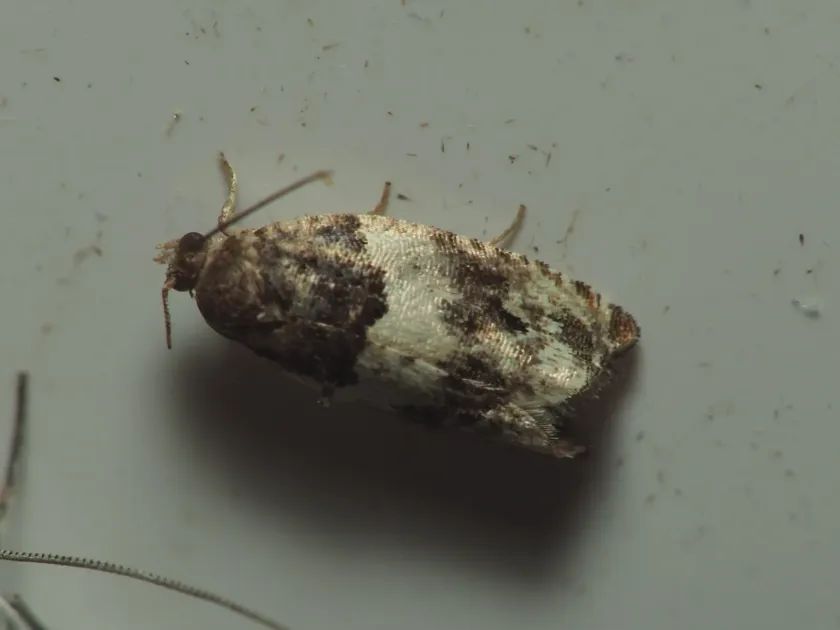
Gypsonoma dealbana, commonly known as the bud moth or the common cloaked shoot, is a species of moth belonging to the family Tortricidae. The adult moth has a wingspan ranging from 12 to 15 mm.
The forewings of the moth are greyish-brown with dark markings, providing excellent camouflage against tree bark. The hindwings are paler, typically light grey or brown.
The larvae are approximately 10–12 mm long when fully grown. They are dirty yellow to light brown in color, characterized by a dark, almost black head and a distinct thoracic shield.
This species typically completes one generation per year. Second-instar larvae overwinter in dense silk cocoons hidden in bark crevices or near the base of buds.
As spring temperatures rise, the larvae emerge from their wintering sites and begin feeding on the developing buds of host trees, marking the start of their active season.
What it damages
The bud moth is a polyphagous pest that affects a variety of deciduous trees, including willows, poplars, and several fruit-bearing species like apples and pears.
The most severe damage occurs in early spring when larvae tunnel into and consume the contents of expanding buds, destroying leaf and flower primordia entirely.
Affected buds fail to develop, eventually drying out and falling off. This results in significant branch defoliation, which hampers the tree's photosynthetic capacity and reduces overall vigor.
In addition to bud destruction, larvae often bore into young shoots, causing structural damage that leads to stunted growth, shoot twisting, and occasional branch dieback.
In nurseries and young orchards, this feeding behavior can severely impact tree formation and delay the development of a healthy, productive canopy.
When it appears
The emergence of larvae coincides with the bud-burst stage of host trees, making this early spring period the most critical window for plant protection measures.
Pupation usually occurs in late spring or early summer. Larvae pupate within the damaged buds, rolled leaves, or in silk webs attached to the bark surface.
Adult moths are active during the summer, typically from late June to July. After mating, females deposit eggs singly on the undersides of the leaves of host plants.
The summer generation larvae feed briefly on leaf tissue before seeking wintering sites as the temperature drops in autumn, completing their annual life cycle.
The pest's population dynamics are strongly influenced by meteorological factors, with warm and dry springs often leading to more rapid development and increased damage.
Signs of infestation
An early indication of infestation is the presence of silk webbing around opening buds and the accumulation of frass (larval excrement) on the twigs.
A classic symptom is the appearance of withered, hollowed-out buds that fail to open. These buds are often easily detached from the branch when inspected.
Leaves affected by summer larvae often show small holes or patches where the tissue has been skeletonized, leaving behind only the veins of the leaf.
The discovery of small, dense silk cocoons tucked into bark folds or branch crotches during dormant winter months serves as a reliable indicator of pest presence.
Heavy infestations lead to a noticeable thinning of the canopy and a sparse appearance of the tree, which is particularly evident in ornamental poplars and young fruit trees.
Control measures
Effective control involves the application of contact or systemic insecticides during the early spring, targeting larvae as they emerge but before they penetrate deeply into the buds.
Biological control using formulations based on entomopathogenic bacteria is a viable option for managing younger larval stages without negatively affecting beneficial orchard fauna.
Cultural practices include the pruning and destruction of heavily infested twigs and branches, which helps to mechanically reduce the population size for the following year.
The use of pheromone traps during the adult flight period is recommended for monitoring population trends and determining the optimal timing for chemical treatments.
- Regular inspection of buds during early spring.
- Removal and disposal of infested plant material.
- Encouraging natural predators such as birds and parasitic wasps.
- Providing proper tree nutrition to improve plant stress resistance.
Taxonomy
- Latin name
- Gypsonoma dealbana
- Order
- Lepidoptera (butterflies)
- Family
- Tortricidae
- EPPO code
- GYPSDE
Discussion
No discussions yet — be the first.