
Citrus fruit borer
Gymnandrosoma aurantianum
Description
How to identify
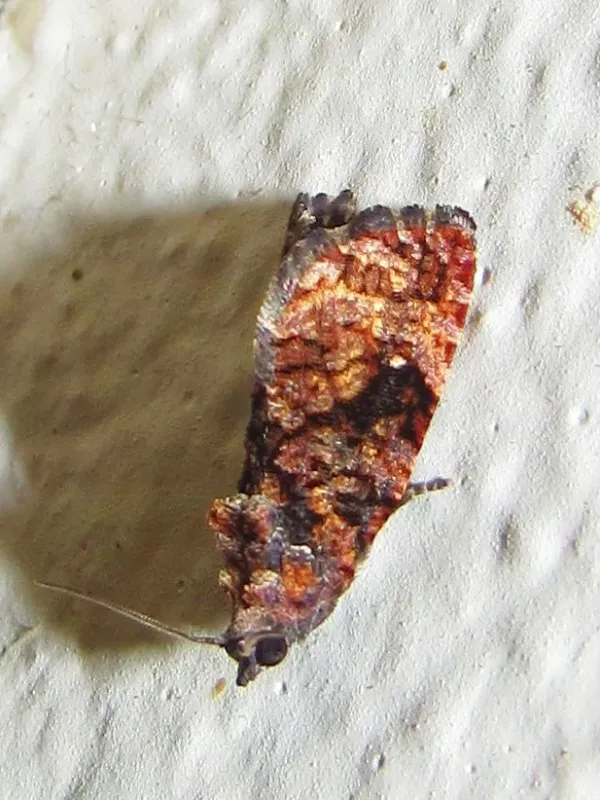
The Citrus fruit borer (Gymnandrosoma aurantianum) is a moth belonging to the Tortricidae family. These small insects are well-known for their camouflage abilities, as their brown-gray wings blend perfectly with the bark of citrus trees.
The insect undergoes a complete metamorphosis, including four stages: egg, larva, pupa, and adult. Females typically deposit their eggs near the calyx of the fruit, providing the hatching larvae with a direct path into the fruit tissues.
The larvae progress through several instars. Younger larvae are pale, while older ones transition to a reddish-brown color with a distinct, hardened head capsule designed to penetrate the dense rind of citrus fruits.
Pupation often occurs inside the fruit or in the soil beneath the canopy, depending on the environmental conditions. This hidden lifestyle makes the borer difficult to target during its pupal stage.
As a highly reproductive species, it can complete multiple generations in a single season. This rapid development allows populations to explode quickly, posing a severe threat to commercial citrus orchards if left unmonitored.
What it damages
The pest primarily targets citrus species, including oranges, mandarins, lemons, and grapefruits. The direct impact on the fruit itself causes significant economic losses for farmers worldwide.
Upon hatching, the larvae tunnel through the rind and deep into the fruit flesh. These internal galleries compromise the integrity of the fruit and create pathways for secondary infections by bacteria and fungi.
Infested fruits frequently drop prematurely from the tree. Those that remain often show signs of early ripening or color change, rendering them completely unmarketable for fresh consumption or processing.
In high-density infestations, crop losses can reach up to 50% of the total harvest. The damage is not limited to the physical loss of the fruit but also extends to the quality degradation caused by rot.
While citrus is the main host, the insect's polyphagous nature allows it to survive on other plant species, which complicates eradication efforts and makes continuous orchard surveillance necessary.
Signs of infestation
The most reliable sign of an infestation is the presence of small entry holes on the fruit surface. These are often accompanied by frass or excrement particles ejected by the feeding larva.
Premature yellowing or color change in fruits while they are still on the tree is a classic symptom of internal borer activity. Affected fruits often feel less dense or show signs of uneven tissue growth.
Inside the fruit, the damage is characterized by winding tunnels and darkened, decaying areas where the larva has been feeding. The flesh around these tunnels is usually unsuitable for consumption due to microbial growth.
Adult moth presence can be monitored using pheromone traps. These traps provide crucial data on the timing of moth flights, which is essential for scheduling preventative or corrective interventions.
Deformation of the fruit, such as small mounds or irregular indentations on the skin, often indicates that the borer entered the fruit at an early stage of development, causing asymmetrical growth.
Control measures
Effective management of the Citrus fruit borer requires an Integrated Pest Management (IPM) approach. This involves combining cultural practices with biological and chemical tools to minimize damage.
The most important cultural practice is the regular collection and disposal of fallen and damaged fruit. By removing these fruits, growers can destroy the larvae inside, preventing them from developing into the next generation.
Pheromone traps are essential for both monitoring and mating disruption. Mating disruption technology creates a high concentration of synthetic pheromones in the orchard, preventing males from finding females and thus reducing total egg deposition.
Biological control includes the release of parasitoids such as Trichogramma wasps. These natural enemies attack the pest at the egg stage, providing a powerful way to suppress populations without the use of broad-spectrum pesticides.
Chemical control should only be used as a last resort, strictly adhering to the economic thresholds. Selective insecticides should be chosen to minimize impact on beneficial insects, and application timing must be precise to catch larvae before they enter the fruit.
Taxonomy
- Latin name
- Gymnandrosoma aurantianum
- Order
- Lepidoptera (butterflies)
- Family
- Tortricidae
- EPPO code
- ECDYAU
Discussion
No discussions yet — be the first.