
Bandicoot rat
Gunomys
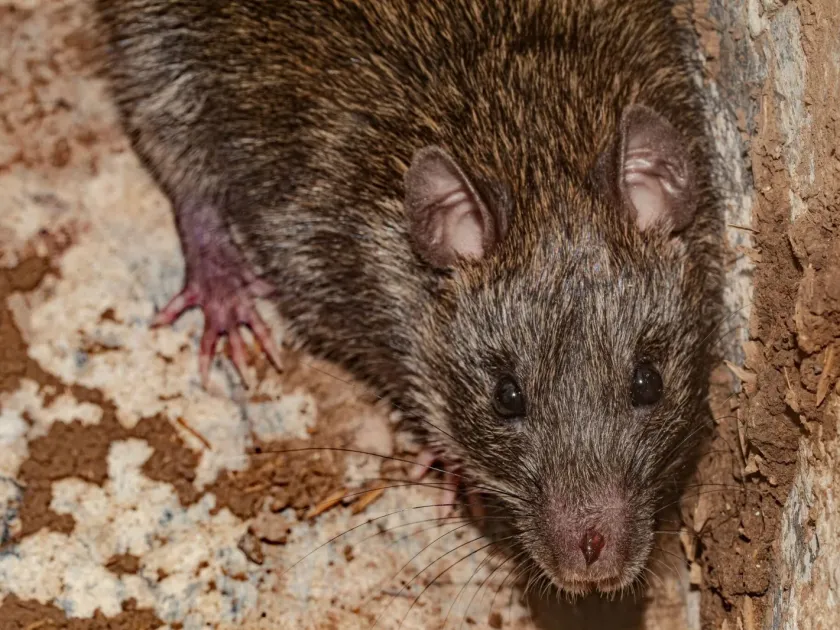
Description
How to identify
Bandicoot rats (genus Gunomys or Bandicota) are large rodents belonging to the Muridae family, highly destructive to agriculture in Asia.
They are characterized by a robust body, coarse dark-brown fur, and a relatively short, thick tail that distinguishes them from common house rats.
Equipped with powerful claws and sharp incisors, these rodents are master excavators, capable of creating deep and complex burrow systems.
They are known for their territorial behavior and high level of aggressiveness, which allows them to outcompete other small mammals in agricultural landscapes.
Adult specimens are significantly larger than most other rat species, which correlates with their substantial caloric requirements and high pest potential.
What it damages
These rodents cause massive losses in rice paddies by cutting stems at the base and consuming grain, leading to severe yield reductions of up to 50%.
Beyond rice, they target sugarcane, maize, vegetables, and root crops, causing damage both to the standing crop and to stored produce in barns.
Their burrowing activity in irrigation embankments leads to significant water leakage and soil erosion, destabilizing the infrastructure of paddy fields.
In storage facilities, they consume large quantities of grain and contaminate the remainder with waste, rendering it unfit for human or animal consumption.
Field-level damage often results in the patchy destruction of crops, making harvesting difficult and further reducing the overall farm efficiency.
When it appears
Bandicoot rats breed prolifically throughout the year, with population surges occurring when food sources like ripening crops are abundant.
Their life cycle is rapid; females can produce several litters annually, with 6 to 10 pups per litter, ensuring swift population recovery after pest control efforts.
Activity peaks during the crop maturity stage, as the rodents move into fields in large numbers to exploit the concentrated food supply provided by the grain.
During dry spells, they migrate towards human settlements and storage structures, where they continue to cause economic damage to food reserves.
Early maturity and a high reproductive rate make it extremely difficult to maintain their numbers below the economic injury level without continuous intervention.
Signs of infestation
The most visible sign of an infestation is the presence of large soil mounds near the entrance of complex burrow networks across the fields.
Accumulations of cut plant stems, particularly rice or maize stalks, are reliable indicators of concentrated foraging activities in specific field areas.
Subsurface damage, such as water leakage from irrigation channels or sinking of field embankments, strongly suggests the presence of underground tunnels.
Footprints in soft, moist soil and distinct odours near burrow entrances help farmers pinpoint the exact locations of the pest population.
Evidence of partially gnawed root crops left near burrow exits provides further confirmation of the bandicoot rat's presence in the cultivated area.
Control measures
The most effective strategy involves using rodenticides placed deep inside the burrows, ensuring the chemical reaches the target while minimizing environmental exposure.
Keeping the perimeter of fields free from brush, weeds, and debris is crucial to deny the rats cover and suitable nesting sites near the crop.
Flooding irrigation channels and burrow systems can force the rodents out of their underground homes, though this is only effective in specific field conditions.
Mechanical trapping is recommended in storage buildings and small-scale farms to reduce the population without relying solely on toxic chemicals.
- Consistent monitoring of burrow density.
- Encouraging natural predators like owls and snakes in the ecosystem.
- Implementing community-wide pest management programs for long-term control.
Taxonomy
- Latin name
- Gunomys
- Order
- Rodents
- Family
- Muridae
- EPPO code
- GUNOSP
Discussion
No discussions yet — be the first.