
Pest · Diptera (flies) · affects Melons and gourds, Button mushroom, Berry crops
Especially harmful
Sciaridae
Sciaridae
Description
How to identify
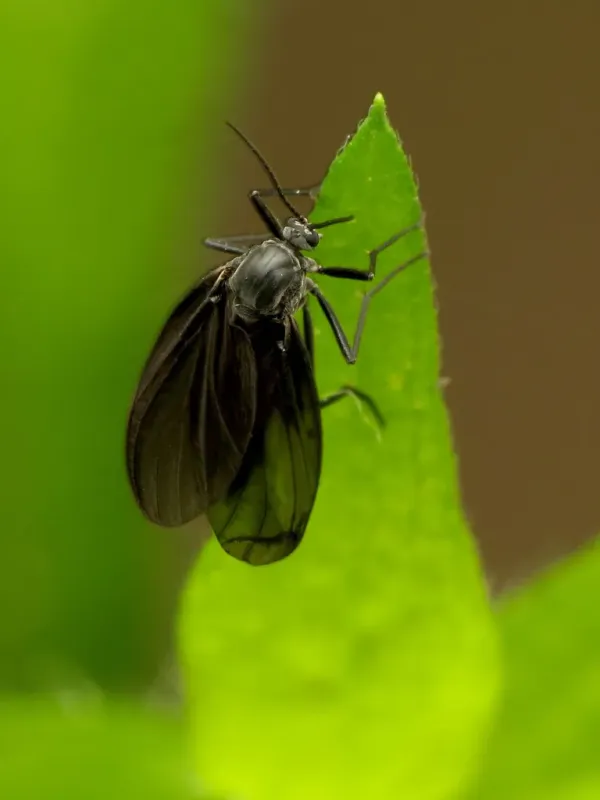
Sciaridae, commonly known as fungus gnats, are a family of small dipterous insects. Adult gnats are typically 1–4 mm long, with a delicate dark or black body and long, thread-like antennae.
The life cycle consists of four stages: egg, larva, pupa, and adult. Adults are short-lived, surviving for only about a week, and they focus primarily on mating and laying eggs in moist substrates.
Larvae, which are the main cause of damage, are worm-like, 3–5 mm long, with a characteristic shiny black head and a translucent body that reveals the contents of their digestive tract.
They thrive in environments rich in organic matter and high moisture levels, with temperatures between 20–25°C providing the optimal conditions for rapid population growth.
In greenhouses and indoor settings, a full generation can develop in as little as three to four weeks, allowing for multiple overlapping generations throughout the year.
What it damages
Sciaridae primarily affect a wide variety of plants, including greenhouse crops, houseplant collections, and tender seedlings, which are the most susceptible to infestation.
The larvae feed on fine root hairs and young roots. This feeding activity damages the root system, causing the plant to lose its ability to take up water and nutrients effectively.
In addition to direct feeding, the larvae can tunnel into the stems of cuttings and young seedlings, often leading to secondary infections by pathogens like Pythium or other fungal rot agents.
Heavily infested plants show significant signs of stress, including stunted growth, yellowing foliage, and a lack of vigor, which can eventually lead to complete plant death.
In propagation areas, the presence of fungus gnats is particularly detrimental, as they can quickly destroy the root systems of delicate cuttings before they establish themselves.
Signs of infestation
The most obvious sign of an infestation is the presence of small, dark adult flies hovering near the soil surface or flying around the plant when disturbed by watering.
Affected plants begin to wilt or yellow unexpectedly, even when the soil moisture is sufficient, indicating that the root system is no longer functioning properly.
Visual inspection of the soil surface or the underside of pots may reveal the presence of small, white-to-clear larvae, which are highly sensitive to light and quickly burrow into the soil.
Excessive humidity combined with a musty or decaying odor from the potting mix suggests an environment that is currently supporting or encouraging a Sciaridae outbreak.
Yellow sticky traps placed near the base of the plants will quickly catch adult gnats, serving as a reliable monitoring tool to confirm the presence and scale of the infestation.
Control measures
Cultural control is the first line of defense; allow the top few centimeters of soil to dry out between waterings to disrupt the favorable environment required for larval development.
Yellow sticky cards are highly effective for capturing adult gnats, which helps break the reproductive cycle and provides an accurate assessment of the population level.
For more severe cases, soil drenches with appropriate systemic insecticides can be used to eliminate larvae directly within the root zone, ensuring proper application according to label guidelines.
Biological control agents, such as predatory nematodes like Steinernema feltiae, can be applied to the soil to safely and effectively hunt and consume fungus gnat larvae.
Preventative measures, including the use of high-quality sterilized potting media, avoiding over-application of organic fertilizers, and keeping the growing area clean, are essential for long-term management.
Content graph
Connections · Sciaridae
Most often together:
Marketplace
Products · 2
Biology
Taxonomy
- Latin name
- Sciaridae
- Order
- Diptera (flies)
- Family
- Sciaridae
- EPPO code
- 1SCIAF
Community
Discussion
No discussions yet — be the first.