
Gretchena
Gretchena
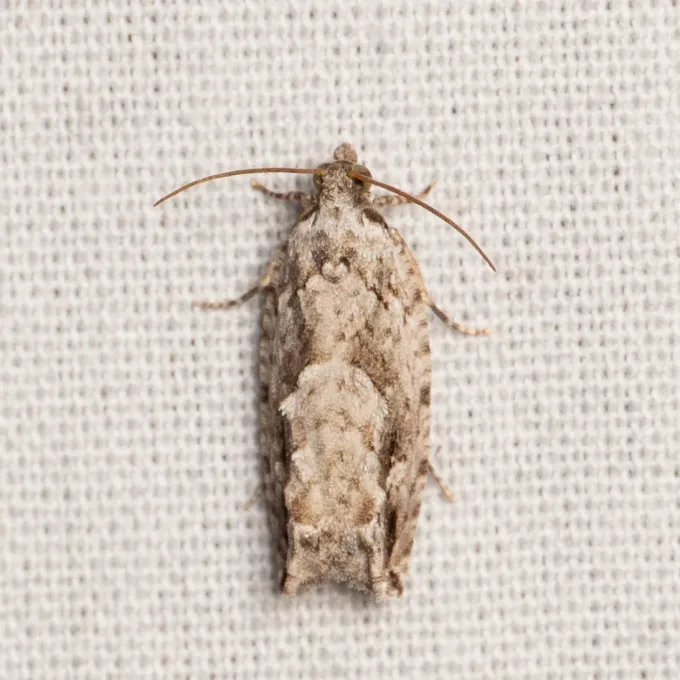
Description
How to identify
The genus Gretchena belongs to the family Tortricidae, which is part of the order Lepidoptera. These are small moths that often remain unnoticed due to their protective coloration.
Adult individuals possess a wing structure characteristic of the Olethreutinae subfamily with distinct patterns that help them blend into tree bark during the day.
Larvae, or caterpillars, go through several developmental instars, changing their coloration from light cream to pink or green depending on the species and food source.
Identifying specific species of the genus often requires analyzing the genitalia of the imago, as they may externally resemble other fruit-boring moths.
Eggs are laid by females singly or in small groups on the surface of leaves, buds, or young shoots, depending on the preferences of each specific species.
What it damages
The main damage to plants is caused by larvae that lead a hidden lifestyle, penetrating inside young shoots, buds, or fruits.
The most frequent targets are nut-bearing crops, such as pecans or walnuts, as well as certain types of Rosaceae trees.
Caterpillars bore tunnels inside delicate shoots, which leads to wilting, distortion, and subsequent drying of the tops.
When fruits are damaged, the larvae consume internal tissues, significantly reducing the market value of the crop and making it unsuitable for storage.
Damaged tree areas become entry points for secondary infections, including fungal diseases and bacterial pathogens.
When it appears
The activity of Gretchena adults usually begins in spring when average daily air temperatures consistently exceed 10-12 degrees Celsius.
The peak flight of the first generation often coincides with the period of bud burst and active vegetative growth of fruit trees.
The development of several generations within a single season allows the pest to rapidly increase population numbers under favorable weather conditions.
The greatest damage is observed in mid-summer, when larvae of the second or third generation are feeding intensively on growing shoots.
Preparation for winter for most species in the genus occurs at the pupal or larval stage inside dense cocoons hidden in bark crevices or litter.
Signs of infestation
The first visual sign of the pest's presence is the appearance of wilting tips — tops of young shoots that suddenly lose turgor.
On the surface of the bark or near petiole attachments, one can discover caterpillar excrement, often entangled with silk into small clumps.
Upon detailed inspection of the shoot, an entry hole is revealed, from which gum or plant sap may exude.
Leaves on damaged areas often curl or deform, which is a consequence of disrupted sap flow within the tissues.
In cases of fruit infestation, evidence of larval penetration and accumulations of brown frass — the products of their activity — are visible on the surface.
Control measures
An important stage of control is sanitary pruning and timely removal of infested shoots where the pest larvae are localized.
The use of pheromone traps allows for monitoring moth populations and determining the exact timing for insecticide applications.
Biological control agents, including products based on Bacillus thuringiensis, show high efficacy against young larvae.
Chemical treatments should be carried out using contact-systemic insecticides during the period of mass egg hatching.
- Timely removal of loose and dead bark from trunks.
- Attracting natural entomophages (like Trichogramma) to the orchard.
- Removal and destruction of plant debris in the fall.
Taxonomy
- Latin name
- Gretchena
- Order
- Lepidoptera (butterflies)
- Family
- Tortricidae
- EPPO code
- GRETSP
Discussion
No discussions yet — be the first.