
Rose fruit moth
Grapholita tenebrosana
Description
How to identify
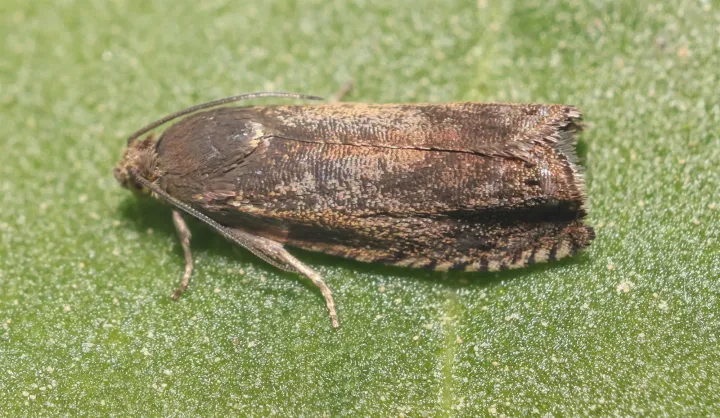
The rose fruit moth (Grapholita tenebrosana) is a member of the Tortricidae family within the Lepidoptera order. Adult moths have a wingspan of 12–15 mm and are characterized by dark brown forewings with a subtle metallic sheen and distinct whitish transverse markings along the anterior edge.
The larvae are typical tortricid caterpillars, growing up to 10–12 mm in length. Their body color ranges from creamy yellow to pink, while the head capsule and the prothoracic plate are dark brown or black. The body is sparsely covered with short, fine setae that are difficult to see without magnification.
This species overwinters as a mature larva in a silken cocoon. These cocoons are typically hidden in bark crevices, dry plant debris, or within the upper layers of the soil near the host plant. Pupation occurs in the spring when temperatures rise, marking the beginning of the new life cycle.
Adult emergence typically aligns with the blooming period of wild roses (rose hips). Females deposit eggs singly on the sepals of young fruit buds or on the pedicels, ensuring that the emerging larvae have immediate access to their preferred food source.
A single female can lay between 50 and 80 eggs. Under favorable climatic conditions, the larval development is rapid, allowing the moth to complete its life cycle effectively within a single season, often with multiple overlapping stages.
What it damages
The primary hosts of this pest include various species of the Rosaceae family, specifically wild rose hips and ornamental garden roses. The larvae specifically target the generative organs, including developing buds, flowers, and fruits, causing both cosmetic and agricultural loss.
Upon hatching, the caterpillar bores into the ovary or fruit. It feeds on the internal tissues, consuming the developing seeds and fruit pulp. This feeding behavior leads to the premature ripening, yellowing, and eventual dropping of the infested fruits.
Damage to the pedicel or the base of the flower bud often results in the immediate wilting and subsequent death of the entire bud. This is particularly damaging to ornamental rose varieties, as it destroys the aesthetic value and reduces the number of blossoms.
In commercial nurseries, the rose fruit moth can significantly compromise the quality of seed production. Furthermore, the boreholes created by the larvae serve as entry points for secondary pathogens, such as fungal infections, which lead to rapid decay of the fruit tissues.
As the larvae grow, they may move from one fruit to another, using silk threads to navigate between them. This behavior allows a single individual to destroy several fruits during its development, potentially escalating the scale of damage within the planting.
When it appears
The emergence of the first generation of adults generally occurs between late May and early June, closely correlated with the budding phase of rose plants. Moths are nocturnal and tend to remain inactive and hidden in dense foliage during the daylight hours.
Mass larval hatching usually follows about 7 to 12 days after the initial moth flight. This window is critical for growers, as it represents the most vulnerable stage for applying control measures before the larvae bore into the fruit.
Depending on the geographic region and climate, the moth may complete one or two generations per year. The second generation, if present, poses a threat to later-ripening fruits, effectively extending the period of infestation through the summer.
Weather conditions significantly impact population dynamics; a cold spring may delay emergence, while a warm, dry summer promotes accelerated development and higher survival rates for the larvae.
As autumn approaches, the final generation of larvae reaches maturity and seeks sheltered sites for overwintering. Sanitation efforts during this time are essential to reduce the population density for the following growing season.
Signs of infestation
The most reliable sign of an infestation is the presence of small entry holes on the surface of rose hips, often accompanied by small amounts of brownish frass (larval excrement). Affected fruits often appear misshapen, bumpy, or prematurely discolored.
Wilting or drooping buds and shoots are classic indicators of internal feeding. A close inspection of the stem or pedicel near the wilted area often reveals a bore hole where the caterpillar entered the tissue.
The presence of fine silk webbing between fruits or leaves indicates the activity of larvae. They use these threads for both movement and protection, tethering fruits together while they feed on the interiors.
When an infested fruit is opened, the caterpillar can usually be found inside. The interior pulp will be largely hollowed out or replaced by dark, granular waste, and the seeds will often be destroyed or entirely consumed.
A sudden, unexplained drop of immature rose hips in mid-summer is a strong indicator of an active fruit moth presence. Regular inspection of the ground beneath the plants for dropped fruits is a vital part of pest monitoring.
Control measures
Cultural control is the cornerstone of management. Regularly collecting and disposing of dropped or infested fruits prevents larvae from pupating in the soil. Deep cultivation of the soil around the base of the bushes in autumn can also disrupt the overwintering cocoons.
Chemical control involves the application of systemic or contact insecticides during the period of larval hatching. Timing is paramount; treatments must be applied before the larvae penetrate the fruit or plant tissue, as they are shielded once they are inside.
Biological control options include using products based on Bacillus thuringiensis, which are effective against young larvae while having a lower impact on beneficial insects. Pheromone traps are also highly recommended for monitoring flight patterns to time sprays accurately.
- Prune and destroy all wilted buds and shoots showing signs of infestation.
- Encourage natural predators such as birds and parasitic wasps in the garden.
- Implement crop rotation in nurseries to prevent the buildup of soil-borne pupae.
- Use sticky bands or pheromone traps to reduce adult populations and monitor infestation levels.
An integrated pest management (IPM) approach that combines monitoring, cultural practices, and targeted treatments ensures the best results. By remaining vigilant and reacting early to the first signs of damage, you can effectively protect your rose bushes and harvest.
Taxonomy
- Latin name
- Grapholita tenebrosana
- Order
- Lepidoptera (butterflies)
- Family
- Tortricidae
- EPPO code
- LASPRO
Discussion
No discussions yet — be the first.