
Cherry fruit moth
Grapholita packardi
Description
How to identify
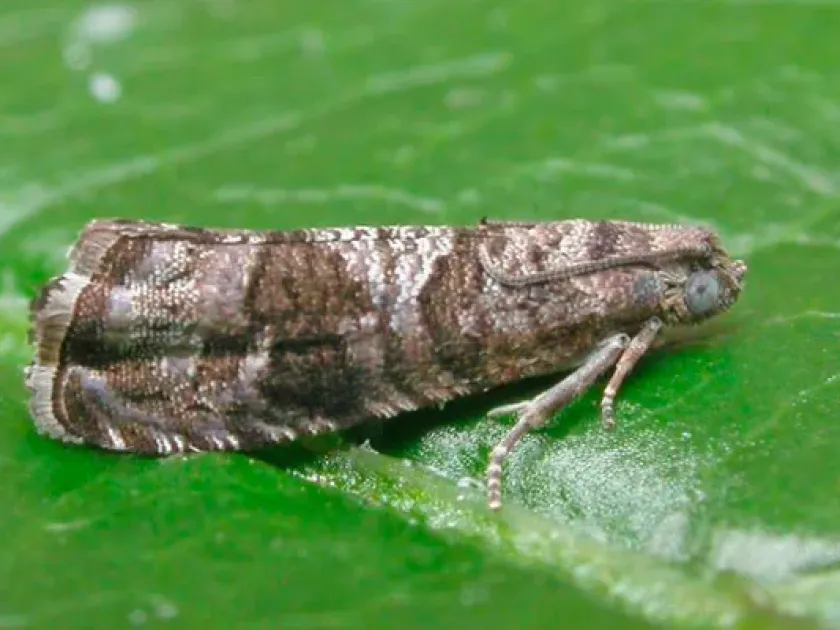
The cherry fruit moth (lat. Grapholita packardi) is a member of the Lepidoptera order and the Tortricidae family. This small moth typically has a wingspan of about 10–13 mm. Its forewings are dark brown or grayish-brown, featuring distinct light-colored patterns that aid in camouflage against tree bark.
The larvae, or caterpillars, reach a length of approximately 10–12 mm. Their bodies are typically pinkish-white or cream-colored, characterized by a dark head and a prominent thoracic shield. A crucial diagnostic feature is the dark anal plate located on the final abdominal segment.
Pupae of this species are encased within dense, silk-like cocoons. They are usually brown and can be found in sheltered locations such as bark crevices, plant debris, or just beneath the soil surface. This stage is primarily used for overwintering and surviving adverse conditions.
The life cycle is closely synchronized with the phenological development of host fruit trees. Depending on the climate and regional temperature, the moth can produce one or multiple generations per growing season. Pupation usually begins in early spring as temperatures rise.
Adult females deposit eggs individually on fruit stalks, young leaves, or the surface of developing fruits. Once hatched, the larvae quickly bore into the fruit. This rapid penetration makes them difficult to target with conventional surface-acting insecticides once they are inside.
What it damages
The primary hosts for the cherry fruit moth include various stone fruits such as cherries, sweet cherries, plums, and peaches. In commercial orchards, this pest can cause significant economic losses by rendering fruit unmarketable and inducing premature fruit drop.
Damage is caused by the larvae feeding inside the fruit. They bore tunnels through the flesh, often targeting the area near the pit. Frequently, sap (gummosis) exudes from the entry hole and hardens on the surface of the fruit, creating a distinct visual indicator of infestation.
Infested fruits lose their commercial quality and become susceptible to secondary infections, such as brown rot or other fungal diseases. The interior of the fruit often contains frass (excrement), which makes the produce entirely unsuitable for fresh consumption or processing.
In addition to fruits, larvae may also attack young, tender shoots. By boring into the growing tips, they cause the shoots to wilt and die back. This type of damage can stunt the development of young trees and affect the formation of the orchard's canopy.
High levels of infestation can lead to yield losses of up to 50% if left unmanaged. Furthermore, trees weakened by repeated attacks are more prone to winter injury and other environmental stressors, ultimately reducing the productive lifespan of the orchard.
When it appears
The flight activity of the adult moths typically begins in the spring, coinciding with the flowering of stone fruit trees. Moths are primarily crepuscular, meaning they are most active during dusk and dawn, which is when mating and oviposition occur.
Larval development for the first generation occurs during the fruit expansion phase. This is a critical window for orchard monitoring, as the larvae are most vulnerable to control measures immediately after hatching and before they successfully bore into the fruit tissues.
Throughout the summer, generations may overlap, especially in warmer climates. This requires growers to maintain consistent vigilance and keep protective barriers on the fruit for an extended period to prevent subsequent infestations from taking hold in ripening crops.
As autumn approaches and temperatures drop, the final generation of larvae finishes feeding. They exit the fruits and seek protected sites to spin their overwintering cocoons. These sites include tree bark fissures, fallen leaves, or sheltered areas beneath the canopy.
Integrated Pest Management (IPM) programs rely heavily on pheromone traps to monitor adult moth populations. By tracking the start and peak of flight activity, growers can time their interventions precisely, ensuring maximum efficacy and minimizing unnecessary pesticide use.
Signs of infestation
The most reliable sign of an active infestation is the presence of small entry holes on the fruit skin, often accompanied by sticky droplets of hardened sap. This indicates that a larva has successfully penetrated the fruit and is currently feeding.
Infested fruit often exhibits uneven ripening, deformation, or soft spots. If a suspected fruit is cut open, one can typically find a larval tunnel, accumulated excrement, and the caterpillar itself. The flesh inside often appears discolored and mushy.
- Sticky resinous droplets on the surface of cherries or plums.
- Small, dark entry holes near the fruit stem.
- Premature fruit drop and shriveling of young, developing berries.
- Wilted, dying tips of young shoots during the mid-summer growth period.
- Tight, silken cocoons found beneath loose tree bark during winter pruning.
Wilted or flagging terminal shoots are a clear indicator of shoot-boring activity. If such a shoot is dissected, the characteristic internal tunnel is a definitive diagnostic feature confirming the presence of Grapholita packardi or similar fruit moth species.
Orchardists should be concerned by excessive fruit drop, as much of this fallen produce contains active larvae. Removing and destroying this fallen fruit is essential to prevent the larvae from completing their development and entering the soil to pupate.
Control measures
Cultural control is the cornerstone of effective management. This includes sanitizing the orchard by removing fallen fruit and clearing debris from under the trees. Additionally, scraping away loose, dead bark from trunks can destroy overwintering sites for the larvae.
Biological control options involve the use of bio-insecticides containing Bacillus thuringiensis or insect-specific viruses. These options are highly effective against larvae while being safe for beneficial insects, pollinators, and the broader orchard ecosystem.
Chemical control focuses on the use of systemic or contact insecticides. Timing is everything: applications should be based on pheromone trap data to ensure the product is applied when neonate larvae are actively crawling on the fruit surface before they can bore inside.
To prevent the development of insecticide resistance, it is crucial to rotate between chemical classes with different modes of action. Always verify the pre-harvest interval (PHI) for every product used to ensure safety and compliance with agricultural regulations.
Using trunk bands in the late summer is a low-cost, effective mechanical method. These bands trap larvae as they search for pupation sites. Collected larvae and bands should be regularly removed and destroyed, significantly reducing the moth population for the following season.
Taxonomy
- Latin name
- Grapholita packardi
- Order
- Lepidoptera (butterflies)
- Family
- Tortricidae
- EPPO code
- LASPPA
Discussion
No discussions yet — be the first.