
Lesser apple fruit moth
Grapholita lobarzewskii
Description
How to identify
The Lesser apple fruit moth (Grapholita lobarzewskii) is a small moth species belonging to the Tortricidae family, known as a significant pest in apple orchards.
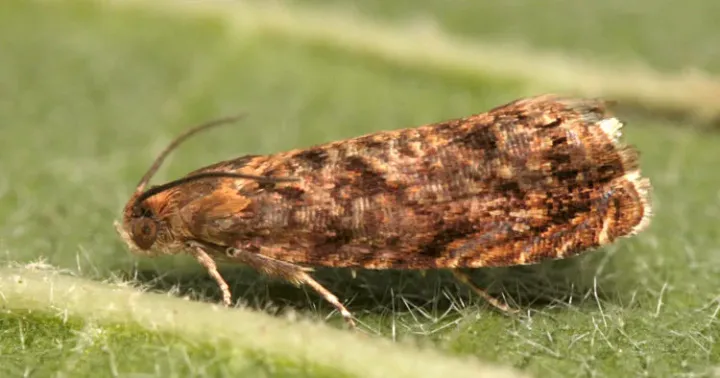
The adult moth is small, with a wingspan of approximately 10–12 mm, featuring dark brown forewings with metallic luster and subtle transverse lines.
The larvae are typically light pink or yellowish-white, with a dark head and thoracic shield, specialized for boring into the fruit flesh.
They overwinter as fully grown larvae in dense cocoons, usually concealed within the bark crevices of host trees or in debris on the ground.
The species biology is closely synchronized with the development of pome fruits, making it a persistent challenge for commercial fruit growers.
What it damages
This pest primarily infests apple fruits, but it may also attack other related pome fruits depending on availability in the surrounding environment.
Larvae cause direct damage by boring through the skin and feeding on the fruit tissue, often leaving winding trails and brown frass on the surface.
High infestation rates lead to significant premature fruit drop and render the harvest unacceptable for both fresh market sale and industrial processing.
Secondary infections, such as fruit rot caused by fungi or bacteria, often establish themselves in the boreholes created by the moth larvae.
Persistent presence in an orchard can drastically reduce yield quality and economic viability if no effective control measures are applied annually.
When it appears
Adult moths typically emerge in the spring, often during the apple blossom period, with the peak flight duration influenced by local temperature fluctuations.
Females deposit eggs on the surface of young fruits or leaves, and upon hatching, the larvae quickly attempt to penetrate the fruit surface.
The development cycle from egg to mature larva occurs during the active fruit growth phase, with the possibility of two generations in warmer regions.
The most active damage period is the summer months, when developing larvae are feeding and growing inside the fruits.
By late autumn, larvae exit the fruit and seek protected overwintering sites, entering a state of diapause until the following spring.
Signs of infestation
Initial signs of infestation appear as small, subtle entry holes on the fruit skin, often surrounded by small amounts of frass or sap exuded from the site.
The tissue surrounding the entry point may discolor, flatten, or become soft, indicating where the larva has tunneled into the fruit flesh.
Upon cutting into the fruit, internal trails filled with larval waste are visible, which is a characteristic symptom of this specific tortricid species.
Premature ripening and the sudden drop of fruits that appear healthy from a distance are strong indicators of an internal pest infestation.
The presence of fine webbing near the entry point or damaged skin areas is a common sign associated with the larval activity.
Control measures
Orchard sanitation is critical; this involves removing old bark from trunks and collecting all fallen fruits to disrupt the pest's lifecycle.
Pheromone traps are essential tools for monitoring adult flight patterns, allowing growers to time insecticide applications accurately for maximum impact.
Chemical control should target the period of egg hatching and initial larval penetration, before the pest gains protection within the fruit flesh.
Biological control, utilizing beneficial insects or microbial-based biopesticides, offers a sustainable alternative to conventional chemical sprays.
Maintaining a regular monitoring schedule throughout the summer allows for quick responses to pest outbreaks, preventing the population from expanding.
Taxonomy
- Latin name
- Grapholita lobarzewskii
- Order
- Lepidoptera (butterflies)
- Family
- Tortricidae
- EPPO code
- CYDILO
Discussion
No discussions yet — be the first.