
Peach fruit moth
Grapholita dimorpha
Description
How to identify
The peach fruit moth, scientifically known as Grapholita dimorpha (associated with the Tortricidae family), is a significant pest primarily targeting stone fruit species in temperate climates.
The adult moth is small, with a wingspan of approximately 15–18 mm. Its forewings are mottled with gray and brown, providing excellent camouflage against tree bark during the day.
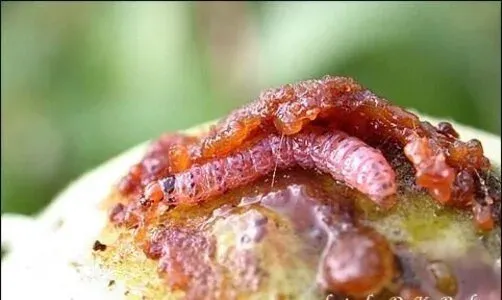
Larvae undergo several developmental stages, starting as pale white caterpillars and maturing into a distinctive reddish-pink color, often reaching 10–12 mm in length.
Pupation occurs within sturdy, silk-lined cocoons, typically hidden in the soil or protected crevices of the tree bark, where they can survive adverse weather conditions.
As a member of the order Lepidoptera, the species exhibits complete metamorphosis, with several generations occurring annually depending on the local temperature profile.
What it damages
The damage is caused exclusively by the larvae, which bore into the fruits of peaches, nectarines, apricots, plums, and cherries, making them completely unmarketable.
In high-density commercial orchards, the peach fruit moth can cause devastating losses, with infestation rates sometimes exceeding 90% if effective control measures are not implemented.
Upon hatching, larvae enter the fruit near the stem or through the skin, creating complex, winding tunnels within the flesh that eventually lead to fruit rot and premature dropping.
In addition to fruit damage, the larvae attack young, tender shoots. They bore into the tips of the shoots, causing them to wilt, twist, and eventually die back, which stunts the tree's growth.
The feeding activity within the fruit leads to secondary infections by various pathogens, including fungi like Monilinia, which further degrade the quality of the harvest.
When it appears
The species overwinters as mature larvae inside cocoons. These are typically located in the topsoil layer around the base of the trees or within the rough bark of the trunks.
Spring emergence of adults occurs when temperatures consistently exceed +15°C, usually coinciding with the fruit set stage of host trees, allowing immediate access to young fruits.
Moths are nocturnal, with peak activity during twilight hours when mating and oviposition (egg-laying) occur directly onto the fruit or the adjacent foliage.
The life cycle from egg to adult takes approximately 30–45 days under optimal conditions. Multiple overlapping generations often emerge throughout the growing season.
As autumn temperatures drop, the final generation of larvae seeks out protected overwintering sites, entering a state of diapause to survive the winter months.
Signs of infestation
A primary indicator of infestation is the presence of small entry holes on the fruit surface, often accompanied by the exudation of gum (gummosis) mixed with larval frass.
If fruits begin to show premature color change, softening, or rot while still on the tree, it is a strong sign that larvae have bored inside the fruit tissue.
Wilting of terminal shoots is another visual symptom. If a wilted shoot is opened, a larval tunnel or the larva itself can typically be found inside the damaged stem.
Early-stage eggs may be observed as tiny, flat, white discs on the leaves or fruit surface, representing the first warning for orchardists to initiate monitoring.
- Gummy droplets on the surface of peaches.
- Premature dropping of underdeveloped fruit.
- Withered terminal shoots on young branches.
- Dark larval excrement (frass) around entry points.
Control measures
Cultural control methods involve meticulous sanitation, such as removing and destroying all fallen fruit promptly to prevent larvae from completing their life cycle in the soil.
Monitoring using pheromone traps is essential for timing insecticide applications accurately, ensuring that sprays hit the target during peak egg-laying or larval hatching.
Chemical control usually involves the application of targeted insecticides during critical growth stages, following local regulations regarding pre-harvest intervals and residue limits.
Biological control options, such as the release of Trichogramma wasps (egg parasitoids), can significantly suppress populations without relying solely on synthetic pesticides.
An integrated pest management (IPM) approach, combining mechanical, biological, and chemical methods, is necessary to keep infestation levels below the economic threshold.
Taxonomy
- Latin name
- Grapholita dimorpha
- Order
- Lepidoptera (butterflies)
- Family
- Tortricidae
- EPPO code
- GRPLDI
Discussion
No discussions yet — be the first.