
Codling moths
Grapholita
Description
How to identify
Codling moths (genus Grapholita) belong to the family Tortricidae. These are small moths with a wingspan of approximately 12–20 mm, characterized by mottled gray or brownish wing patterns that provide effective camouflage against tree bark.
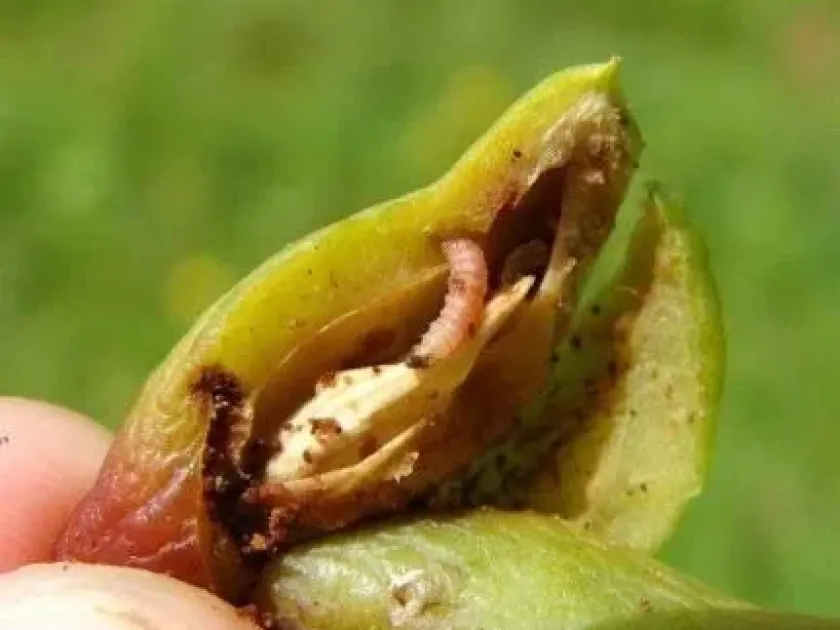
The larvae, or caterpillars, reach lengths of up to 20 mm. They are easily identified by their pale pink or cream-colored bodies and a distinctive dark brown or black head capsule, which is a key morphological feature.
The life cycle of these insects is complete, passing through egg, larva, pupa, and adult stages. Understanding these phases is crucial for determining the timing of monitoring and intervention programs.
They typically overwinter as mature larvae inside thick, protective cocoons. These are usually tucked away in deep bark crevices, pruning wounds, or occasionally in the soil near the base of the host tree.
Due to their high adaptability, these moths can produce multiple generations per season in favorable climates, significantly increasing their potential to cause widespread damage in commercial orchards.
What it damages
Codling moths primarily infest pome and stone fruits, including apples, pears, peaches, and plums. They are considered one of the most destructive pests in global pomology, causing significant yield losses.
Upon hatching, young larvae bore directly into the fruit. They create deep tunnels toward the seed chamber, feeding on the pulp and seeds, which severely compromises the structural integrity of the fruit.
Entry points are usually marked by the presence of frass—a mixture of excrement and silk—which often becomes trapped in the entry hole, providing a clear visual indicator of current infestation.
Infested fruits frequently experience premature ripening and drop from the tree. Those that remain often suffer from internal rot and are unsuitable for fresh market sales or long-term storage.
Persistent infestations weaken the overall productivity of the orchard and can lead to secondary infections, such as fungal rots, entering the fruit through the larval entry and exit tunnels.
When it appears
Adult moth emergence typically begins in the spring when evening temperatures consistently exceed 12–15°C. This activity is often closely tied to the petal-fall stage of apple trees.
Throughout the summer, multiple generations overlap. Monitoring using pheromone-baited traps is essential to determine the timing of peak flight activity and subsequent larval egg-laying cycles.
The most intense damage occurs during the summer months when fruit is developing. Targeted control measures must be implemented before the larvae successfully penetrate the fruit skin.
Later generations represent a significant challenge for late-season varieties, as the window for chemical applications closes as the fruit approaches the harvest maturity date.
As temperatures decline in autumn, the final generation of larvae seeks out secure overwintering sites, marking the transition from active feeding to a state of winter diapause.
Signs of infestation
The most common sign of an active infestation is the presence of prematurely fallen fruit, known as "drops," which contain larval entry holes and internal feeding damage.
When inspecting the fruit on the tree, look for characteristic brown, powdery frass expelled by the larvae at the entry point, often located near the calyx or where two fruits touch.
Discoloration or premature reddening of a specific spot on the fruit surface can indicate internal mining by the caterpillar, which often leads to the fruit shriveling or losing its shape.
Inside the fruit, the damage is unmistakable: a central chamber filled with brown excrement and necrotic tissue, often leading to a breakdown of the fruit's texture from the inside out.
In mature orchards, searching for overwintering cocoons under loose bark flaps in early spring can help estimate the potential population pressure for the upcoming growing season.
Control measures
- Using pheromone traps for population monitoring and mating disruption strategies.
- Applying registered insecticides during peak larval egg-hatch periods.
- Sanitation practices: removing and destroying all infested "drop" fruit to kill larvae.
- Installing corrugated cardboard wraps on trunks to provide trap sites for pupating larvae.
- Encouraging natural predators such as parasitic wasps, predatory beetles, and insectivorous birds.
Chemical control remains a staple in commercial management; however, it must be carefully timed with degree-day models to hit the vulnerable larval stage before entry occurs.
Biological controls, including the use of granulosis virus (CpGV) and beneficial nematodes, have proven effective in reducing codling moth populations while minimizing environmental impact.
Cultural practices like thinning fruit to prevent contact between clusters reduce the number of sites where larvae can easily bore into the fruit, thereby decreasing overall damage.
Orchard hygiene, including the removal of abandoned host trees and the scraping of loose bark during dormancy, physically limits the available shelters for overwintering larvae.
Taxonomy
- Latin name
- Grapholita
- Order
- Lepidoptera (butterflies)
- Family
- Tortricidae
- EPPO code
- GRPLSP
Discussion
No discussions yet — be the first.