
Eucalyptus snout beetle
Gonipterus gibberus
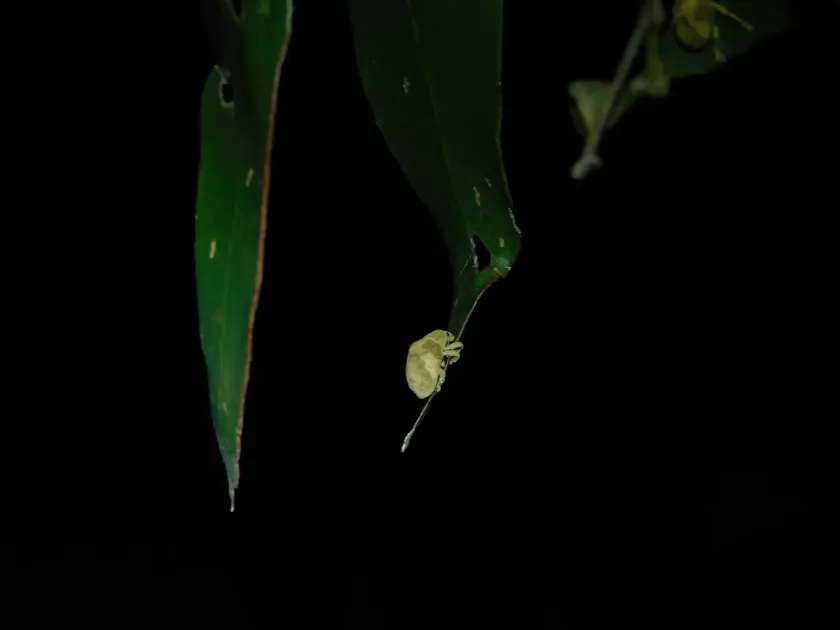
Description
How to identify
The Eucalyptus snout beetle (Gonipterus gibberus) is a member of the Curculionidae family within the order Coleoptera. This small beetle, typically 7 to 9 mm in length, has a robust, brownish-grey body covered with scales.
The insect is characterized by distinctive ridges and bumps on its thorax and elytra. Its coloration allows it to blend seamlessly with the bark and foliage of its host trees, aiding in camouflage.
The larvae are distinct in appearance, typically yellowish-green with dark lateral stripes. They develop on the foliage, eventually dropping to the soil to pupate in earthen cells.
The life cycle is temperature-dependent; in favorable climates, the beetle can produce multiple generations annually, leading to rapid population surges if left unmanaged.
Adult beetles are capable of flying long distances, facilitating the spread of the species across large forest plantations or urban landscapes where eucalyptus is grown.
What it damages
The primary hosts of this beetle are species within the Eucalyptus genus. Both adults and larvae are responsible for significant damage, primarily targeting the leaves and young terminal shoots.
Adults consume the leaf margins, creating characteristic semi-circular notches. This feeding pattern significantly impairs the tree's ability to photosynthesize, weakening the overall plant.
Larvae are even more destructive, feeding on the leaf parenchyma and leaving only the skeleton of the leaf. In severe infestations, trees may become completely defoliated.
Repeated defoliation places immense stress on the trees, leading to stunted growth and increased susceptibility to secondary infections by pathogens and other wood-boring insects.
In young plantations or nursery settings, heavy infestation can cause widespread dieback and mortality, posing a significant economic threat to eucalyptus cultivation.
Signs of infestation
Visible signs of infestation include jagged, notched edges on leaves and the presence of dark, granular fecal matter deposited by larvae on the foliage.
An infested tree often displays a thin, sparse crown with yellowing or browning leaves. This decline in canopy density is a classic symptom of high larval activity.
Small, shiny egg clusters may be found on the surface of young leaves, protected by a dark, hardened substance secreted by the female beetle during oviposition.
Distorted growth at the tips of branches is another indicator, as the insects prefer the tender, nutrient-rich tissues of new shoots for their initial feeding.
The physical presence of the beetles, which often drop to the ground when disturbed (a behavior known as thanatosis), is a sure sign of a localized population.
Control measures
Biological control is the most successful management strategy, primarily using parasitic wasps like Anaphes nitens, which target the beetle eggs and prevent outbreaks.
Chemical control, including the use of systemic insecticides, is generally reserved for nurseries or high-value urban trees where biological agents may not provide immediate relief.
Forestry practices should prioritize maintaining tree vigor through proper site selection and sanitation, which includes the removal of heavily infested material.
Ongoing monitoring using pheromone traps or systematic visual inspections allows managers to track population levels and determine the necessity of intervention.
- Biological control with parasitic wasps
- Application of systemic insecticides
- Sanitary pruning of infested branches
- Regular plantation monitoring and scouting
Taxonomy
- Latin name
- Gonipterus gibberus
- Order
- Coleoptera (beetles)
- Family
- Curculionidae
- EPPO code
- GONPGI
Discussion
No discussions yet — be the first.