
Eucalyptus weevil
Gonipterus cinnamomeus
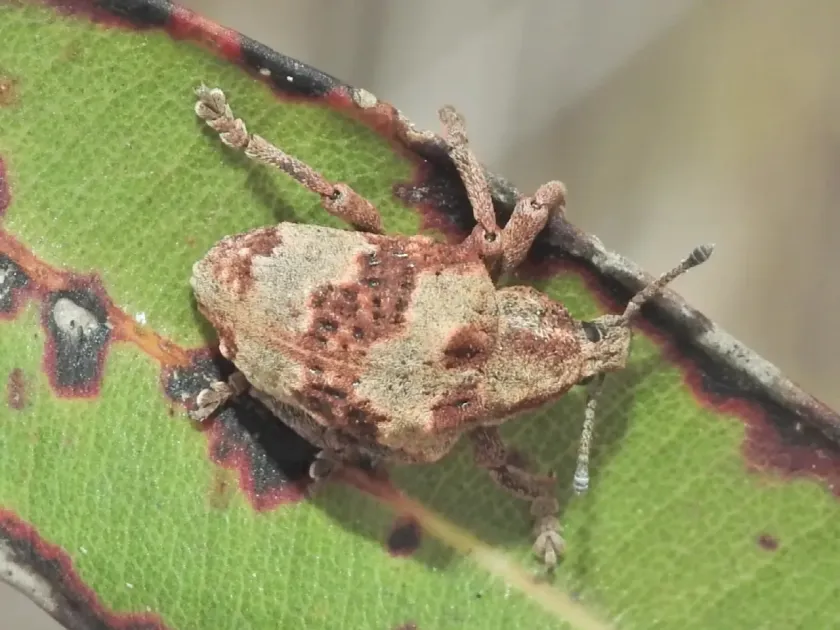
Description
How to identify
The Eucalyptus weevil (Gonipterus cinnamomeus, often referred to within the Gonipterus scutellatus complex) is a significant coleopteran pest belonging to the Curculionidae family. The adult beetle is typically 7-9 mm long, with a reddish-brown body and distinct white patches on the elytra.
The larval stage is characterized by a slug-like appearance, usually yellowish-green in color with a darker dorsal stripe. Larvae possess a chewing mouthpart, enabling them to consume leaf tissue efficiently while often remaining on the underside of leaves for protection.
The insect undergoes a complete metamorphosis involving egg, larva, pupa, and adult stages. Females lay eggs in small batches on young leaves, covering them with a protective fecal capsule to ensure survival against environmental stressors and predators.
Adults are strong fliers and can rapidly colonize new plantations. They are most active during warm, dry weather, feeding on foliage and buds. Their dispersal ability makes the Eucalyptus weevil a challenging pest to contain within a specific geographic range.
Pupation typically occurs in the soil, where the larvae drop down after completing their development on the leaves. The transition from larva to pupa and eventually to adult is highly dependent on ambient temperature, which dictates the number of annual generations.
What it damages
The Eucalyptus weevil exclusively targets eucalyptus species, with a preference for young, tender foliage. Both adults and larvae contribute to the destruction of the tree's photosynthetic apparatus, which is vital for growth and survival.
Adults feed by creating irregular notches along the edges of leaves. Severe infestations often lead to complete defoliation, where the tree loses almost all its leaves, resulting in significant growth reduction and stress that can lead to tree death in young specimens.
Larvae feed by skeletonizing the leaf surface, eating the soft green tissue while leaving the veins intact. This damage pattern makes the leaves brittle, causing them to dry out, turn brown, and fall off well before the natural leaf shedding cycle.
Economic losses in the timber industry are significant, as chronic defoliation stunts tree development and degrades wood quality. Frequent infestations often cause crown dieback and increase the susceptibility of trees to drought and secondary pathogens.
In nursery environments, the impact is particularly acute. Young seedlings can be killed or permanently deformed by the feeding activities of the weevil, requiring replanting and resulting in substantial financial losses for forestry operations.
Control measures
The most effective long-term strategy for managing the Eucalyptus weevil is biological control, particularly the introduction of the egg parasitoid Anaphes nitens. This wasp species has proven highly successful in reducing weevil populations globally.
Chemical control is generally restricted to nursery settings or critical infestations where timber value is at high risk. Systemic insecticides are preferred as they effectively target the larvae feeding on the leaf tissue without immediate environmental degradation.
Integrated Pest Management (IPM) practices focus on regular monitoring and maintaining healthy forest conditions. Ensuring proper tree nutrition and density can enhance the trees' natural resilience against moderate pest pressure.
Sanitation practices, such as removing heavily infested trees or debris, can reduce the number of overwintering sites for the adult beetles. Furthermore, pheromone traps are utilized to monitor population density and determine the optimal timing for intervention.
- Biological control using Anaphes nitens
- Application of systemic insecticides
- Regular monitoring via pheromone traps
- Sanitary thinning of infested stands
Taxonomy
- Latin name
- Gonipterus cinnamomeus
- Order
- Coleoptera (beetles)
- Family
- Curculionidae
- EPPO code
- GONPCI
Discussion
No discussions yet — be the first.