
Eucalyptus snout beetle
Gonipterus
Description
How to identify
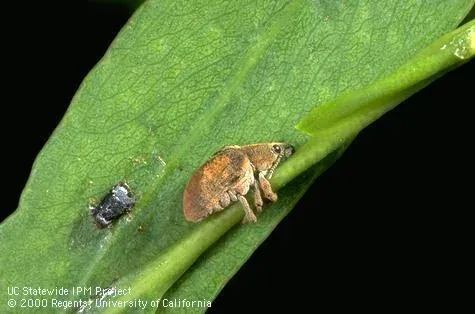
The eucalyptus snout beetle (Gonipterus scutellatus) belongs to the order Coleoptera and the Curculionidae family. Adults are small, reddish-brown to dark brown beetles, measuring about 7–9 mm in length, with distinctive white markings on their wing covers.
The larvae are elongated, yellowish-green with dark lateral stripes, and are covered in a sticky slime that protects them from predators and environmental stress. Eggs are laid in clusters, encased in protective dark brown capsules attached to the surface of young leaves.
The life cycle encompasses the egg, four larval stages, pupal stage, and adult. In temperate or tropical climates, these beetles can produce multiple generations annually, allowing for rapid population growth.
Pupation typically occurs in the soil, often a few centimeters deep. This stage is particularly difficult to target, as the pupae remain protected within the soil profile until they emerge as adult beetles.
The species spreads via wind dispersal and, more significantly, through the transport of infested nursery stock. Their high adaptability enables them to colonize new regions quickly where eucalyptus species are available as hosts.
What it damages
This beetle specifically targets various Eucalyptus species, causing significant damage to young plantations and nurseries. They show a strong preference for the succulent, tender leaves of juvenile growth.
Larvae consume the leaf tissue, leaving only the central midrib, a process known as skeletonization. Adult beetles feed on the edges of the leaves, creating jagged, irregular notches.
Severe infestations lead to massive defoliation, stunted shoot growth, and a general decline in tree vigor. Consistent loss of foliage forces the tree to redirect energy stores, weakening its overall health.
Prolonged damage can result in the dieback of terminal branches and, in extreme cases, the death of entire stands. The economic impact is substantial in forestry operations that rely on eucalyptus for timber or oil production.
Plants under high stress from beetle feeding are more susceptible to secondary infestations by wood-boring insects and various fungal diseases, complicating management efforts.
Signs of infestation
The most prominent sign of infestation is skeletonized foliage, where leaves are reduced to mere veins. This is easily observed during routine inspections of younger trees.
Look for brown, rectangular egg capsules on the surface of young leaves. Finding these signifies that a new generation of the beetle is present and active.
Frass (larval excrement) appearing as dark, thread-like strands on the remaining leaf tissue is a clear indicator of active feeding by the larvae.
Premature leaf drop is a strong warning sign of a severe outbreak. When large amounts of fragmented or eaten leaves accumulate beneath the trees, immediate action is typically required.
Changes in canopy color, such as a shift toward yellow or light brown in certain branches, indicate physiological stress caused by significant leaf loss and nutrient disruption.
Control measures
Biological control is the most successful long-term strategy for managing this pest. The introduction of the egg parasitoid Anaphes nitens has proven to be highly effective in reducing beetle populations globally.
This tiny wasp attacks the egg capsules of the eucalyptus snout beetle, preventing the larvae from hatching. It is considered a cornerstone of sustainable integrated pest management in affected regions.
Chemical control is generally reserved for nurseries and young, high-value plantations where mechanical or biological options are insufficient. Systemic insecticides are preferred to minimize impact on non-target species.
Strict quarantine measures on the movement of eucalyptus seedlings are essential to prevent the spread of eggs and pupae to uninfested plantations or regions.
Maintaining high forest hygiene, including the removal of heavily infested material and promoting good soil health, helps trees recover more quickly and increases their resilience against pest attacks.
Taxonomy
- Latin name
- Gonipterus
- Order
- Coleoptera (beetles)
- Family
- Curculionidae
- EPPO code
- GONPSP
Discussion
No discussions yet — be the first.