
Gnathotrichus retusus
Gnathotrichus retusus
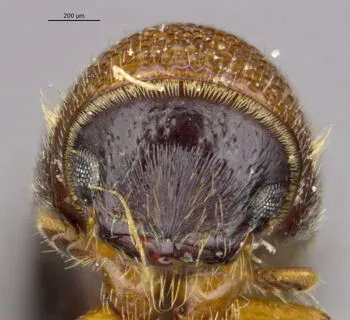
Description
How to identify
Gnathotrichus retusus is a species of bark and ambrosia beetle belonging to the family Curculionidae, subfamily Scolytinae. These small beetles are known for their habit of colonizing softwood trees, particularly conifers, where they develop deep within the wood.
The adult beetle is small, typically measuring 3–4 mm in length, with a cylindrical, dark brown body. The key identification feature is the shape of the elytral apex, which is truncated or emarginated, distinguishing it from related species in the genus.
Unlike traditional bark beetles that feed on phloem, this species is an ambrosia beetle. It maintains a symbiotic relationship with specific fungi, which it introduces into its galleries. The fungus serves as the primary food source for the developing larvae.
Because they live inside the timber, adult beetles are rarely seen. Their presence is usually identified by the subtle physical evidence they leave behind on the bark surface or through internal examination of harvested logs.
The beetle's life cycle is highly dependent on wood moisture content. They preferentially select freshly felled, injured, or weakened trees where the internal environment is ideal for the cultivation of their symbiotic fungal gardens.
What it damages
This pest primarily attacks coniferous species, including firs (Abies), spruces, and pines. It favors the moist wood of freshly cut timber, making it a significant problem in forestry and log storage yards.
The damage is caused by the construction of branched galleries that penetrate deep into the sapwood. These tunnels mechanically disrupt the wood structure, which can cause significant degradation in the quality and value of lumber.
Furthermore, the associated fungi carried by the beetles cause staining in the wood. These dark or bluish-black streaks spread through the wood tissue, rendering the affected material unsuitable for high-grade carpentry or furniture production.
While Gnathotrichus retusus can colonize living, stressed trees, its most significant impact is observed on stored logs. In large stockpiles, unchecked infestations can rapidly lead to massive degradation of the timber.
The economic impact involves both direct financial loss due to wood rejection and the increased costs associated with managing infested areas to prevent the spread of the beetle to healthy stands.
Signs of infestation
The most reliable indicator of an infestation is the presence of fine, light-colored boring dust (frass) on the bark surface. This dust is pushed out by the beetles as they carve their entry holes.
When the bark is removed or inspected closely, small, perfectly round entrance holes approximately 1 mm in diameter are visible. These holes lead directly into the gallery systems deep within the timber.
Dark staining is a hallmark of ambrosia beetle activity. In cross-sections of damaged wood, the galleries are surrounded by a distinct dark-colored border, caused by the fungal growth that persists long after the beetles have emerged.
During the flight season, adult beetles may be attracted to fresh timber piles. They rely on chemical cues (volatiles) released by stressed or recently harvested conifers to locate suitable breeding sites.
On severely infested logs, multiple entrance holes may be clustered together. In some cases, the wood may show signs of sap bleeding if the beetle attacked a tree that still possessed some physiological vitality during the initial colonization phase.
Control measures
The most effective strategy for managing Gnathotrichus retusus is rapid turnover of harvested timber. Removing logs from the forest site before the beetle flight season significantly reduces the risk of successful colonization.
Sanitation of forest sites is critical. Removing logging debris, slash, and storm-damaged timber eliminates the breeding grounds that allow local beetle populations to build up to destructive levels.
Proper log storage is essential for commercial operations. Keeping timber in well-ventilated areas or under conditions that keep the wood surface dry can make the logs less attractive to the beetles.
Pheromone-based monitoring tools can be deployed in forest yards to track population trends. This allows managers to predict the peak flight periods and prioritize the processing of susceptible timber stocks.
Chemical control is rarely effective once the beetles have bored deep into the wood. Preventive spraying of logs with insecticides can provide short-term protection, but it is generally secondary to sound silvicultural and logistical practices.
Taxonomy
- Latin name
- Gnathotrichus retusus
- Order
- Coleoptera (beetles)
- Family
- Curculionidae
- EPPO code
- GNAHRE
Discussion
No discussions yet — be the first.