
Gnathotrichus materiarius
Gnathotrichus materiarius
Description
How to identify
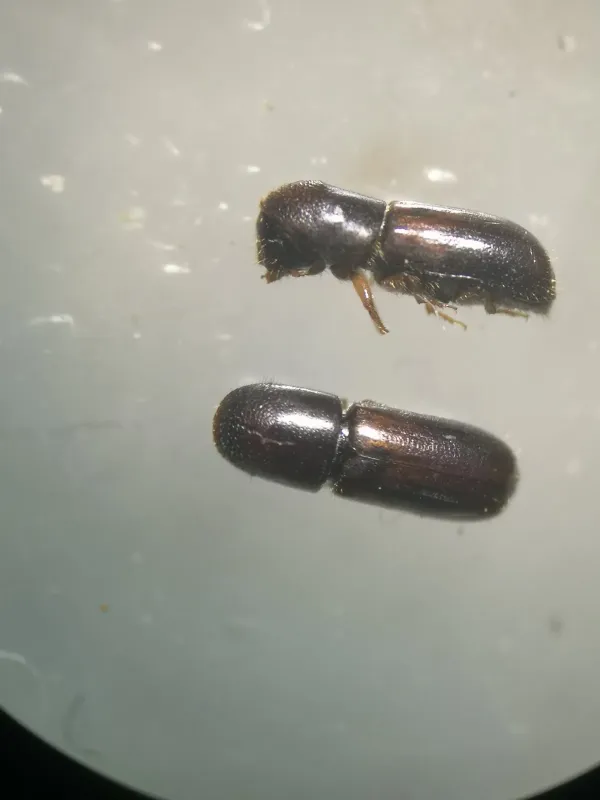
Gnathotrichus materiarius is a species of bark beetle belonging to the family Curculionidae. Adult beetles are small, cylindrical, measuring approximately 3 millimeters in length, with a dark brown to black coloration.
The body is covered with fine setae, which assist the beetle in maneuvering through the narrow tunnels it excavates within the wood. As an ambrosia beetle, it relies on symbiotic fungi to feed its offspring.
The head is partially recessed into the pronotum, a structural characteristic common to many members of this subfamily, often visible only under magnification.
The larvae are small, legless grubs with a curved body, developing within the gallery systems created by their parents. They feed strictly on the mycelium of the fungi cultivated within the wood tunnels.
Unlike many other bark beetles that colonize the cambium layer, this species bores deep into the sapwood and heartwood, which makes it a significant pest for wood production.
What it damages
This beetle primarily affects conifers such as pines, spruces, and larches. It targets both weakened, stressed living trees and freshly cut timber stored in forests or yards.
In the timber industry, the damage is severe because the beetles penetrate deeply into the wood. This significantly reduces the commercial value of lumber for construction or decorative use.
The galleries are often stained black or blue by the fungi introduced by the beetle, creating permanent visual defects in the wood known as "blue stain" or "ambrosia damage."
In living trees, heavy infestation accelerates decline and death, especially when the tree's natural defense mechanisms are compromised by drought, wind damage, or other pests.
The economic impact is high because infected timber is often rejected for high-quality purposes due to internal structural degradation and disfigurement of the grain.
When it appears
The activity of Gnathotrichus materiarius begins in spring once ambient temperatures consistently rise above 12–15 degrees Celsius, triggering the emergence of adults.
Peak flight periods occur during late spring and throughout the summer months. Depending on the climatic region, the species can complete one or two generations per year.
Adult beetles overwinter within the galleries they have excavated deep in the wood, entering a state of diapause until the return of favorable temperatures.
The reproduction phase involves constructing complex galleries where the parents prepare a substrate suitable for the growth of symbiotic fungi, which is vital for larval development.
Infestation hotspots are typically found in areas with large amounts of logging slash, fallen timber, or forests suffering from poor management or adverse climatic conditions.
Signs of infestation
The most distinctive sign of an infestation is the appearance of small, perfectly circular entry holes on the bark or directly on exposed wood surfaces.
A fine, powder-like sawdust, known as boring dust, is usually found near these holes, as beetles eject the debris while excavating their interior tunnels.
Dark patches or streaks observed on the wood surface or during cross-cutting indicate deep colonization and the presence of fungi introduced by the beetles.
Yellowing needles on a tree combined with the presence of entry holes are reliable indicators that the tree has been colonized and is in the process of dying.
- Circular holes measuring 1.0–1.5 mm in diameter.
- Accumulation of fine, light-colored sawdust at the tree base.
- Dark fungal staining inside the wood tunnels.
- Evidence of mycelial growth inside the gallery network.
Control measures
The most effective strategy for managing this pest is the timely removal and processing of freshly cut timber from the forest before the beetle's flight season begins.
If logs must be stored, debarking is a highly effective cultural control method, as it significantly discourages colonization by the beetles.
Chemical control can be applied to valuable stockpiles of timber using contact insecticides to create a barrier that prevents the initial beetle attack.
Sanitary management of the forest, including the removal of dead or severely stressed trees, is essential to minimize the breeding sites and reduce overall population pressure.
Pheromone traps are used for monitoring purposes to track population density and timing, allowing for targeted protective interventions in commercial forest management.
Taxonomy
- Latin name
- Gnathotrichus materiarius
- Order
- Coleoptera (beetles)
- Family
- Curculionidae
- EPPO code
- GNAHMA
Discussion
No discussions yet — be the first.