
Gluvia
Gluvia
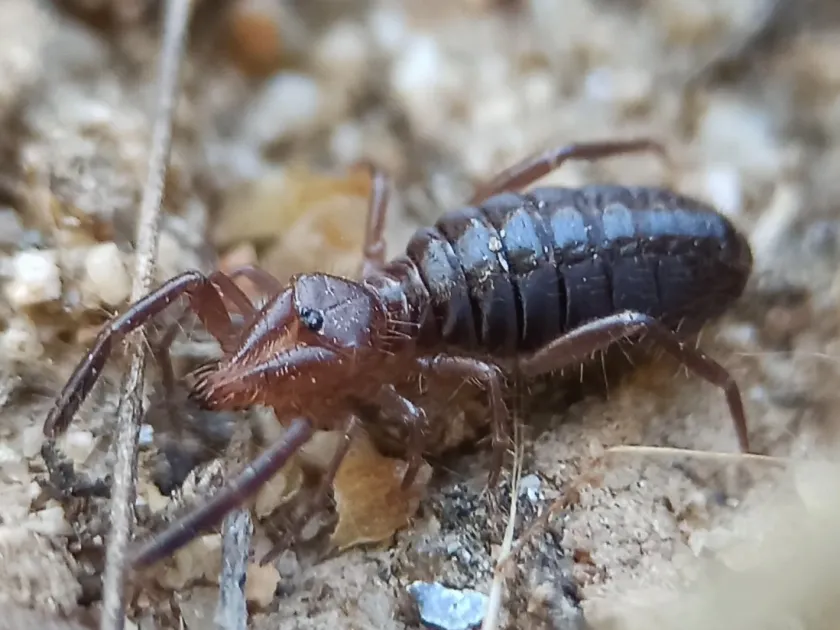
Description
How to identify
Gluvia is a genus of solifuges (commonly known as camel spiders or wind scorpions) belonging to the family Daesiidae. They are not spiders, but rather a distinct order of arachnids with unique physiological traits.
They are characterized by strong, pincer-like chelicerae, four pairs of legs, and a body covered with sensory hairs. They do not possess venom glands, making them physically non-dangerous to humans despite their frightening appearance.
These creatures are primarily nocturnal hunters. They possess high mobility and are capable of traversing various types of terrain, including agricultural fields and garden plots.
Identification of the genus Gluvia requires expert examination of the cheliceral structure. They vary in size, generally ranging between 2 and 5 centimeters in total body length.
In agricultural contexts, they are frequently misidentified as harmful pests, leading to unnecessary attempts at eradication, whereas they are actually predatory organisms.
What it damages
Members of the genus Gluvia do not feed on plant tissues. They do not eat leaves, roots, stems, or fruits, meaning they do not cause direct damage to cultivated agricultural crops.
Instead, they act as predators, feeding on various small insects, soil invertebrates, and larvae, which often include agricultural pests such as cutworms or grasshopper nymphs.
Their presence on a field is usually a sign of a healthy ecosystem where there is an abundance of food sources, which are the smaller insects they hunt.
Any perceived damage attributed to them is often secondary, such as minor soil disturbance during their burrowing process, which has no significant impact on crop yield.
They should be considered beneficial natural enemies of agricultural pests, and their presence generally indicates a high level of biodiversity in the field.
When it appears
The activity period of Gluvia is highly dependent on ambient temperature and environmental moisture. They are most active during the warm months, peaking from June through August.
During daylight hours, they remain inactive, hiding in burrows or under organic debris to avoid dehydration and high solar radiation.
As nocturnal animals, they become active at night when temperatures drop, providing them with the necessary conditions to hunt for their prey.
As the season shifts toward autumn and temperatures decrease, they retreat deeper into the soil profile to enter a state of dormancy or reduced metabolism for the winter.
In greenhouses or controlled environments, their seasonal cycles can be disrupted, potentially leading to year-round activity if the microclimate remains consistently warm.
Signs of infestation
Signs of their presence include small, circular burrow entrances in the soil, usually found near the base of plants or under stones where they shelter during the day.
Observation at night is the most effective way to identify them. They move quickly across open soil, often visible with the aid of a flashlight during evening inspections.
Unlike phytophagous insects, they leave no feeding marks, leaf skeletonization, or vascular damage on plants, which is the primary indicator that they are not the cause of plant decline.
Fragments of chitinous debris from other insects near their burrow entrances indicate their role as active hunters within the field's food web.
Their appearance in agricultural stores or near crop storage areas usually signals an infestation of other, true pests that serve as the primary food source for the Gluvia.
Control measures
There is no standard chemical control protocol for Gluvia, as they are not considered agricultural pests and do not justify the use of pesticides.
To reduce their presence in specific areas, such as farm buildings, one should focus on removing shelter sources like piles of lumber, stones, or thick organic mulch.
Mechanical cultivation of the soil can disrupt their burrowing habitats, encouraging them to migrate to undisturbed areas, but this is usually unnecessary for crop health.
Avoiding the use of broad-spectrum insecticides helps preserve these beneficial arachnids, which can contribute to the natural biological control of actual plant-eating pests.
Education and awareness among farmers regarding the predatory nature of solifuges can prevent the loss of beneficial ecosystem services provided by these animals.
Taxonomy
- Latin name
- Gluvia
- Family
- Daesiidae
- EPPO code
- GLUVSP
Discussion
No discussions yet — be the first.