
Tsetse fly
Glossina
Description
How to identify
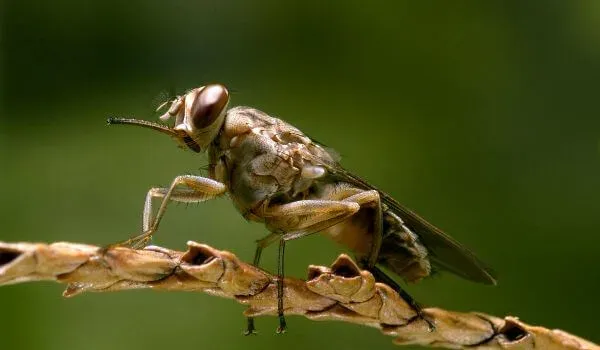
The tsetse fly (genus Glossina) is a large biting fly that lives in tropical regions of Africa, belonging to the order Diptera.
These insects are easily identified by their forward-projecting proboscis and the way their wings fold flat over each other when at rest.
They are generally brownish-grey in color and range from 7.5 to 15 mm in length, which aids in their camouflage in natural habitats.
As obligate hematophages, both males and females rely entirely on the blood of vertebrate hosts for their survival and reproductive cycle.
Taxonomically, they are distinct from other biting flies due to their unique life history and specialized reproductive biology.
What it damages
It is important to clarify that the tsetse fly is not an agricultural pest and does not cause any direct damage to crops or plant tissues.
Farmers do not need to apply protective measures to plants against these insects, as they are not phytophagous and do not feed on vegetation.
The primary economic damage caused by Glossina is related to the livestock sector, as they transmit parasites known as trypanosomes.
These parasites cause sleeping sickness in humans and nagana in animals, which significantly limits agricultural productivity in infested areas.
Consequently, the economic impact is felt through the loss of livestock and the restricted use of fertile grazing lands.
When it appears
Tsetse fly activity is strictly regulated by climate, specifically requiring high humidity and moderate temperatures for optimal survival.
Populations tend to be most active during the rainy season, when vegetation provides enough shade and suitable conditions for pupation.
During drier months, the flies concentrate in riparian corridors and dense forest patches where the microclimate remains stable.
Unlike many other insects, tsetse flies exhibit viviparity, with females depositing a single larva that quickly burrows into the soil.
The development of the pupa within the soil is a critical stage, requiring loose, shaded, and protected ground conditions to succeed.
Signs of infestation
Signs of tsetse fly presence include persistent annoyance to cattle and other animals, which can be observed through erratic behavior.
Entomological surveys usually involve the deployment of blue and black fabric traps, which mimic the visual stimuli that attract the flies.
Auditory identification is also possible, as the flies produce a distinct, loud buzzing sound while in flight toward their target host.
The absence of vegetation damage helps distinguish these flies from true agricultural pests, confirming that they target animal hosts only.
Field monitoring is performed using electronic grids or adhesive panels coated with attractants to measure local population density.
Control measures
Control methods for Glossina are specialized and fall under the purview of veterinary medicine rather than traditional plant protection.
Trapping systems incorporating synthetic attractants and residual insecticides are commonly used to reduce fly numbers in high-risk zones.
The Sterile Insect Technique (SIT) involves releasing irradiated, sterile males to interrupt the breeding cycle of wild populations.
Vegetation management, such as controlled clearing of thickets, removes the essential resting sites required for the flies to survive.
In certain contexts, the use of pour-on insecticides on livestock serves as an additional shield to protect herds from vector bites.
Taxonomy
- Latin name
- Glossina
- Order
- Diptera (flies)
- Family
- Glossinidae
- EPPO code
- GLOSSP
Discussion
No discussions yet — be the first.