
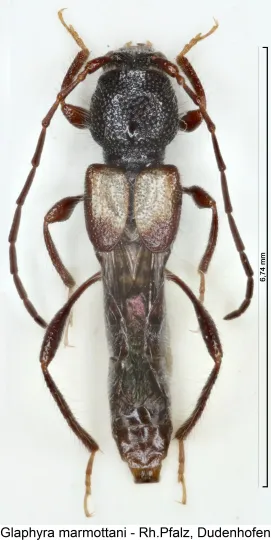
Glaphyra marmottani
Glaphyra marmottani
Description
How to identify
Glaphyra marmottani is a species of longhorn beetle (Cerambycidae) belonging to the order Coleoptera. This beetle is characterized by its small size, elongated body, and long antennae, which are typical features for this family of insects.
The adult beetle has a specific coloration that allows it to blend in perfectly with the bark of trees, making it difficult to spot during routine garden inspections. Their camouflage is a primary defense mechanism that aids in their survival.
The larvae of this pest have a whitish, slightly curved body with a well-developed head capsule, perfectly adapted for boring into tough plant tissues. They spend most of their life cycle hidden deep within the wood or under the bark.
The lifecycle of this insect is closely linked to weakened trees, where adults lay their eggs in bark crevices. This dependency makes them secondary pests that often target trees already suffering from environmental stress or mechanical damage.
Biological studies suggest that the development of this species is tied to the quality of the host tree's wood. Their ability to remain hidden makes them particularly challenging to eradicate once they have established themselves within a trunk or branch.
What it damages
Glaphyra marmottani primarily affects deciduous trees, with a strong preference for fruit-bearing species such as apples, pears, and various stone fruits. Damage caused by this pest leads to significant reductions in both tree vigor and overall crop yields.
The damage is mainly inflicted by the larvae, which bore galleries through the cambium and phloem layers. This behavior disrupts the transport of water and nutrients, eventually causing the dieback of branches and, in severe cases, the death of the tree.
Entry holes made by larvae provide access points for secondary pathogens, including various fungi and bacteria. These infections accelerate the decay of the wood and further weaken the tree's immune response to other environmental stressors.
When infestation levels are high, larval galleries can ring the branches, cutting off the supply chain to the outer canopy. This leads to premature wilting and the loss of entire branches, severely impacting the structural integrity of the tree.
Secondary infestation often leads to a decline in productivity, turning healthy fruit trees into reservoirs for the pest. Consistent monitoring and early intervention are essential to preventing this long-term deterioration of orchard health.
When it appears
The flight period for adult beetles generally occurs during late spring and early summer, when rising temperatures facilitate mating and egg-laying activities. Observing these windows is crucial for timing any necessary control measures.
Activity levels are highly dependent on ambient temperature, with warmer spring weather often leading to earlier emergence from the pupal stage. Accurate prediction of this window is vital for successful pest management programs.
Larval development continues throughout the warmer months, as they feed on the wood tissues. As temperatures drop, their metabolism slows down, and they enter a quiescent state within their galleries to survive the winter months.
The emergence of the next generation of adults happens in the following spring after a period of pupation. This strictly seasonal cycle allows orchard managers to plan preventive maintenance and monitor for the presence of adults during peak activity.
By understanding the seasonal requirements of this beetle, growers can implement cultural practices that minimize the risk of infestation during the most vulnerable periods of the tree's growth cycle.
Signs of infestation
One of the most noticeable signs of infestation is the presence of small entry holes in the bark of trunks or branches, often accompanied by the expulsion of "frass" (sawdust-like material). This is a clear indicator that larvae are active inside.
Yellowing leaves and the progressive wilting of individual branches are major warning signs that the tree's vascular system has been compromised. Close inspection of these branches often reveals tell-tale holes or bark damage.
In some cases, the bark may show signs of cracking or sagging where the larval galleries are located near the surface. Such areas may also exhibit gumming or sap flow as the tree attempts to seal the damage.
Adult beetles can sometimes be found on the bark during sunny spring days. Routine visual checks of tree trunks, especially near pruning wounds or areas of dead bark, can help in early detection and prevention of further spread.
- Sawdust-like frass near the trunk base
- Exit holes on the surface of branches
- Premature wilting of foliage
- Cracked bark with sap exudation
- Presence of adults on the trunk
Control measures
The primary control method is cultural, focusing on the removal of dead or infested wood. Regular pruning of damaged branches helps eliminate the larval population and prevents the further spread of the pest throughout the orchard.
Maintaining tree vigor through proper fertilization, irrigation, and protection from sunscald is the best long-term prevention. Healthy trees possess better natural defense mechanisms against wood-boring insects.
Mechanical cleaning of infested bark sites can be done by scraping away dead wood to expose larvae. Once the area is cleared, applying a protective wound dressing or fungicide helps prevent secondary infections.
Chemical control using systemic insecticides applied during the peak adult flight period can be effective. It is critical to follow label regulations to avoid negative impacts on beneficial insects, especially during blooming periods.
The use of monitoring traps allows growers to track population levels and decide on the most appropriate timing for intervention. An integrated pest management approach is consistently the most effective way to handle this borer species.
Taxonomy
- Latin name
- Glaphyra marmottani
- Order
- Coleoptera (beetles)
- Family
- Glaphyridae
- EPPO code
- MOLCMA
Discussion
No discussions yet — be the first.