
Giraffe
Giraffa camelopardalis
Description
How to identify
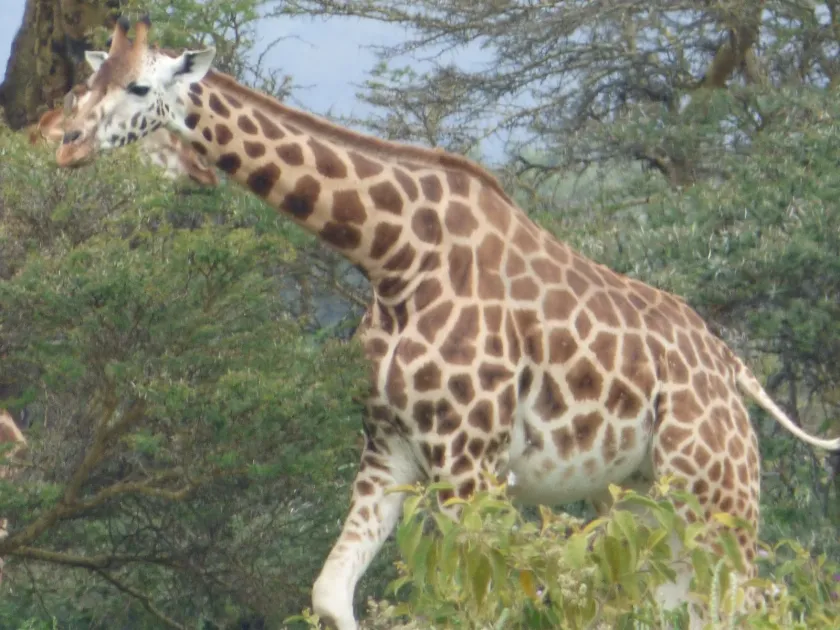
The giraffe (Giraffa camelopardalis) is the tallest terrestrial mammal, belonging to the order Artiodactyla and the family Giraffidae. Adults reach heights of 5-6 meters, enabling them to browse tree canopies unreachable by other herbivores.
Their unique anatomy, characterized by a long neck and a prehensile tongue up to 50 cm long, allows them to efficiently strip foliage from thorny branches that are inaccessible to smaller animals.
In agroforestry systems, giraffes can be considered pests due to the high volume of biomass they consume, which can impede the development of managed tree stands.
The species has a slow reproductive cycle; gestation lasts approximately 15 months, and sexual maturity is attained only at 4-5 years of age.
High nutritional requirements compel giraffes to move across large areas, which expands the scope of their browsing impact on agricultural and forested lands.
What it damages
Giraffes are highly specialized browsers that primarily consume leaves, buds, shoots, and flowers from a variety of woody plants.
Vulnerable crops include various species of the Acacia genus, Combretum species, and fruit trees planted within agroforestry zones.
Repeated browsing on leading shoots results in stunted growth, stem deformation, and significantly reduced timber quality or crop yield.
Beyond direct foliage consumption, giraffes frequently strip bark from tree trunks, creating entry points for fungal pathogens and wood-boring insects.
Excessive damage to young saplings can lead to complete plant death, posing significant challenges for reforestation and timber production programs.
When it appears
The intensity of plant damage is highly seasonal and depends on the availability of preferred forage in the surrounding environment.
During dry seasons, when the quality of ground-level forage diminishes, giraffes increase their browsing pressure on trees, making them a significant agricultural concern.
Giraffes exhibit a constant daily feeding cycle, browsing throughout both day and night, with intervals for rumination.
In rainy seasons, when fresh grasses and shrubs are abundant, the impact on cultivated trees is usually reduced as the animals shift their diet.
Migration patterns, largely driven by rainfall distribution, are the primary factors determining when giraffes appear at specific agricultural sites.
Signs of infestation
The most distinctive sign of giraffe presence is the characteristic "umbrella" or "hourglass" shape of tree canopies caused by selective browsing from below and the sides.
Damage is typically concentrated at a height of 2 to 5 meters, a zone largely inaccessible to other ground-dwelling herbivores.
Branches show clear evidence of tongue-stripping and large tooth marks, distinct from the feeding patterns of rodents or smaller ungulates.
Large hoof prints found near damaged trees serve as confirmation of the presence of these mammals in the vicinity of the cultivation area.
Long-term indicators include reduced annual growth increments and anomalous branching patterns in trees that are subjected to persistent browsing.
Control measures
Protecting agricultural and forestry assets from giraffe browsing requires robust strategies focused on limiting physical access to the plants.
- Installation of high-tensile fences at least 3 meters tall around nurseries and young plantations.
- Deployment of individual trunk guards or protective mesh sleeves for young trees to prevent bark stripping.
- Application of chemical repellents with deterrent scents or tastes to the foliage of valuable specimens.
- Establishing buffer zones of non-palatable or wild-growing forage species to distract animals from commercial crops.
- Strategic land-use planning that accounts for wildlife migratory corridors to minimize conflict between agriculture and local fauna.
Taxonomy
- Latin name
- Giraffa camelopardalis
- Family
- Giraffidae
- EPPO code
- GIRFCA
Discussion
No discussions yet — be the first.