
Giraffe weevil
Giraffa
Description
How to identify
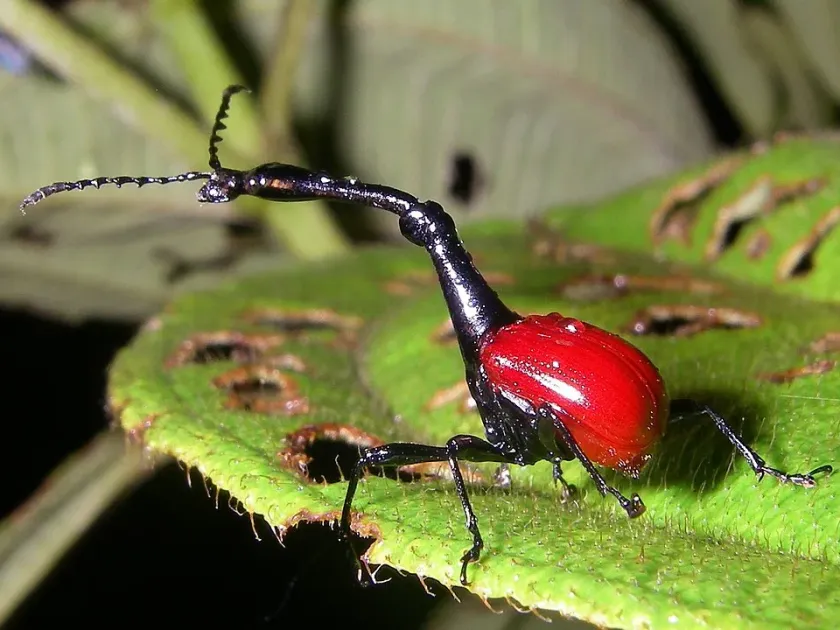
The giraffe weevil (Trachelophorus giraffa) is a distinct beetle species belonging to the family Attelabidae, widely known for the males' elongated necks, which are used in mating rituals and nest construction.
The beetle typically displays a vibrant black and red coloration, with a sleek, elongated body shape that is highly adapted to its environment on the island of Madagascar.
While the neck length is a characteristic trait, females possess significantly shorter necks than males, which is an evolutionary adaptation for efficient leaf-rolling during oviposition.
It is classified as a leaf-rolling weevil, reflecting its primary biological behavior of creating protective structures for its offspring from the foliage of host trees.
Taxonomically, it sits within the Coleoptera order, where its unique morphology makes it one of the most recognizable insects in its endemic range.
What it damages
The primary damage caused by the giraffe weevil is the destruction of leaf tissue through the construction of larval nests, which can affect the overall health of host plants.
The beetle targets specific tree species, cutting the leaf blades and rolling them into tight, protective tubes where the larvae develop and feed upon the internal tissues.
While this activity is natural in their endemic forest habitats, in agricultural contexts, such behavior could potentially reduce the photosynthetic efficiency of young saplings if the population becomes dense.
The cutting of the leaf veins often causes the leaf to wither and eventually detach, leading to localized defoliation in the tree canopy.
Since the species is not a major agricultural pest globally, its impact is largely restricted to natural environments and ornamental trees within its limited geographical range.
Signs of infestation
The most prominent sign of infestation is the appearance of perfectly rolled leaf tubes hanging from branches, often resembling small cigars.
Upon closer inspection, the leaves used for these tubes show distinct, clean-cut incisions made by the female beetle as part of the preparation process.
The presence of larvae inside these rolled-up structures is a definitive sign, as they consume the protected leaf material during their growth phases.
Wilting of foliage and abnormal leaf curling on otherwise healthy trees are common indicators that a population of these weevils is active in the vicinity.
Adult beetles can also be spotted resting on foliage or engaging in nest-building activities during the warmer hours of the day.
Control measures
Manual removal and destruction of the rolled-up leaves is the most effective and eco-friendly way to control local populations of the giraffe weevil.
Good agricultural practices, such as maintaining healthy tree vigor and performing regular canopy inspections, help in identifying and removing nests early.
Chemical control is rarely necessary and generally discouraged due to the species' limited ecological impact and the risk of harming non-target beneficial insects.
Fostering a balanced ecosystem where natural predators like birds and parasitic wasps thrive is recommended to keep weevil populations at a natural equilibrium.
For ornamental gardens or conservatories, maintaining proper sanitation by clearing fallen debris prevents the completion of the beetle's life cycle in the soil or leaf litter.
Taxonomy
- Latin name
- Giraffa
- Family
- Giraffidae
- EPPO code
- GIRFSP
Discussion
No discussions yet — be the first.