
Gerstaeckeria
Gerstaeckeria
Description
How to identify
Gerstaeckeria is a genus of weevils belonging to the family Curculionidae. These beetles are specialized pests that have co-evolved with various species of cacti, particularly Opuntia.
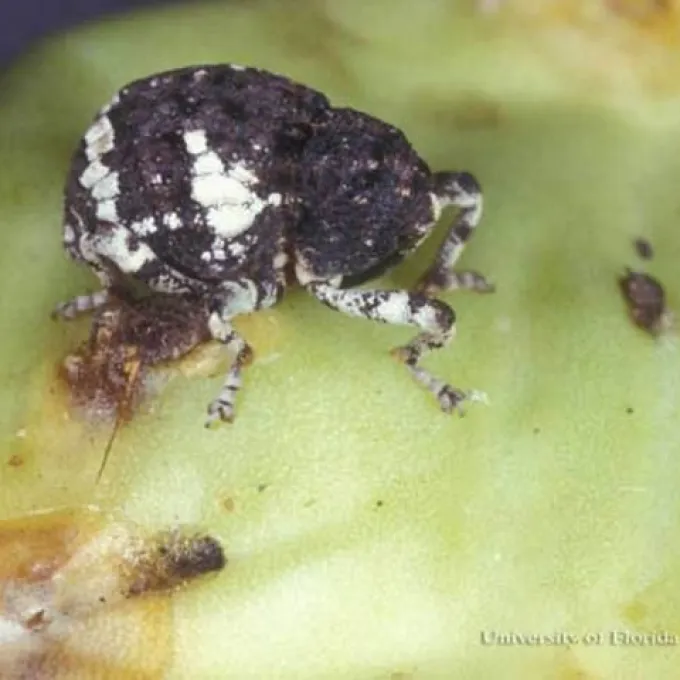
The adult beetle possesses the characteristic rostrum (snout) typical of weevils. Their size and coloration often blend perfectly with the cactus skin, making detection difficult for the untrained eye.
The life cycle involves complete metamorphosis: egg, larva, pupa, and adult. The entire development process, except for the adult dispersal stage, typically occurs inside the succulent tissue of the host plant.
Larvae are legless, stout, and creamy-white with a hard, brownish head capsule. They possess strong mandibles designed to tunnel through the firm, fibrous interior of cactus pads.
The pupal stage occurs within a small chamber carved out by the larva inside the host plant. Once the adult emerges, it creates a small exit hole to begin its lifecycle outside.
What it damages
The primary hosts for Gerstaeckeria are cacti. The damage is severe because it occurs internally, often going unnoticed until the structural integrity of the plant is compromised.
Larval feeding destroys the internal parenchyma of the cactus stems. This disruption affects water storage and nutrient transport, leading to localized or systemic wilting.
Adult beetles feed on the surface of the cactus, leaving small, circular wounds. These wounds are not only damaging in their own right but serve as entry points for bacterial and fungal pathogens.
Severe infestations lead to the collapse of plant segments. As the interior is eaten away, the cactus loses its ability to photosynthesize and sustain its weight, resulting in structural failure.
In nursery settings, this pest can cause significant economic losses by ruining the cosmetic quality and health of commercial cactus stock, rendering them unsalable.
Signs of infestation
The most reliable sign of a Gerstaeckeria infestation is the presence of small, round exit or entry holes on the surface of the cactus pads, often accompanied by dry, dark staining.
Soft or mushy spots on the cactus that do not seem to be caused by traditional rot may indicate internal tunneling by larvae. Pressing these areas might reveal a hollow interior.
Stunted growth or sudden yellowing of specific segments of the cactus is a frequent indicator of internal damage. The plant may lose its turgor pressure prematurely.
Frass (insect waste) may sometimes be found near the entry holes or accumulated at the base of the plant, indicating an active infestation inside the tissue.
During the night, adult weevils may be observed feeding on the surface or moving between pads. Regular nocturnal inspections with a flashlight are highly recommended.
Control measures
Managing Gerstaeckeria requires a combination of systemic chemical treatments and rigorous sanitation practices within the collection or greenhouse.
- Apply systemic insecticides that are absorbed by the plant, ensuring the larvae feeding inside are exposed to the toxicant.
- Surgically remove segments that are severely damaged to eliminate the larval population center.
- Treat wounds resulting from mechanical removal with fungicides and bactericides to prevent secondary decay.
- Maintain strict quarantine protocols for any new plant material added to the collection to prevent the introduction of the beetle.
- Monitor the collection during peak activity months using manual inspection and sticky traps if necessary.
Taxonomy
- Latin name
- Gerstaeckeria
- Order
- Coleoptera (beetles)
- Family
- Curculionidae
- EPPO code
- GERTSP
Discussion
No discussions yet — be the first.