
Garden centipede
Geophilus carpophagus
Description
How to identify
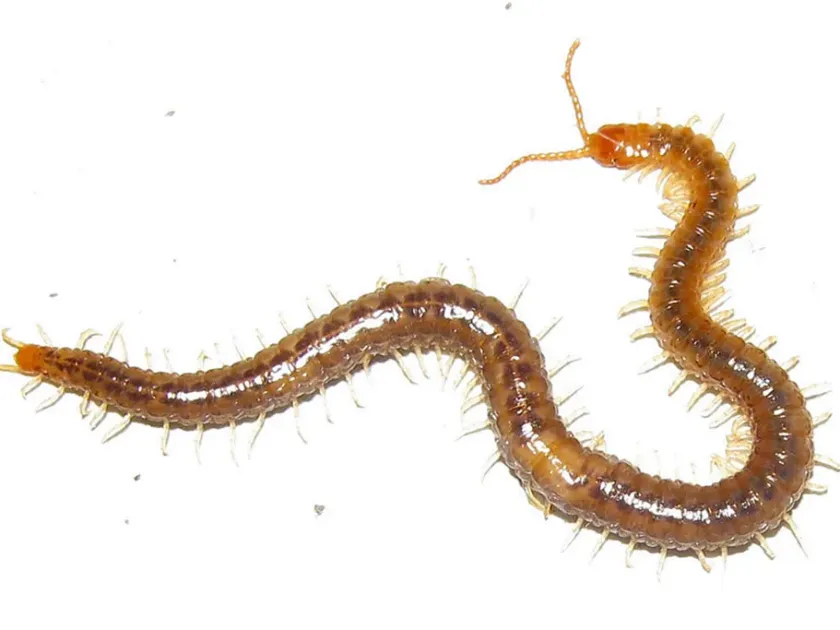
Geophilus carpophagus is a species of soil-dwelling centipede belonging to the order Geophilomorpha and the family Geophilidae. It has a long, slender body composed of numerous segments.
The adults typically reach a length of about 40 to 50 mm. Their coloration ranges from yellow to reddish-brown, which helps them blend into the soil environment.
A key anatomical feature is their modified front legs, called forcipules, which contain venom glands used to subdue prey or defend against threats.
While primarily predatory, feeding on small invertebrates, they are known to opportunistically feed on plant tissues when soil organic matter is scarce or populations are dense.
They prefer moist, loose soil conditions where they can easily burrow and maintain the high humidity levels required for their respiration and survival.
What it damages
This pest is known to cause damage to a variety of garden crops, including carrots, beetroots, potatoes, and young vegetable seedlings.
Damage often occurs in wet seasons when the outer layers of vegetables become softer, allowing the centipedes to penetrate the surface more easily.
They excavate deep tunnels and cavities in tubers and roots, which not only causes direct yield loss but also reduces the shelf life of the harvested produce.
Plants damaged by these centipedes are prone to secondary infections, such as bacterial or fungal soft rots that enter through the feeding wounds.
Seedlings are particularly vulnerable; a high density of centipedes can sever the main stem at the base, leading to complete plant failure in infested beds.
When it appears
The activity of Geophilus carpophagus is highly dependent on soil moisture and temperature, with peak activity observed during the spring and autumn months.
As soil temperatures rise in early spring, these centipedes migrate towards the surface layers to feed and seek out reproductive sites.
In the heat of summer, they tend to move deeper into the soil profile to avoid desiccation, returning to the surface after heavy rainfall or irrigation.
During autumn, there is often a resurgence in surface activity as they prepare for winter and feed on decaying plant materials and residual crops.
They overwinter deep in the soil, often aggregating in areas with high organic matter content where they can remain protected from freezing temperatures.
Signs of infestation
The primary symptom is the presence of irregular, winding tunnels or small, deep pits on the surface of root crops, often mistaken for wireworm damage.
Stunted growth or sudden wilting of vegetable seedlings without apparent above-ground causes often indicates damage to the root system or root neck.
Direct observation is possible by sifting through the topsoil near affected plants, where the elusive, slender centipedes may be found scurrying away.
The presence of heaps of decomposing organic matter, such as uncomposted manure, often serves as a magnet for these centipedes, increasing their local population.
Secondary symptoms include the rapid onset of rot on vegetables that appear to have small, punctured lesions on their skin, indicating previous feeding by pests.
Control measures
Regular cultivation and deep tillage of the soil are the most effective non-chemical methods to disturb their habitat and expose them to natural predators.
Proper water management is essential; avoiding excessive soil moisture through controlled irrigation helps create an environment less favorable for centipede survival.
Sanitation practices, such as removing crop debris and maintaining clean garden beds, help to minimize the hiding spots and food sources for the pests.
Applying agricultural lime can sometimes alter soil pH to a level that is less conducive to the survival of various soil-dwelling centipede species.
In cases of severe infestation, targeted soil insecticides may be used, provided they are applied according to label instructions and local agricultural guidelines.
Taxonomy
- Latin name
- Geophilus carpophagus
- Family
- Geophilidae
- EPPO code
- GEOPCA
Discussion
No discussions yet — be the first.