
Soil centipedes
Geophilus
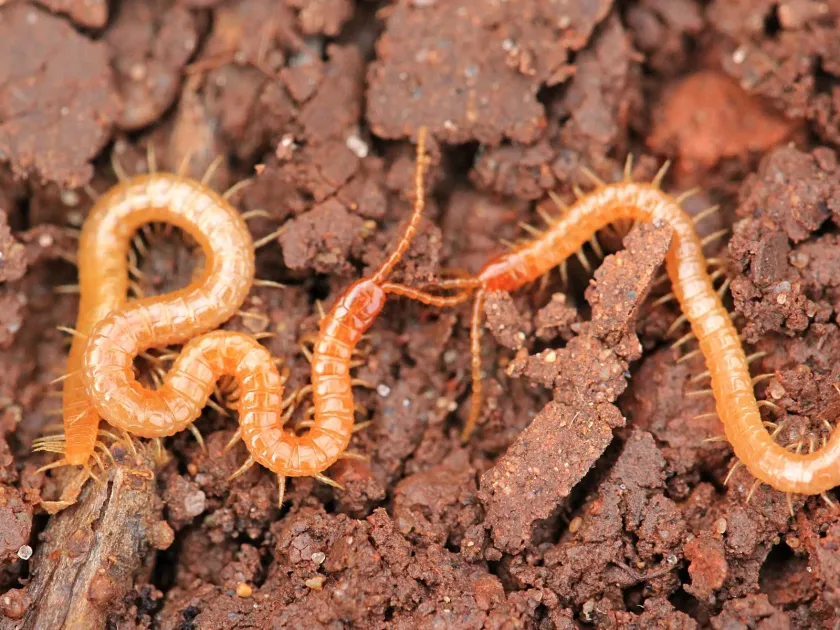
Description
How to identify
Soil centipedes belonging to the genus Geophilus are members of the order Geophilomorpha. They are characterized by an extremely elongated, worm-like body with numerous pairs of legs.
These organisms are typically yellowish or reddish-brown in color, which helps them blend in with the soil environment. They lack eyes and rely on sensory organs on their antennae to navigate.
Their head features specialized pincer-like maxillipeds that contain venom glands, used primarily to capture small soil invertebrates, though they can also consume plant tissues.
They lead a strictly subterranean life, preferring moist soil rich in organic matter. They are highly sensitive to desiccation and must remain in the soil profile to survive.
The life cycle involves multiple developmental stages, with the centipedes growing in size and segment number as they mature within the soil, often taking over a year to reach adulthood.
What it damages
While primarily predators, soil centipedes can cause significant damage to young plants, seedlings, and root crops when their natural prey is scarce or environmental conditions are favorable.
They chew tunnels and holes into the roots and stems of vegetable crops. This feeding behavior destroys the vascular system of the plant, leading to stunted growth or total death of the seedling.
Root crops like carrots, potatoes, and beets are particularly susceptible. Damage often appears as deep, irregular grooves that ruin the quality of the harvested produce and invite pathogens.
The feeding wounds act as entry points for secondary infections such as fungal root rots and bacterial soft rots, which often cause more extensive damage than the centipedes themselves.
Seedlings in greenhouses are at the highest risk, as the controlled moisture and lack of natural predators in potting media can lead to rapid population spikes of these centipedes.
When it appears
Activity levels are highly dependent on soil moisture and temperature. Spring is a critical period when high moisture levels bring them closer to the surface to feed on young roots.
Autumn also sees an increase in activity as they follow the presence of mature root crops in the topsoil layers, taking advantage of the food availability before winter.
During the summer, if the soil becomes dry, these pests migrate to deeper, moister layers of the soil to escape the heat, becoming less visible and less harmful to shallow-rooted crops.
Winter survival is achieved by retreating deep underground below the frost line. They do not hibernate fully but significantly slow their metabolic processes until conditions improve.
Heavy rainfall or over-irrigation throughout the year can lead to persistent problems, as these conditions allow the centipedes to stay near the surface and remain active for longer periods.
Signs of infestation
The most obvious sign of an infestation is the presence of irregular, shallow, or deep holes in harvested root vegetables, often with clean, eaten-out edges.
Wilting plants that are otherwise well-watered may indicate root damage caused by these centipedes, requiring an inspection of the soil near the root zone for the pests.
Finding the characteristic long, fast-moving, multi-legged centipedes during soil cultivation or planting is a definitive sign of their current population levels.
In container plants, the emergence of centipedes at the surface during or immediately after irrigation is a strong indicator of an established colony in the root media.
Patches of dying seedlings in seedbeds, often associated with small tunnels in the soil surface, are typical symptoms of high centipede density in greenhouses.
Control measures
Cultural control is the most effective approach. Deep plowing and frequent cultivation help expose the centipedes to the surface, where they succumb to desiccation or predation.
Managing soil moisture is essential; avoiding constant waterlogged conditions in greenhouses or garden beds reduces the habitat suitability for soil-dwelling centipedes.
Using sterile potting media for seed starts prevents the accidental introduction of these pests into new growing areas, ensuring a clean start for the crops.
Biological controls, such as beneficial nematodes or entomopathogenic fungi, can be applied to suppress populations in organic farming systems without harming beneficial soil biota.
Chemical intervention should be considered a last resort. Use soil-applied insecticides only when monitoring confirms high population densities and significant crop damage thresholds are exceeded.
Taxonomy
- Latin name
- Geophilus
- Family
- Geophilidae
- EPPO code
- GEOPSP
Discussion
No discussions yet — be the first.