
Toad bug
Gelastocoris oculatus
Description
How to identify
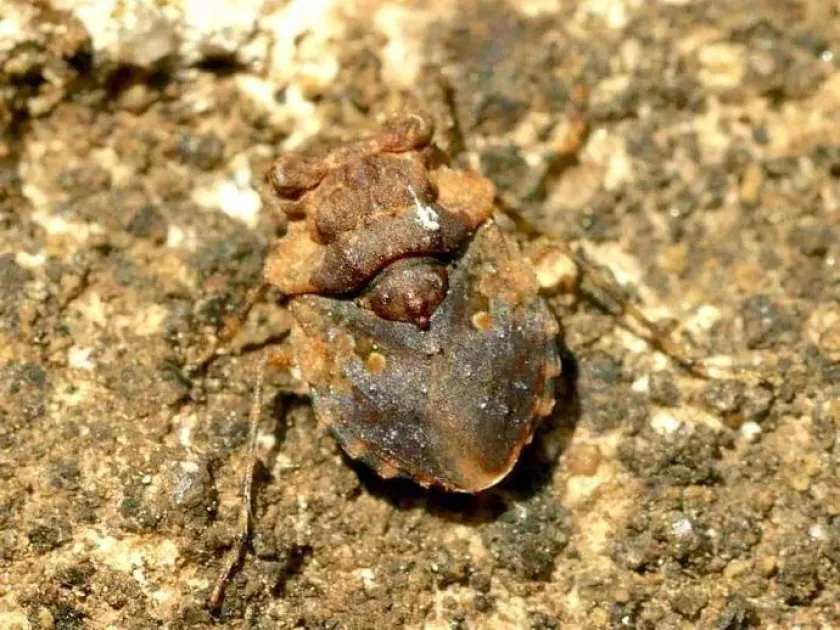
The toad bug (Gelastocoris oculatus) is a fascinating member of the Gelastocoridae family. It earns its common name from its distinct appearance: a stocky, flattened body, a bumpy dorsal surface, and prominent, bulging eyes that resemble those of a common toad.
These insects typically measure about 7 to 10 millimeters in length. Their coloration is highly variable, ranging from gray to mottled brown, providing excellent camouflage against sandy or muddy substrates where they spend most of their time.
The front legs of the toad bug are significantly thickened and adapted for raptorial action, meaning they are built to seize and hold prey. This anatomical feature is perfectly suited to their predatory lifestyle.
Toad bugs move in short, sudden jumps rather than walking smoothly, which further reinforces their visual and behavioral resemblance to small amphibians.
They undergo incomplete metamorphosis, meaning the nymphs look like miniature versions of the adults. These nymphs often bury themselves in damp soil to avoid detection while they develop.
What it damages
Toad bugs are strictly predatory and do not feed on plant tissues. They are not considered agricultural pests because they do not damage leaves, stems, roots, or fruit of any crops.
Instead of causing damage, they act as beneficial predators in the garden or field. They prey upon other small insects and invertebrates that live in the same damp, soil-level microhabitats.
While they might occasionally startle a gardener or disturb the soil surface, they cause no structural or physiological harm to vegetation. Their impact on plant health is entirely neutral or slightly positive due to predation.
There is no economic threshold for toad bugs, and they do not require any monitoring or scouting protocols typically associated with crop-destroying insects.
In the context of integrated pest management (IPM), toad bugs are seen as part of the natural predator population that helps keep smaller, potentially harmful arthropods in check.
Signs of infestation
The most common sign of a toad bug is its presence near bodies of water, such as pond edges, irrigation ditches, or in greenhouses where the soil remains consistently wet.
Behavioral signs include observing an insect that freezes in place when approached, using its cryptic coloration to disappear into the texture of the soil or gravel.
Visual identification is the primary method: look for the distinctively bulging eyes and the wide, toad-like shape of the bug resting on wet soil or sand.
Unlike true pests, there will be no signs of feeding, such as necrotic spots, chlorosis, or wilting associated with insect mouthparts, which confirms that the plant is not being attacked.
During the warmer months, adults may be attracted to outdoor lighting at night, which is often when people first notice them and worry about their presence near crops.
Control measures
No control measures are necessary for toad bugs. They are non-pest organisms and do not pose a threat to agricultural productivity or home garden success.
If you prefer to reduce their numbers in greenhouse settings, the most effective approach is habitat modification. Reducing soil saturation and improving drainage makes the environment less attractive for these moisture-loving insects.
Chemical control is strongly discouraged as it is an ineffective use of resources and can cause collateral damage to other beneficial insects and the surrounding ecosystem.
Manual removal is neither feasible nor needed, given their natural tendency to stay away from densely planted crops and their minimal impact on plants.
Encouraging a diverse ecosystem where these bugs can exist as natural predators is the recommended approach for sustainable land management.
Taxonomy
- Latin name
- Gelastocoris oculatus
- Order
- Hemiptera (bugs, aphids, leafhoppers)
- Family
- Gelastocoridae
- EPPO code
- GELAOC
Discussion
No discussions yet — be the first.