
Three-spined stickleback
Gasterosteus aculeatus
Description
How to identify
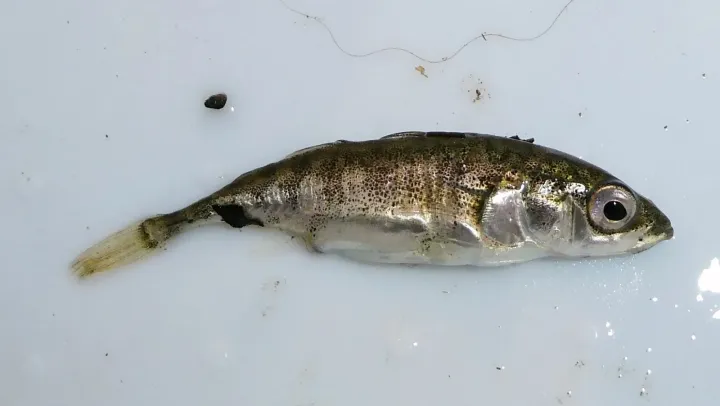
The three-spined stickleback (Gasterosteus aculeatus) is a small fish belonging to the Gasterosteidae family. It is easily identified by three distinct, sharp spines on its dorsal side, which act as a defensive mechanism against predators.
Instead of scales, the fish is covered with bony plates along its body. It typically reaches a length of 5 to 10 centimeters and possesses a fusiform body shape, which is highly efficient for movement in varied aquatic environments.
The species is known for its remarkable ecological plasticity, thriving in both freshwater rivers and brackish coastal waters. This adaptability allows it to rapidly colonize artificial environments like irrigation canals and ponds.
During the breeding season, males demonstrate complex behavior by constructing nests from aquatic vegetation fragments, bound together by a specialized glandular secretion. The male remains to guard the eggs, ensuring high survival rates.
The combination of aggressive nest guarding and a short reproductive cycle allows the three-spined stickleback to quickly become the dominant species in small water bodies used for agricultural purposes.
What it damages
In aquaculture, the three-spined stickleback is considered a significant pest. It directly preys upon the eggs and larvae of commercially important fish species, leading to severe losses in fish stocking programs.
In irrigation networks, sticklebacks compete heavily for food resources, specifically targeting zooplankton and benthic organisms. This depletion of food supply stunts the growth of cultivated species in pond farms.
The presence of large populations of sticklebacks can clog water intake filters and screens of irrigation pumps. This increases maintenance costs and creates operational delays during the critical agricultural irrigation window.
Their invasive nature causes imbalances in the ecosystem of stagnant or slow-moving waters, forcing farm managers to invest in supplementary feeding and additional water treatment processes.
Ultimately, the damage caused is reflected in lower productivity, increased labor costs for water system cleaning, and the need for constant monitoring of water quality and fish composition.
Control measures
Effective management of the three-spined stickleback begins with physical control measures. Periodically draining and drying out ponds serves as a vital step to destroy nesting sites and inhibit further colonization.
Installing fine-mesh screens and barriers at the entrances of irrigation channels prevents the migration of sticklebacks from natural water sources into the farm's water supply system.
Biological control methods involve introducing natural predators, such as pike or perch, into the aquaculture ponds. These predators are effective at reducing stickleback populations through natural predation.
Regular maintenance, including the systematic removal of aquatic vegetation from canals, eliminates the essential materials needed by the fish for nest building, thereby discouraging breeding in protected areas.
While chemical interventions exist, they are often discouraged due to environmental risks. Integrated pest management, focusing on habitat modification and ecological balance, remains the preferred approach for long-term control.
Taxonomy
- Latin name
- Gasterosteus aculeatus
- Family
- Gasterosteidae
- EPPO code
- GASOAC
Discussion
No discussions yet — be the first.