
Galeodes graecus
Galeodes graecus
Description
How to identify
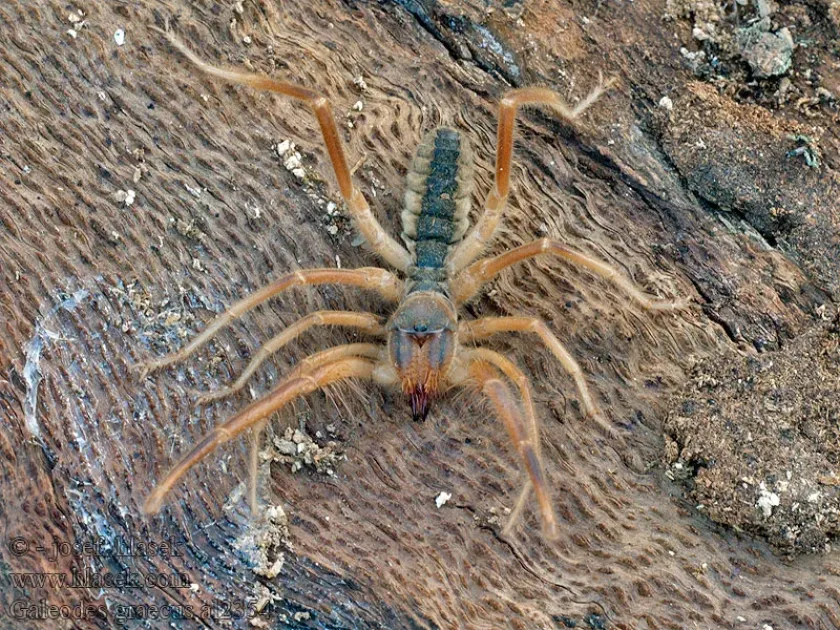
Galeodes graecus belongs to the order Solifugae, commonly known as camel spiders or wind scorpions. These are large arachnids characterized by powerful chelicerae and segmented bodies, often reaching lengths of 50–70 mm.
The body is covered in dense hairs, typically ranging in color from pale yellow to light brown. They are easily recognizable by their rapid, erratic movements and the way they hold their large jaws forward.
They possess specialized sensory organs on their pedipalps, known as malleoli, which help them navigate their environment and detect vibrations, making them highly efficient nocturnal predators.
The life cycle involves incomplete metamorphosis. Females lay eggs in burrows deep in the soil, and the young undergo several molts before reaching maturity, gradually increasing in size and hunting capability.
Unlike true insects, their growth is dependent on successful molting phases, which require specific soil humidity and temperature levels maintained within their underground galleries.
What it damages
Galeodes graecus is primarily a predator rather than a specialized herbivore. However, in agricultural contexts, their presence can be detrimental to the health of young crops.
The primary damage occurs during their burrowing activity, which can disrupt the root system of seedlings, leading to reduced nutrient uptake and subsequent wilting or death of the plants.
By consuming beneficial insects and natural predators within the field, they can disrupt the local ecosystem, leading to secondary infestations of true crop-damaging pests like aphids or beetles.
In arid regions, their burrowing can create air pockets around the roots of vegetable crops, significantly hindering the plant's ability to access groundwater and fertilizers effectively.
While they do not feed on the plant tissues directly, their high-density presence often correlates with soil instability, which is a major concern for intensive row-crop management.
When it appears
Activity levels of Galeodes graecus peak during the hot summer months, as they are well-adapted to arid and semi-arid climates with high soil temperatures.
They are strictly nocturnal; they remain hidden in deep burrows during the daytime to avoid desiccation and intense solar radiation, emerging only after sunset to hunt.
Their seasonal presence starts in late spring, following the warming of the upper soil layers, and continues until the onset of cool autumn weather triggers their transition to winter dormancy.
Winter is spent in deep subterranean burrows, where they enter a state of reduced metabolic activity. They survive the winter by retreating well below the frost line.
The emergence in spring is synchronous with the breeding season, where adults become more aggressive and active in patrolling their territories, often becoming a visible concern for farmers.
Signs of infestation
The presence of Galeodes graecus is easily identified by the entrance holes to their burrows, which are neat, circular openings approximately 1–2 cm in diameter in the soil surface.
Farmers often notice a sudden decline in the health of young seedlings in patches where these burrows are concentrated, caused by the physical disruption of the root zone.
Finding discarded chitinous remains of beetles or other insects near the burrow entrance is a common sign of a resident predator, indicating an active hunting ground.
Direct nocturnal observation using a flashlight is the most accurate diagnostic method, as these animals are highly sensitive to movement and light at night.
- Circular burrow entrances (1–2 cm) in the soil.
- Localized wilting of seedlings without disease symptoms.
- High concentration of insect debris near burrows.
- Direct sighting of large arachnids during night inspections.
Control measures
Effective management begins with thorough mechanical soil cultivation. Deep plowing and harrowing effectively destroy the burrows, forcing the animals out and disrupting their reproductive cycles.
Crop rotation and proper field hygiene are essential practices to minimize the long-term establishment of permanent burrowing sites within the field perimeter.
Promoting the population of natural predators, such as insectivorous birds and small mammals, helps in maintaining a natural balance, significantly reducing the density of solifugids.
Chemical control is rarely necessary and generally inefficient due to the nocturnal and burrowing nature of the species. Soil-applied insecticides for other pests usually provide incidental control.
Keeping field margins clear of debris and excessive weeds reduces the availability of daytime shelters, effectively forcing the population to migrate away from sensitive crop areas.
Taxonomy
- Latin name
- Galeodes graecus
- Family
- Galeodidae
- EPPO code
- GALDGR
Discussion
No discussions yet — be the first.