
Sun spider
Galeodes
Description
How to identify
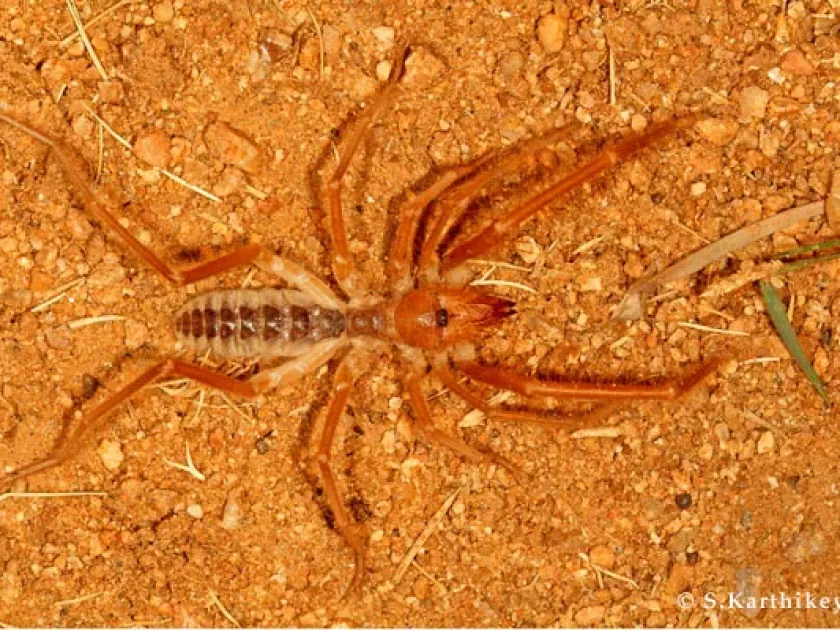
Galeodes, commonly known as the sun spider, camel spider, or wind scorpion, belongs to the order Solifugae. Despite their common names, they are neither true spiders nor scorpions, but a unique group of arachnids characterized by large, powerful chelicerae.
They are easily recognized by their hairy, tan-colored bodies and fast movement. Adult individuals can reach lengths of up to 7 centimeters, featuring eight legs and specialized pedipalps that act as sensory organs during hunting.
Sun spiders are nocturnal predators that lack venom glands. However, they are known for their aggressive appearance and a painful bite that can occur if the animal feels threatened or is handled by farm workers.
Their life cycle typically involves the female digging a burrow in the soil, where eggs are laid. The young develop through several molts, reaching maturity in response to environmental conditions and food availability.
In an agricultural context, they are often found in arid and semi-arid regions. They thrive in loose, sandy soils, which are ideal for their burrowing behavior and survival during the heat of the day.
What it damages
Galeodes are not considered plant pests as they do not consume any part of a crop. Their diet is entirely carnivorous, consisting primarily of insects, spiders, and occasionally small lizards or rodents.
From an agronomic perspective, they can be viewed as beneficial organisms. By preying on locusts, beetles, and other ground-dwelling pests, they help naturally regulate insect populations that may cause damage to crops.
No scientific evidence exists to suggest that sun spiders feed on leaves, roots, or fruits. Their presence on a farm is a reflection of a healthy invertebrate food web rather than a sign of a crop infestation.
The perception of them as pests is largely due to their intimidating size and behavior. Farmers and field workers often fear them, which may complicate manual fieldwork or crop harvesting in infested areas.
Overall, the economic damage caused by Galeodes is zero. They do not pose a direct threat to yield quality or plant health, making them a neutral presence in the agricultural ecosystem.
When it appears
Sun spiders are most active during the warmer months, typically from late spring through early autumn. Their nocturnal nature is a behavioral adaptation to avoid the extreme heat and dehydration caused by direct sunlight.
During peak summer months, their activity levels are highest. This is the period when they are most frequently sighted, especially in fields that undergo irrigation, which may attract a higher density of prey insects.
As temperatures begin to drop in the fall, their metabolism slows down, and they retreat deeper into their burrows to overwinter. This seasonal behavior limits their presence on the surface during the cooler seasons.
The life cycle is closely synchronized with the moisture and temperature fluctuations of the soil. Favorable conditions during the egg-laying season lead to higher population numbers in the subsequent year.
Field observation shows that Galeodes activity peaks during periods of high insect prey density. If an outbreak of locusts or other ground pests occurs, a temporary increase in sun spider sightings is common.
Control measures
Because sun spiders are not crop pests, targeted chemical control is neither recommended nor ecologically sound. Broad-spectrum pesticides used to kill them would also eliminate valuable predatory species and disrupt biological pest control.
Management of these creatures is limited to precautionary measures for farm workers. Wearing appropriate personal protective equipment, such as sturdy boots and gloves, is sufficient to prevent accidental bites during harvest.
Standard cultural practices such as soil cultivation and tillage significantly reduce the availability of suitable burrowing sites. By disturbing the soil regularly, farmers naturally discourage sun spiders from settling in cultivated zones.
Removing piles of debris, fallen logs, or heavy weed growth near fields minimizes the number of hiding spots available for these nocturnal hunters, effectively pushing them toward the periphery of the cultivated area.
Focusing on integrated pest management (IPM) is the best approach. By maintaining the natural balance of insect populations, the presence of predatory arachnids like Galeodes remains a minor issue that does not require direct intervention.
Taxonomy
- Latin name
- Galeodes
- Family
- Galeodidae
- EPPO code
- GALDSP
Discussion
No discussions yet — be the first.