
Furcipus
Furcipus
Description
How to identify
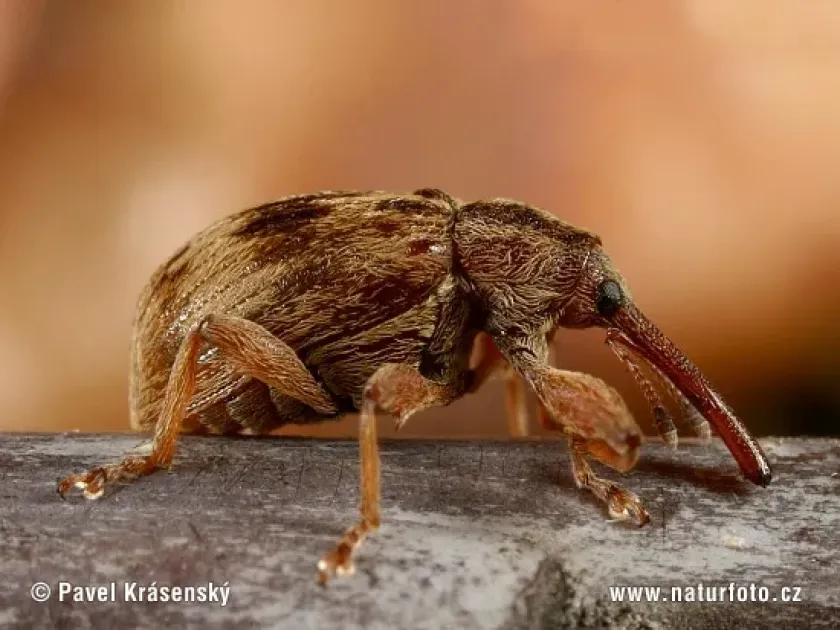
Furcipus (Furcipus rectirostris) is a species of weevil belonging to the Curculionidae family. The adults are beetles measuring 4–6 mm in length with a characteristic elongated rostrum.
The coloration of the beetle ranges from dark brown to almost black, with dense pubescence, which provides excellent camouflage on tree bark.
The pest has an oval body shape, and the surface of the elytra is covered with fine grooves, which helps distinguish this species from closely related weevils.
The larvae of Furcipus are legless, white-colored, with a distinct yellowish or brownish head capsule, typical for this family.
A distinctive feature of the adults is their ability to feign death when threatened, which makes it difficult to detect them during visual plant inspections.
What it damages
The main crops susceptible to Furcipus damage are stone fruit trees, particularly cherries, sweet cherries, and plums.
The pest shows a preference for generative organs, feeding on fruit ovaries, which directly impacts the commercial yield of the orchard.
In forest and garden environments, Furcipus can also damage the fruits of wild species within the Prunus genus.
Significant damage occurs during mass outbreaks when beetles attack a large portion of young ovaries, causing them to drop prematurely.
In addition to direct fruit damage, adults may feed on flower buds, which reduces the tree's vegetative activity during the spring season.
When it appears
The pest activates in early spring when the average daily temperature remains consistently above 8–10 degrees Celsius.
The period of mass adult emergence coincides with the bud break and flowering phases of early stone fruit crops, which is a critical time for protection.
Egg-laying occurs directly into young ovaries, where the female deposits eggs by drilling characteristic holes.
Larval development inside the fruit takes several weeks, after which they leave the damaged fruit to pupate in the soil.
The full development cycle of one generation is completed by mid-summer, after which the new generation of beetles enters diapause until the next season.
Signs of infestation
The first sign of infestation is small punctures on young ovaries, often accompanied by darkening of the tissue around the wound.
Premature yellowing and massive dropping of ovaries in late spring is a clear signal that Furcipus larvae are developing inside the fruits.
When inspecting fallen fruits, one can find small exit holes created by the larvae as they emerge to enter the soil.
The presence of the beetles themselves on branches during morning hours, when they are least active, helps confirm the population's presence.
Damaged buds appear dry with signs of internal tissue consumption, which leads to a lack of flowering on affected shoots.
Control measures
The primary method of control is the application of contact-systemic insecticides during the early spring "green tip" phase.
A crucial agrotechnical method is the regular collection and destruction of fallen fruits, where the pest larvae continue their development.
Autumn tilling of the soil around the tree trunk helps destroy a significant portion of the population overwintering as pupae or adults.
Using sticky traps on tree trunks helps restrict the movement of beetles climbing from the soil into the canopy to feed.
- Application of biological products based on entomopathogenic fungi.
- Deployment of pheromone traps for population monitoring.
- Stimulation of natural enemies (entomophages) within the orchard.
Taxonomy
- Latin name
- Furcipus
- Order
- Coleoptera (beetles)
- Family
- Curculionidae
- EPPO code
- FURPSP
Discussion
No discussions yet — be the first.